The Election Commission plans to hold union parishad elections across Bangladesh in five phases, with voting in 1,026 unions scheduled for 21 January.
Under the proposed schedule, elections will take place in 1,026 unions across 131 upazilas in the first phase, 1,113 unions across 129 upazilas in the second, 1,002 unions across 118 upazilas in the third, 793 unions across 93 upazilas in the fourth, and 356 unions across 37 upazilas in the fifth.
A detailed list specifying the polling dates for individual unions will be published on the EC’s website by Thursday.
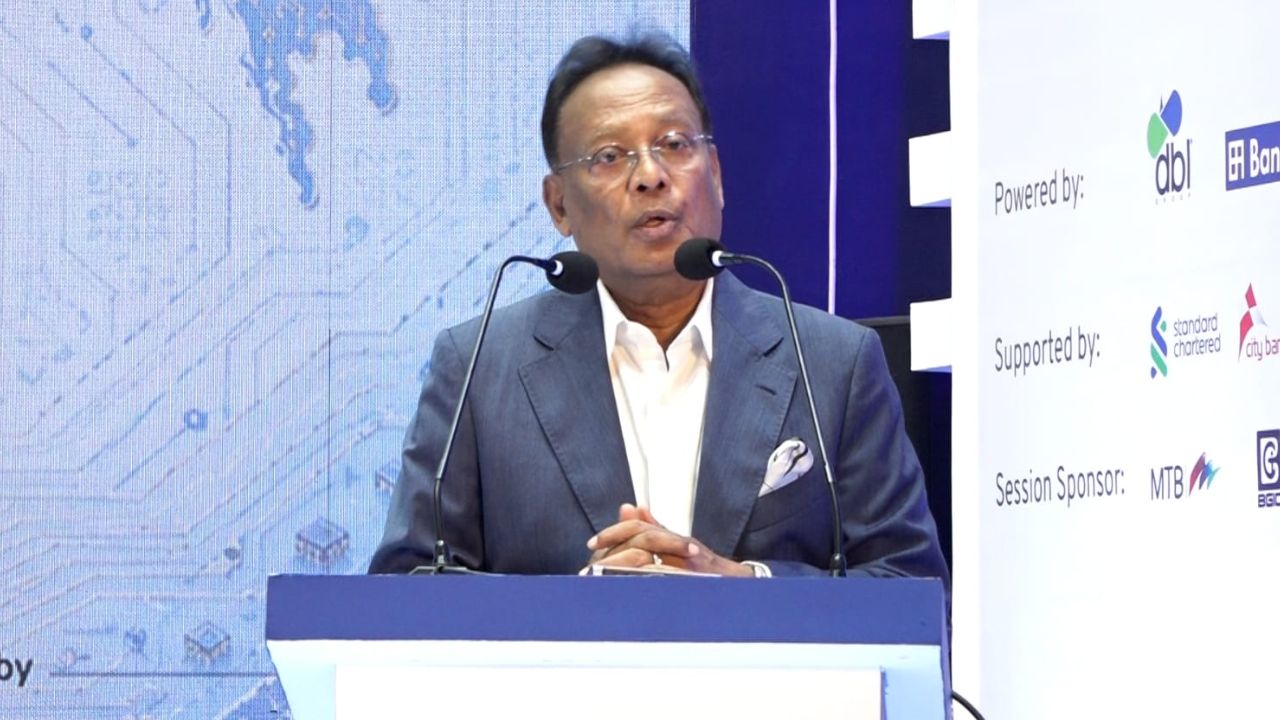
Election Commissioner Brigadier General (retd) Abul Fazal Md Sanaullah shared the details with journalists on Monday following a commission meeting at the Election Building in Agargaon, Dhaka.
Sanaullah stated that the commission intends to hold talks with political parties ahead of the UP elections, aiming to conclude the dialogue before 10 December.
The discussions will focus on ensuring that the local government polls are conducted in a free and fair manner.
Asked whether the possible return of Sheikh Hasina from India in December could affect law and order or the political climate during the elections, Sanaullah said he did not believe it would have any impact.

On the contrary, he noted, local government polls could in some cases help improve the law and order situation.
Regarding proposed amendments to electoral laws, Sanaullah was asked whether the upcoming polls would be held under existing legislation despite the commission’s recommendations for reform.
He clarified that the elections would be conducted in accordance with whichever law is in force on the day the election schedule is announced.
Responding to another query, Sanaullah noted that the commission had not received any demand for army deployment during the local government elections.


Whilst army deployment had previously been discussed in connection with the national election, the commission had yet to hold talks with any political party regarding military deployment for the local polls.
He assured that necessary measures would be taken to maintain an acceptable law and order situation and ensure the smooth conduct of voting.
The commission will assess the availability and effectiveness of law enforcement agencies, evaluating whether relevant forces can effectively discharge their duties in specific areas, before finalising security arrangements.
Software glitches affect smartcard printing
The commission meeting also addressed ongoing technical issues affecting National Identity Card (NID) services and smartcard printing.
Sanaullah confirmed that software-related glitches had disrupted smartcard printing over the past four to five days, though he maintained that no NID services had been suspended as a result.
He stressed that neither standard NID nor smartcard printing had been completely halted.
Technicians are currently identifying the root cause of the software issue, and efforts are under way to resolve it, he said, expressing hope that normal operations would resume shortly.
In the meantime, Sanaullah noted, citizens whose NIDs have been approved can download and print their cards from the official website, laminate them, and use them as valid identification.
Unresolved contracts and audit objections
The meeting also examined the failure to renew contracts linked to NID services alongside unresolved audit objections from previous years.

Sanaullah acknowledged that the relevant contract had lapsed without renewal whilst an audit objection remained pending, meaning some operations were currently being carried out without a formal contract.
Calling it an effort to resolve legacy issues dating back to 1 July 2017, he pledged that all future commission activities would be conducted strictly under formal agreements.
He emphasised that NID services could not be suspended, as they constitute an essential national service.
Asked about Tk 23 crore in outstanding payments owed to the Bangladesh Machine Tools Factory (BMTF), Sanaullah explained that the previous commission had withheld the funds on specific grounds.
The current commission would not abruptly overturn that decision without first reviewing the matter in full and understanding the reasons behind the freeze.
To address ongoing service bottlenecks, the Election Commission will organise a workshop on Wednesday to review all aspects of NID delivery.
The session will focus on simplifying procedures, making services more user-friendly, and resolving difficulties faced by both applicants and officials.
Sanaullah noted that journalists would also participate, with 12 members of the Reporters Forum for Election and Democracy (RFED) expected to attend.