


Two Chinese contractors have sought a combined Tk1,158 crore in compensation from the Bangladesh government following its decision to cancel the Dhaka Bus Rapid Transit (BRT) project, triggering an international legal dispute over losses, additional costs and prolonged implementation delays.
China Gezhouba Group Company Limited (CGGC) has filed a complaint against the Roads and Highways Department (RHD) at the Singapore International Arbitration Centre, with hearings expected to begin soon.
Jiangsu Provincial Transportation Engineering Group Co. Ltd (JTEG) has submitted a separate claim against the Bangladesh Bridge Authority.
CGGC is seeking Tk758 crore, while JTEG has demanded approximately Tk400 crore.
Road Transport and Highways Division officials said the government considered the contractors’ claims unreasonable and appointed lawyers to contest them.
Bridge Division officials said JTEG had outstanding bills of approximately Tk24 crore, which could not be settled after the project period ended in December 2024.

The company subsequently raised additional claims at various stages, increasing its compensation demand to approximately Tk400 crore.
RHD Chief Engineer Mohammad Muniruzzaman said contractual disputes with contractors were not unusual in international infrastructure projects.
He said contractors often submitted claims based on their own interpretations, even when the contracts did not explicitly provide for them.
“However, any claims proven to be justified under the contracts would be paid.”




The Cabinet decided on 18 October to cancel the BRT corridor between Gazipur and Dhaka Airport, following recommendations from an expert committee formed under the Department of Civil Engineering at Bangladesh University of Engineering and Technology (BUET).
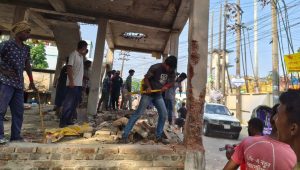
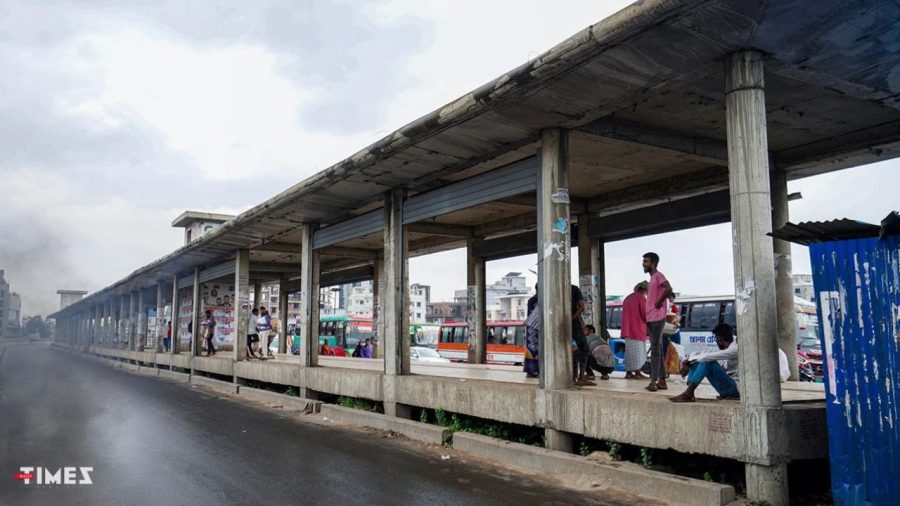
Under the decision, the existing two-lane dedicated bus corridor and associated infrastructure will be removed, and the entire 20-kilometre route will be converted into a six-lane highway.
Warning that removing the existing structures would involve substantial additional expenditure, General Secretary of the Bangladesh Institute of Planners, Mosleh Uddin Hasan said, “Demolition does not simply mean removing infrastructure; it also involves removal costs, construction waste management and the subsequent cost of reconstructing the entire road.”
According to Road Transport and Highways Division estimates, removing the structures and converting the corridor into a six-lane highway will cost approximately Tk78 crore.
Hasan said the Cabinet relied on the views of one group of BUET experts, although others at the university supported retaining the dedicated bus corridor.
He warned that demolishing the existing infrastructure and converting the corridor into a highway could create further implementation complications and additional costs.
Government sources said the BRT would become the country’s first foreign-assisted project to be cancelled at the final stage of implementation, potentially creating financial and procedural complications in terminating loan agreements with the Asian Development Bank and Agence Française de Développement.

Economic Relations Division officials said the lenders had been informed of the government’s decision, but the formal process of cancelling the loan agreements had yet to begin.
Road Transport and Highways Division Secretary Ziaul Hoque states, “The ongoing arbitration proceedings in Singapore and the associated legal costs will not create a significant additional financial burden for the government.”
He maintained that the money already spent would not be entirely wasted, as the public was using infrastructure built under the project, including flyovers and widened roads.
These facilities would generate economic benefits in the long term, he added.
Work on the BRT project began in 2012 with an estimated budget of Tk2,810 crore with the cost rising to Tk4,286 crore under a revised development Project Proposal.
By the time the cancellation decision was taken, 65.6 per cent of the revised budget had been spent, while approximately 97 per cent of construction work completed.
Project estimates show that completing the procurement of modern buses, operational infrastructure and other remaining work would have pushed the total project cost to Tk6,597 crore.