While the global nanotechnology market prepares to surge past $398 billion on the premise that the smallest particles drive the biggest economies, Bangladesh’s own atomic and materials science ambitions have ground to a political and bureaucratic halt.
The stalling of a planned Tk380-crore national research institute in Savar leaves Bangladesh’s brightest young scientific minds with the bleak choice of either switching fields or leaving the country.
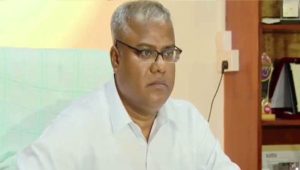
“The project has not been cancelled, but it is currently under review,” said Mohammed Nazrul Islam Khan, project director and chief scientific officer of the Bangladesh Atomic Energy Commission (BAEC).
The deposed Awami League government had planned to establish the Institute of Nanotechnology in 2023 and assigned the BAEC to implement the project under the Ministry of Science and Technology.
The project director noted that while initial activities at the Savar campus have been halted due to budget reviews and debates over its necessity, a review petition has been filed. “We are just waiting to see what decision the ministry will take.”
The delay threatens to derail Bangladesh’s long-term national strategies.
The Perspective Plan 2021–2041, the Smart Bangladesh ICT Master Plan 2041, and the National Adaptation Plan all explicitly identify nanotechnology—specifically nanofertilisers and nano-based garments—as vital drivers for the Fourth Industrial Revolution.

The power of nanoscale
Nanotechnology involves manipulating matter at an atomic and molecular scale. To put this in perspective, a nanometre is one-billionth of a metre. The field uses particles thousands of times smaller than the diameter of a human hair, focusing specifically on materials sized between 1 and 100 nanometres.
At this scale, a material’s properties can change drastically, significantly enhancing efficiency and allowing greater results using fewer resources.
Today, applications span almost every sector. Notable examples include targeted drug delivery in cancer treatment, antibacterial fabrics in clothing, nanofertilisers in agriculture, highly efficient solar cells, and advanced nanofilters for water purification.
Sheikh Manjura Hoque, head of the Materials Science Division at the Atomic Energy Centre, noted, “The mobile phones we use today have reached almost everyone, from rickshaw pullers to vegetable vendors. Without nanotechnology, this technology would not have become so small, effective, and affordable.”
Similarly, Md Abdullah Zubair, head of the Nanomaterials and Ceramic Engineering Department at BUET, emphasised that Bangladesh’s greatest potential lies in the agricultural, pharmaceutical, and energy sectors.



Manjura echoed this sentiment, adding, “It is difficult to imagine major technological advancements without nanotechnology at present.”
Global investment and research
A look at the global market illustrates massive international investment in the field. In 2025, the global nanotechnology market stood at $105 billion, projected to exceed $398 billion by 2034. Research is equally competitive: in 2024, China alone accounted for 46 per cent of the world’s nanotechnology publications, followed by India. In terms of patents, the US and China lead, filing more than 173,000 and 166,000 patents, respectively.
This success is backed by long-term state support; China has run a national nanotechnology programme since 2006, while India launched its Nano Mission in 2007 with hundreds of crores of rupees invested. Consequently, the Asia-Pacific region is advancing at the fastest pace in this sector.
Despite this global momentum, Bangladesh’s response remains largely on paper. While national plans recognise the importance of the field, the Perspective Plan 2021–2041 identifies nano-based materials as a core pillar of the Fourth Industrial Revolution, the Smart Bangladesh ICT Master Plan 2041 targets nano-driven innovation in the garment industry, and the National Adaptation Plan highlights nanofertilisers. Yet, the critical institutional foundation required to meet these targets has yet to be built.
Project stalls at Savar campus
Nazrul Islam Khan explained that the project has faced prolonged delays due to various complications. At times, suggestions were made to slash the budget; at others, questions were raised about the project’s necessity. While some initial activities had commenced at the Savar campus, they have now been completely halted.
Consequently, it remains undecided whether the project will proceed as a full-fledged campus according to the original plan or be restructured entirely.
“The government is aware of the importance of nanotechnology,” Nazrul said. “We are just waiting to see what decision the ministry takes.”
The fragile state of nanotechnology research in Bangladesh is starkly evident at Dhaka University’s Nanotechnology Centre. The current director, Farida Begum, revealed that it operates on a meagre annual budget of only about Tk10 lakh ($8,000–$9,000), covering all administrative expenses, basic activities, and research grants.
Furthermore, Farida added, the centre lacks a fully equipped laboratory, critical research infrastructure, and advanced equipment. “First, some basic infrastructure needs to be built,” she emphasised. “Only then can we gradually expand our research facilities.”
Md Abu Bin Hasan Susan, former director of the centre, pointed out that the country’s greatest limitation is not researcher quality but lack of infrastructure. “Sophisticated instruments, like transmission electron microscopes (TEM), are absolutely vital for nanomaterial analysis,” he explained. “Yet large-scale infrastructure has not been developed at the national level.”
According to Susan, a centralised national facility would allow universities and independent researchers across the country to pool and utilise resources effectively. He found the stalling of the Savar project “deeply surprising.”
The Savar campus already hosts several major institutions, including the Institute of Atomic Science and Technology, the Institute of Food and Radiation Biology, the Institute of Computer Science, the Institute of Electronics, and the Institute of Radiation and Polymer Technology.
Integrating the proposed Institute of Nanotechnology into this ecosystem would transform Savar into the most powerful, consolidated science and research hub in the country, Nazrul said.
Meanwhile, Md Abdullah Zubair raised a pressing concern regarding human capital. As head of the Nanomaterials and Ceramic Engineering Department at BUET, he oversees pioneering batches of students enrolled in 2022 and 2023. Now in their third year, these students face an uncertain future.
Zubair warned, “If there is no strong research institute in the country, our most talented students will go abroad. It will be incredibly difficult to stop this brain drain.”
He sharply criticised the country’s technological dependency. “We import countless advanced products yet ignore the nanotechnology embedded within them. We remain mere end-users. If we cannot develop a highly trained domestic workforce, we cannot convince policymakers that this technology can be manufactured in Bangladesh. We use it, but we do not own it.”
Financial priorities also paint a stark picture. In the last fiscal year, the government cancelled 29 projects on which Tk6,755 crore had already been spent. While stalling the Nanotechnology Institute has not caused a direct financial loss of that scale, it has caused Bangladesh to fall drastically behind its neighbours.
Manjura emphasised that funding for research and technology must be viewed as a strategic investment in future capability, not a sunk cost. “Nanotechnology will inevitably shape the future of our industry, agriculture, healthcare, and tech sectors,” she said.
Nazrul noted that a review petition has been filed and they are awaiting the government’s decision. However, in the current bureaucratic landscape, how long that wait will last remains entirely uncertain.