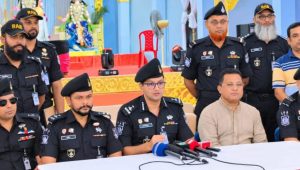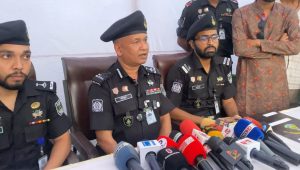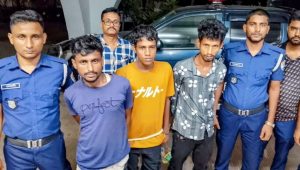
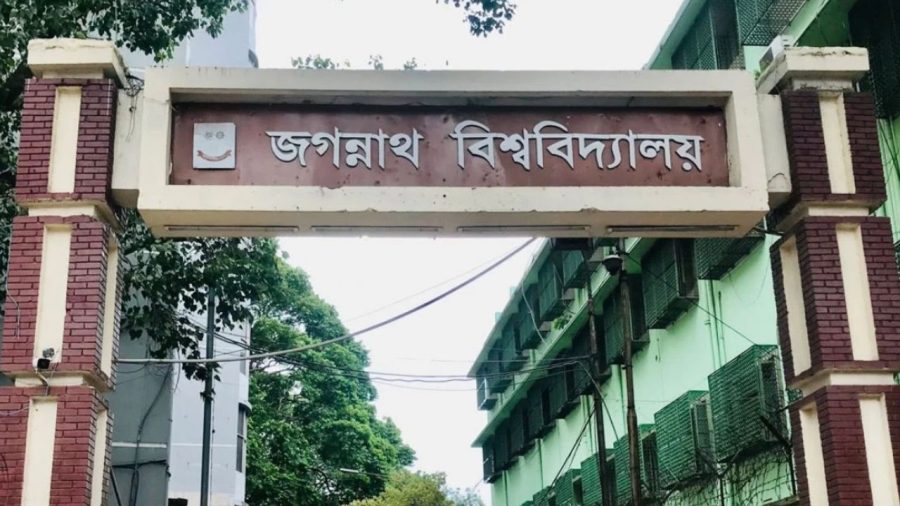



The public slaughter of a cow on the campus of Jagannath University has ignited fierce controversy and raised serious legal questions after students proceeded with the ritual in direct defiance of an administrative ban, allegedly backed by verbal permission from the university proctor.
The incident unfolded on Friday morning when a group of students slaughtered a cow on the roadway between the vice-chancellor’s office and the Mathematics Department.
Blood and visceral remains were subsequently dumped into a nearby drainage system, posing potential environmental and public health hazards.
The tense episode traces back to 12 October, when students from the 2021-22 session of the Department of Islamic History and Culture planned a beef feast near the university’s open stage to celebrate completing their undergraduate studies.

With the institution’s central temple located nearby, Hindu students raised strong objections, alongside allegations that temple bricks had been repurposed for cooking.
In an effort to defuse mounting communal tensions, the university administration issued a formal notice on 14 October prohibiting animal slaughter anywhere on campus on grounds of hygiene and public health, warning of strict legal consequences.




Defying the directive, a faction of students announced a counter-demonstration, parading a live cow through the campus on the evening of 15 October before carrying out the slaughter the following morning.
Under the Animal Slaughter and Meat Quality Control Act, 2011, animals cannot legally be slaughtered outside designated facilities unless specific statutory exemptions apply, such as during Eid or other religious festival or government-declared festivals, and even then, strict environmental and sanitary conditions must be satisfied.
Furthermore, university authorities hold no legal competence to grant exemptions; such permission requires formal authorisation from the Department of Livestock Services following veterinary inspection.
Violations carry penalties of up to one year’s imprisonment, a fine ranging from Tk5,000 to Tk25,000, or both.
Despite these provisions, University Proctor Azam Khan defended the administration’s handling of the situation, admitting that verbal permission had been granted after students reacted negatively to the initial ban and framed it as an interference in religious matters. When informed of the statutory penalties and the administration’s lack of legal jurisdiction to authorise the slaughter, the proctor declined to comment.
Meanwhile, Mostafizur Rahman, social welfare secretary of the university’s central students’ union and one of the event’s organisers, claimed ignorance of any laws restricting cow slaughter in Bangladesh, maintaining that the animal had been purchased from a government-approved market and carried official clearance.
However, Ivan Tahsib, president of the university unit of the Socialist Students’ Front, condemned the breakdown of governance, arguing that verbal permission from university officials does not override statutory law.
He warned that the event had severely damaged the university’s reputation and threatened communal harmony, demanding that all individuals responsible be held accountable under the law.