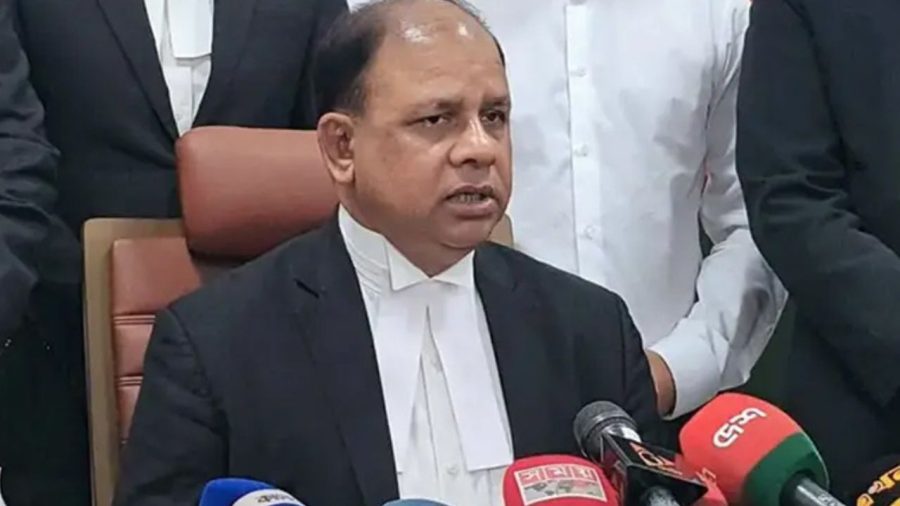



Bangladesh government cannot issue a passport or travel pass to Sheikh Hasina, a convicted and absconding accused in cases of genocide and crimes against humanity, as doing so would amount to the state making a mockery of the judicial process, said Chief Prosecutor Md Aminul Islam.
Speaking on the premises of International Crimes Tribunal on Tuesday, he said, “Under the provisions of the Passport Order, 1973, there is no legal opportunity to obtain a passport for an individual who has been convicted and is absconding to evade judicial proceedings.
“Hasina did not face the judicial process of the International Crimes Tribunal and did not appeal after the verdict was announced. Under the International Crimes Tribunal Act, 1973, an appeal must be submitted within 30 days of the verdict announcement; because she did not appeal within that period, she no longer holds any legal right to appeal.”
Bar under passport order
Citing Articles 6 and 7 of the Passport Order, 1973, the chief prosecutor explained that a passport cannot be issued to anyone sentenced to at least two years of imprisonment within five years prior to applying.

He added that Article 7 provides for the impounding or cancellation of passports belonging to persons convicted of offences involving moral turpitude.
In his view, crimes against humanity fall under offences involving moral turpitude, and considering these provisions together, there is no legal basis to issue a passport to Sheikh Hasina.




Article 36 and right of movement
Addressing discussions regarding her right to return to Bangladesh, Aminul noted that while Constitution Article 36 guarantees citizens the right to movement, leaving the country, and entering the country, this right does not apply in the same manner to a convicted and absconding person.
Hasina was absconding even prior to her conviction, and although an arrest warrant was issued, newspaper notices were published, and other legal steps were taken to bring her back, she did not return to face the cases.
He added that evading court proceedings or being an absconder is also relevant under passport law for withholding a passport, rendering any demand for her passport under Article 36 misleading.
Highlighting the historical context of the Passport Order, 1973, he said it was enacted in 1973 after independence by the government led by Sheikh Mujib. In the same year, Article 47 of the Constitution was amended to provide constitutional protection to the International Crimes Tribunal Act.
Under that article, any person accused in a crimes against humanity case is prohibited from voting or standing as a candidate in any election, while the opportunity to move the High Court under Article 102 against tribunal orders has also been barred.

Application by foreign law firm
The chief prosecutor also raised questions regarding reports that London-based law firm Matrix Chambers applied for a passport on her behalf at the Bangladesh High Commission in India.
He noted that a passport application must be submitted by the individual concerned, whereas in this case the application was made by a so-called London-based law firm whose alleged client is residing in India.
He pointed out that the legal agreement between Sheikh Hasina and that firm has not been clarified, questioning how any organisation could apply for a passport on her behalf without a clear legal agreement.