


Bangladesh on Tuesday marked the 54th anniversary of Victory Day with formal state ceremonies, military displays, and tributes to those who sacrificed their lives during the 1971 Liberation War. While official events drew crowds, much of Dhaka presented a quieter picture, with lighter traffic, fewer visible street celebrations, and many residents observing the day indoors.
In the days leading up to the anniversary, major roads, intersections, and government buildings across the capital were illuminated in red and green, reflecting the colours of the national flag. From Monday evening, landmarks such as the High Court, Curzon Hall, Motijheel’s Shapla Chattar, Bangladesh Bank, and the National Board of Revenue were lit up in tribute to the Liberation War, reinforcing national pride.
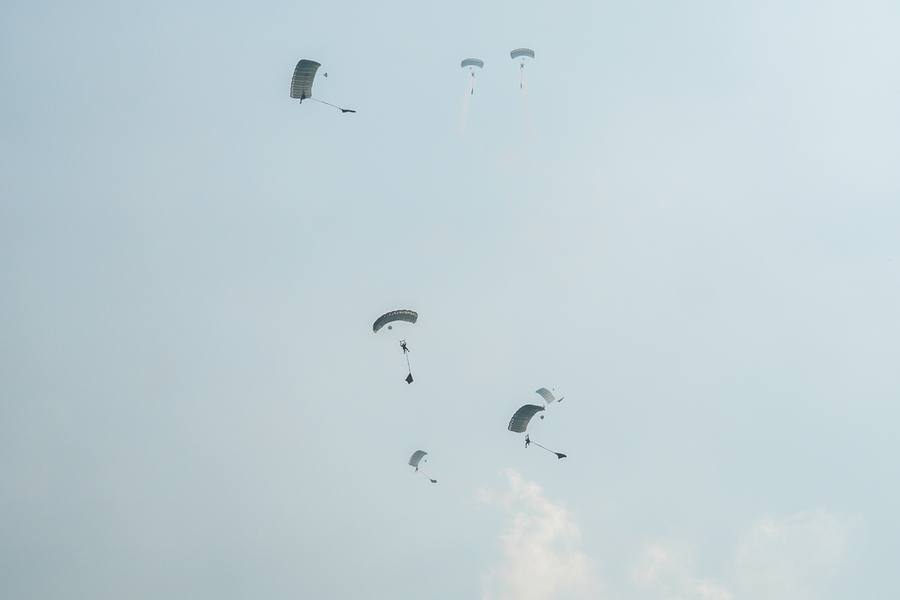
The main state ceremony took place at the National Parade Ground near Suhrawardy Udyan, attended by Chief Adviser Muhammad Yunus, senior military officials, and diplomats. Fifty-four paratroopers descended with the national flag, symbolising the 54 years since Bangladesh’s victory. Later, the Armed Forces staged a separate programme at the Tejgaon old airport parade ground, featuring a coordinated parachute jump by 54 paratroopers, known as “Team Bangladesh.” A flypast by fighter jets and helicopters drew applause from spectators who had queued since early morning.
“Being here on Victory Day makes the meaning of independence feel more real,” said Tariqul Mahid, a second-year political science student from Mirpur Bangla College.

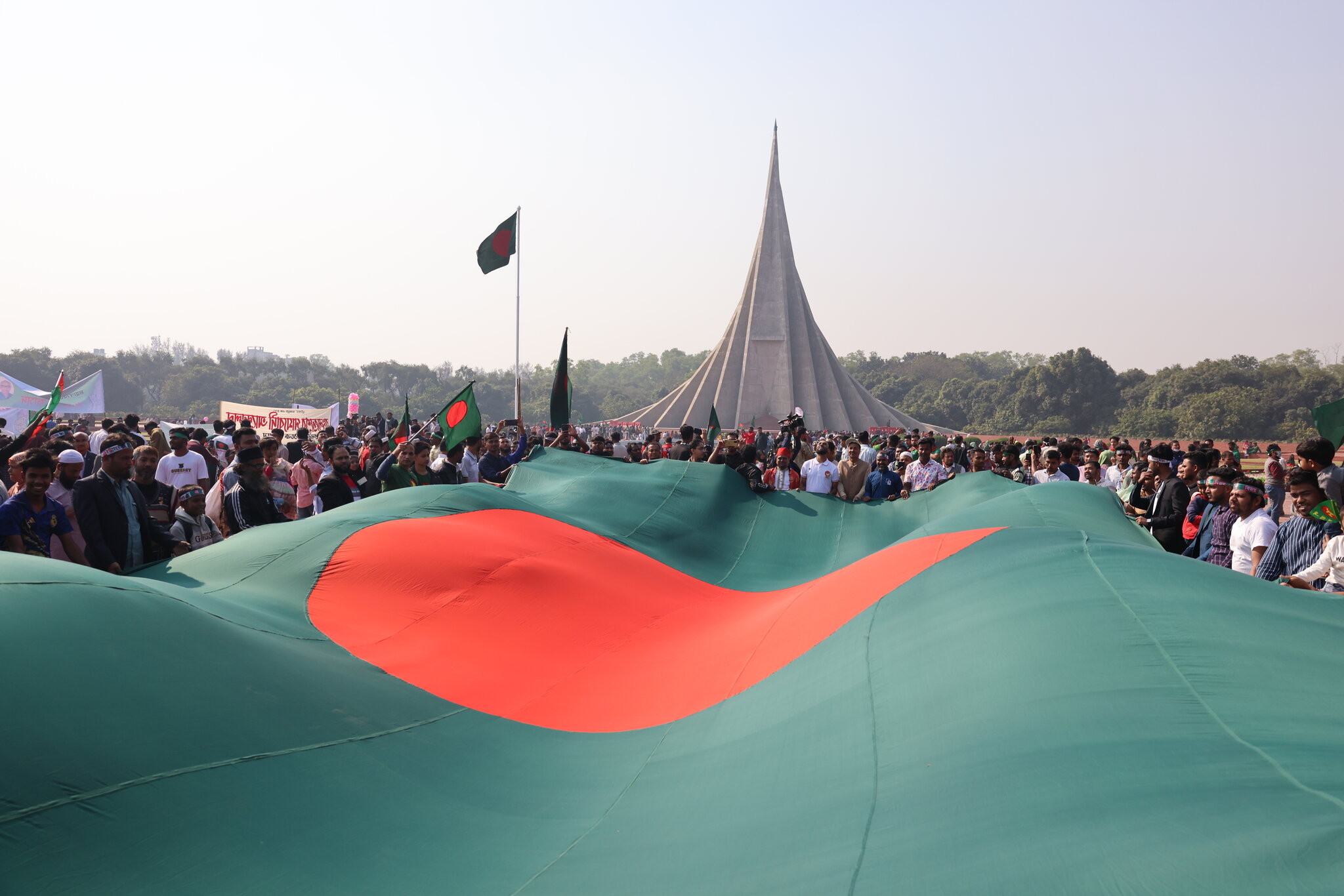
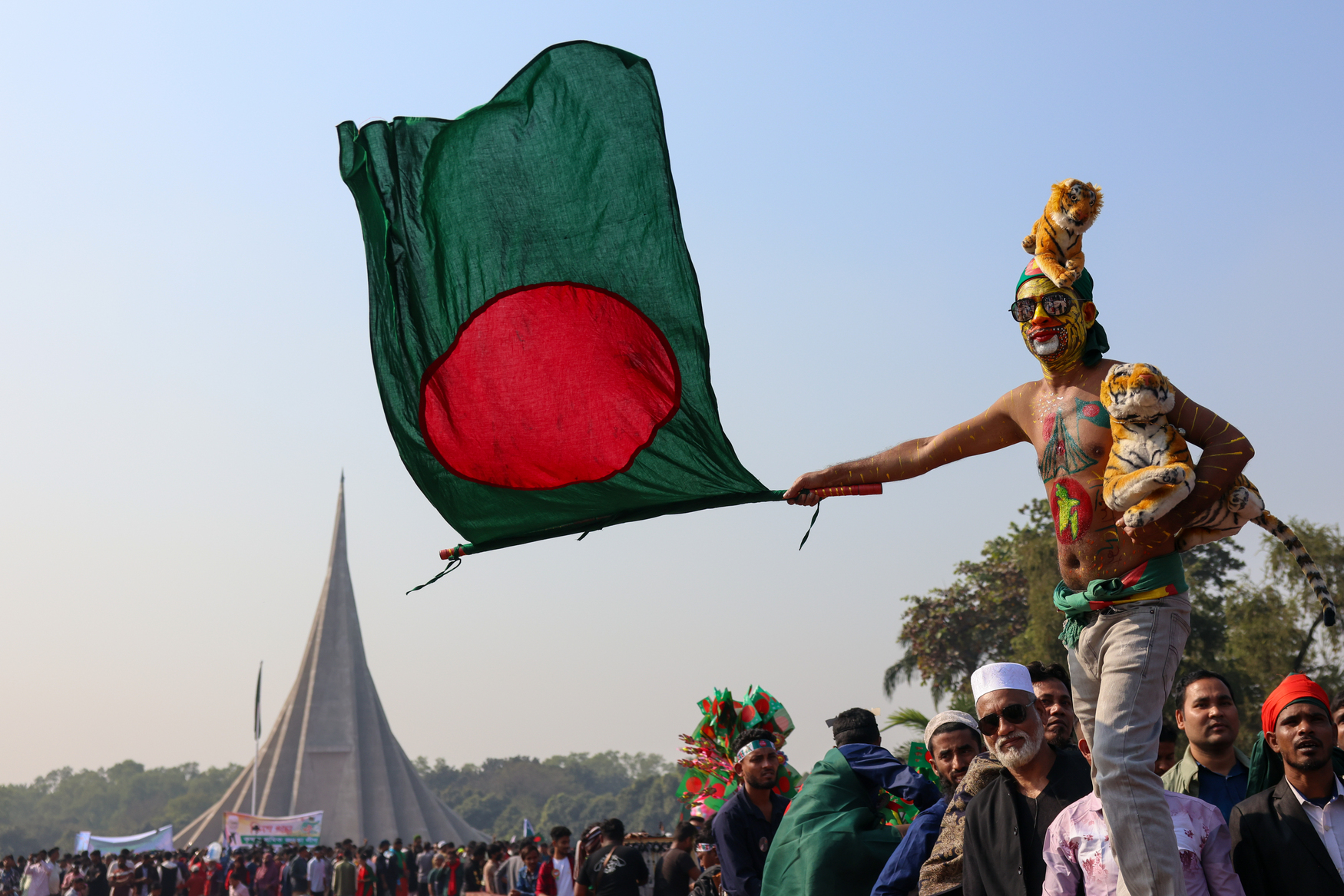
At dawn, thousands gathered at the National Martyrs’ Memorial in Savar, where the president laid the first wreath, followed by Chief Adviser Yunus and other dignitaries. Families, students, freedom fighters, and political activists continued to arrive throughout the morning, carrying flowers and national flags.


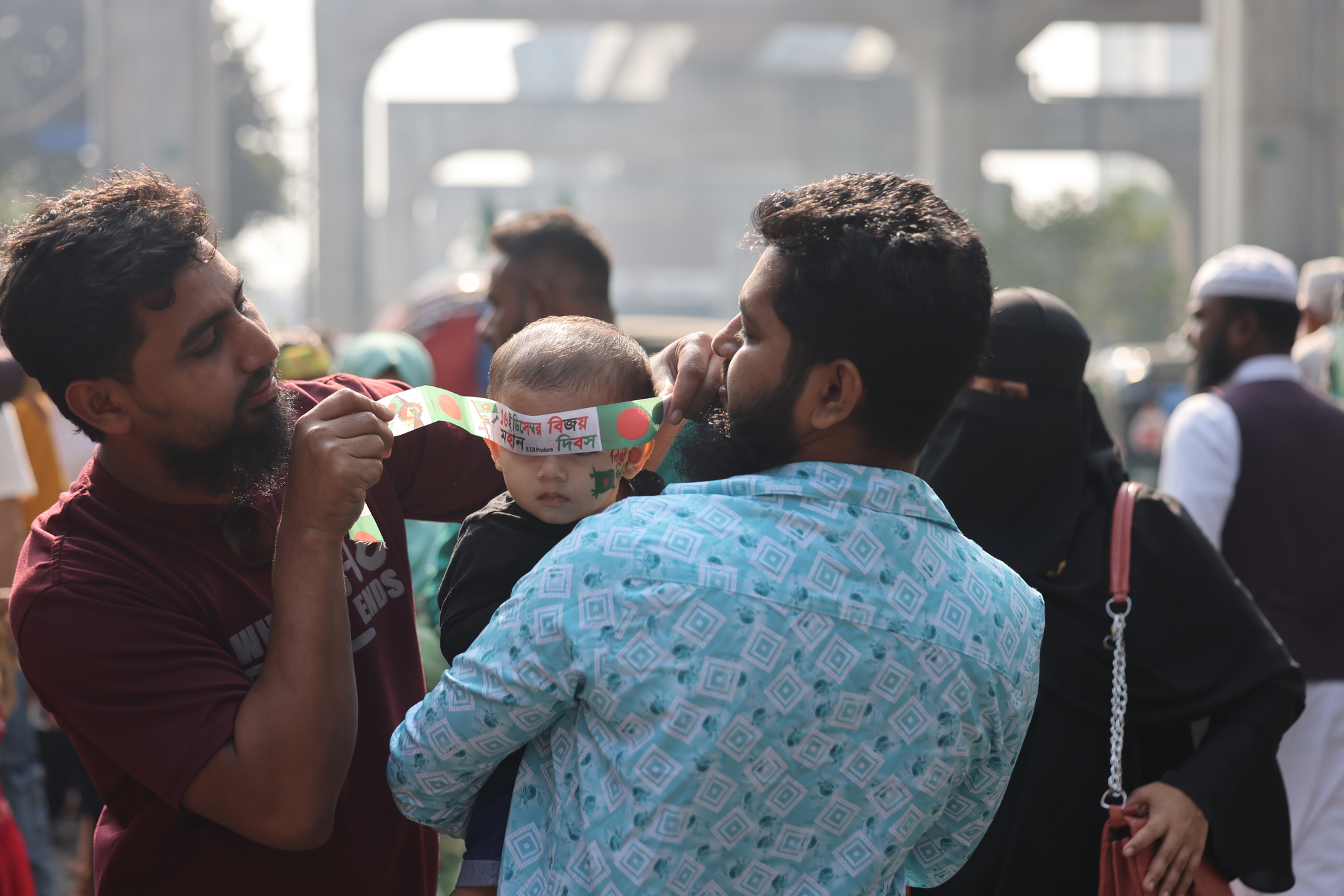
Children dressed in red and green were seen on their parents’ shoulders, while political parties including the BNP and NCP also laid wreaths at the memorial.
Dhaka University observed the day with a series of programmes, including the hoisting of the national flag, a procession to the Martyrs’ Memorial led by Vice-Chancellor Professor Niaz Ahmed Khan, and special prayers at mosques and other places of worship.
Cultural events, exhibitions, and film screenings on the Liberation War were held across halls and academic buildings, with campus landmarks illuminated in the evening.
Alongside celebrations, a group of students staged a protest by throwing shoes at a photograph of Ghulam Azam, an Islamist leader accused of opposing independence in 1971. Chanting slogans against “anti-Liberation War forces,” the students emphasised that Victory Day was a time for both commemoration and reaffirming opposition to those who resisted independence. “Victory Day continues through conversations at home, not just events on the streets,” a local schoolteacher observed.
While sites like Suhrawardy Udyan drew crowds in the afternoon and evening for concerts and cultural events, much of the city remained unusually calm. Several large shopping centres, including New Market, Bashundhara City, Eastern Plaza, and Chandni Chawk, were closed, and traffic on many roads was significantly lighter.
“The roads are very empty today. We can move swiftly without congestion,” said Abdul Karim, a private car driver. A local shopkeeper noted, “The streets are calm, but most families are observing the day inside their homes.” Farzana Akter, a Mirpur resident, added, “Relatives came over, but everything is happening inside the house. People are not really out on the streets.”
Many residents also remarked on the reduced display of national flags on vehicles. “In previous years, flags were visible on almost every car or motorcycle,” said office worker Sajid Ahmed. “This year, that is not very visible.”
Despite the quieter streets, the spirit of Victory Day remained intact. “Many people chose to stay home, rest, or attend family gatherings indoors. That is also a form of remembrance,” said another Mirpur resident. A university student added, “We may observe Victory Day differently now, but we still carry the stories of 1971 with us. Our parents and grandparents taught us what this day means. That cannot be undone.”
Apart from a handful of small processions, large-scale political rallies were largely absent. This year’s observance reflected a blend of official ceremony, youth-led celebration, and private commemoration, highlighting how the capital balances formal remembrance with quieter, personal reflection on one of the nation’s defining moments.