



Bangladesh’s paper and paper products industry, once a strong example of import substitution, is facing a deepening crisis marked by idle machines, factory closures and weakening export competitiveness.
Industry leaders say rising energy costs, policy reversals, financial stress and unfair import competition have pushed the sector into survival mode, despite production capacity far exceeding domestic demand.
Of 128 registered paper mills, 106 entered production at some point, but only 42 are currently operational, with capacity utilisation rarely sufficient for financial viability.
Several more mills face closure unless domestic sales and exports recover.
After independence, paper production remained limited for decades, leaving Bangladesh almost entirely dependent on imports except for output from a few state-owned mills.
That began to change in the 1990s, with a decisive shift after 2009 as private-sector investment expanded rapidly.

Driven by large industrial groups, domestic manufacturing scaled up over the past decade, reducing import dependence and moving the sector close to self-sufficiency.
According to the Bangladesh Paper Mills Association (BPMA), installed annual capacity now stands at about 15–16 lakh metric tonnes, while domestic demand has risen to 9–10 lakh tonnes.
Domestic mills supply 60–70 per cent of national demand, up from 30–40 per cent in the 2000s, producing multiple grades of paper and tissue.
Bangladesh also gained competitiveness in specialised grades, exporting A4, writing, tissue and grease-resistant paper to India, Nepal and Bhutan, industry leaders said.



However, rapid capacity expansion dependent on imported raw materials has become a structural weakness as demand growth lagged.
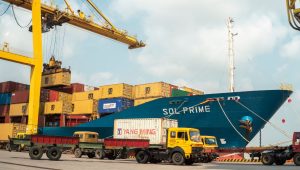
All pulp is imported, mainly from Indonesia, Scandinavian countries and Brazil, along with carbon dioxide, starch and other chemicals, making production vulnerable to foreign exchange shocks.
Foreign exchange shortages in 2022–23 disrupted raw material imports, forcing production cuts and shutdowns, industry insiders said.
Energy costs have added to the pressure, with gas and electricity prices nearly doubling over the past three years and irregular supply pushing mills towards costlier alternatives.
Export incentives were cut from 10 per cent to 6 per cent, while interest rates rose to 15–16 per cent from single digits, further squeezing margins.
Of four state-owned mills, three have shut down, while Karnaphuli Paper Mill continues operations under strain, largely dependent on government orders.
Industry insiders estimate nearly 80 mills are closed or close to closure, while operating factories rarely exceed 60 per cent capacity utilisation.
Demand has weakened as digitalisation reduces paper use in several segments, although white paper, A4 paper, packaging paper and tissue still dominate domestic consumption.
Industry leaders also cite regulatory constraints, noting that local mills are not permitted to produce newsprint, which remains fully imported.
Domestic producers further allege unfair competition from misuse of bonded warehouse facilities, allowing duty-free imports to enter the local market.
Export Promotion Bureau data show paper exports rose from $26.33 million in FY2010–11 to $285.83 million in FY2024–25, but fell 8.58 per cent year on year in the first six months of the current fiscal year.
Political changes, visa restrictions and land transit disruptions through India have affected exports to India, Nepal and Bhutan, leaving only a handful of regular exporters.
BPMA estimates that Tk70,000 crore in investment is at risk, potentially affecting more than 300 ancillary industries and costing the government about Tk5,000 crore a year in revenue.
Industry leaders warn that further closures would again make Bangladesh heavily dependent on imported paper, though they say recovery remains possible if policy support improves.
Environmental restrictions in neighbouring countries have reduced their production capacity, creating potential export opportunities, they added.
The government’s declaration of paper and packaging as product of the year has raised expectations, with industry leaders saying effective support will determine whether the sector recovers or retreats.