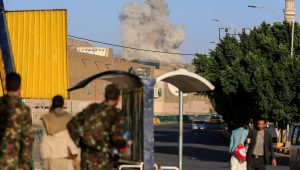
Pakistan’s Defence Minister Khawaja Asif has issued a threat of war against India regarding water security, an escalation of rhetoric that comes as his government faces severe domestic instability and an internal water crisis linked to gross mismanagement.
During an interview with ARY News on Saturday, Asif asserted that Islamabad would “definitely” engage in military conflict if it perceived a threat to its national security, of which water is a fundamental part, reports NDTV.
He further suggested that military action would be an option should Islamabad find evidence that New Delhi is acting at an “alarming speed” to interfere with water supplies.

These provocative statements follow India’s firm suspension of the 1960 Indus Waters Treaty, a move prompted by a Pakistan-sponsored terror attack in Pahalgam in April 2025 that resulted in 26 deaths.
New Delhi has maintained its stance that the treaty will not be restored until Pakistan takes credible and concrete measures to dismantle its cross-border terror networks. Although the World Bank-brokered treaty historically allows Pakistan to utilise 80 per cent of the Indus water basin for agriculture, the nation’s current inability to manage these resources has left its farming regions in a vulnerable state.



Asif attempted to shift the blame to New Delhi, accusing it of “weaponising water,” withholding data, and manipulating the flow of the Chenab River.
However, the minister’s credibility was questioned when he admitted to having no up-to-date information on developments from the last year, despite claiming that Pakistani teams had previously conducted roughly 115 inspections.
Meanwhile, the impact of internal mismanagement is evident as a severe water crisis now affects nearly one-third of the Pakistani population, particularly in Sindh and Balochistan.
Data from the Sindh irrigation department reveals a deteriorating infrastructure, with North West Canal facing a 64.1 per cent deficit, while Rice and Dadu Canals report shortages of 38 per cent and 82 per cent respectively.
As water levels at the vital Sukkur Barrage continue to fall, local leaders are warning of an “economic massacre” driven by the government’s failure to settle internal water distribution disputes.