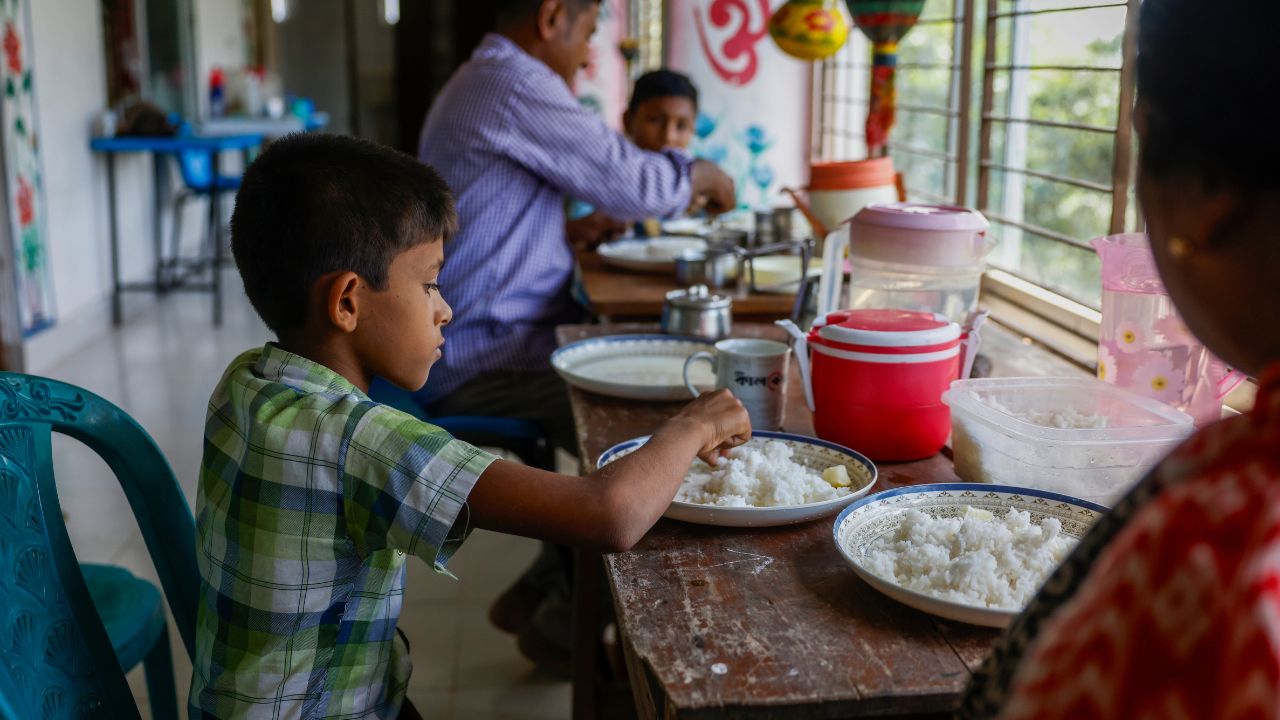



At Uttar Gunari Karuna Kanta Government Primary School and Cyclone Shelter, third-grader Rik Sardar had nothing to eat when the tiffin bell rang one recent day. He watched classmates open tiffin boxes containing food prepared at home.
Rik had walked several kilometres to school and had been unable to bring food because his family was late preparing the morning meal. Seeing him sitting without food, teachers called him to their table and served him hot rice and radish greens.
The school used to provide biscuits under a government and Unicef-supported school feeding programme, but that programme has ended. The replacement midday meal programme has yet to reach the school.
Children in all 113 government primary schools in Dacope upazila of Khulna are being left without school meals after the previous biscuit-based feeding programme ended and the upazila was excluded from the first phase of the government’s new national school feeding programme.
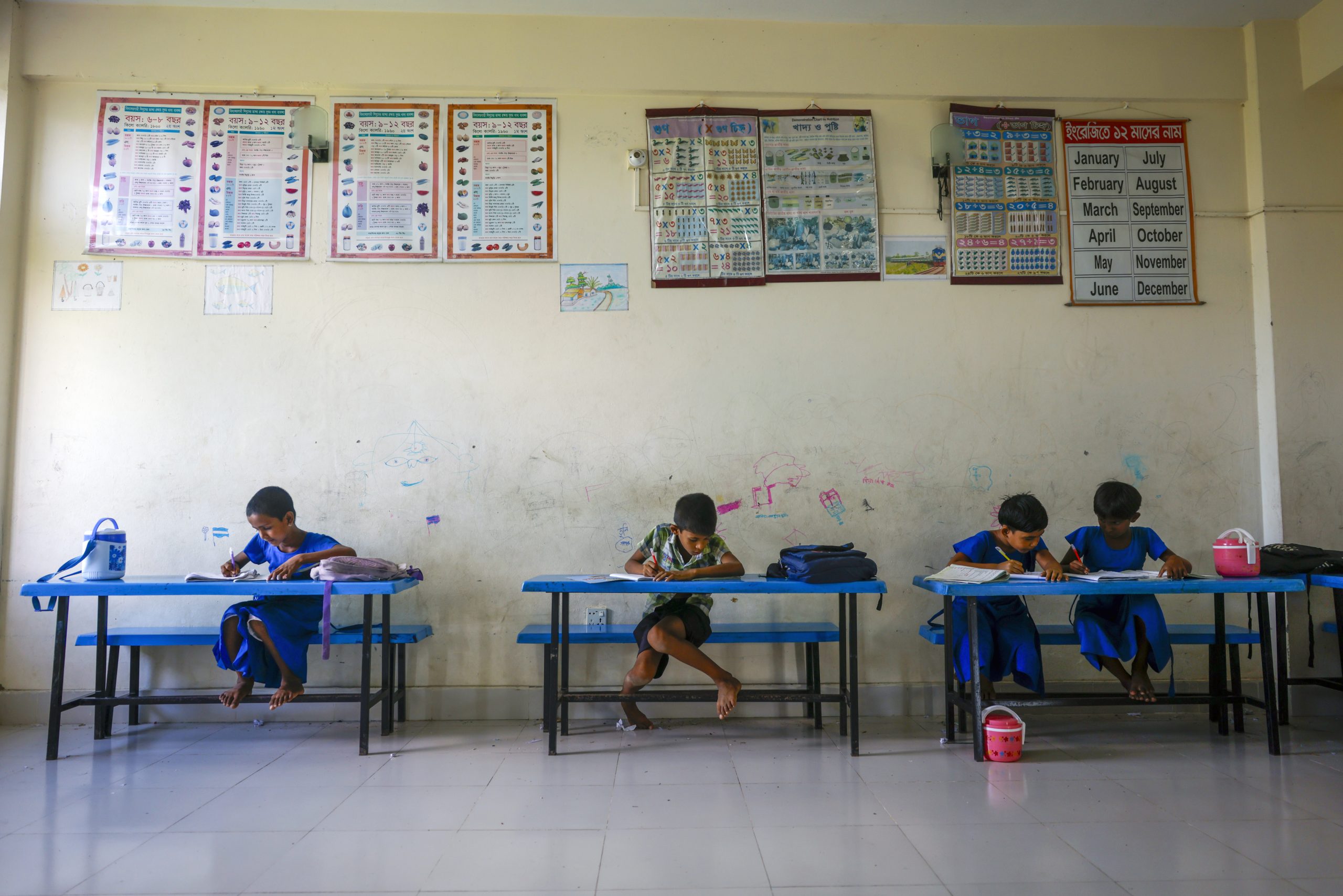
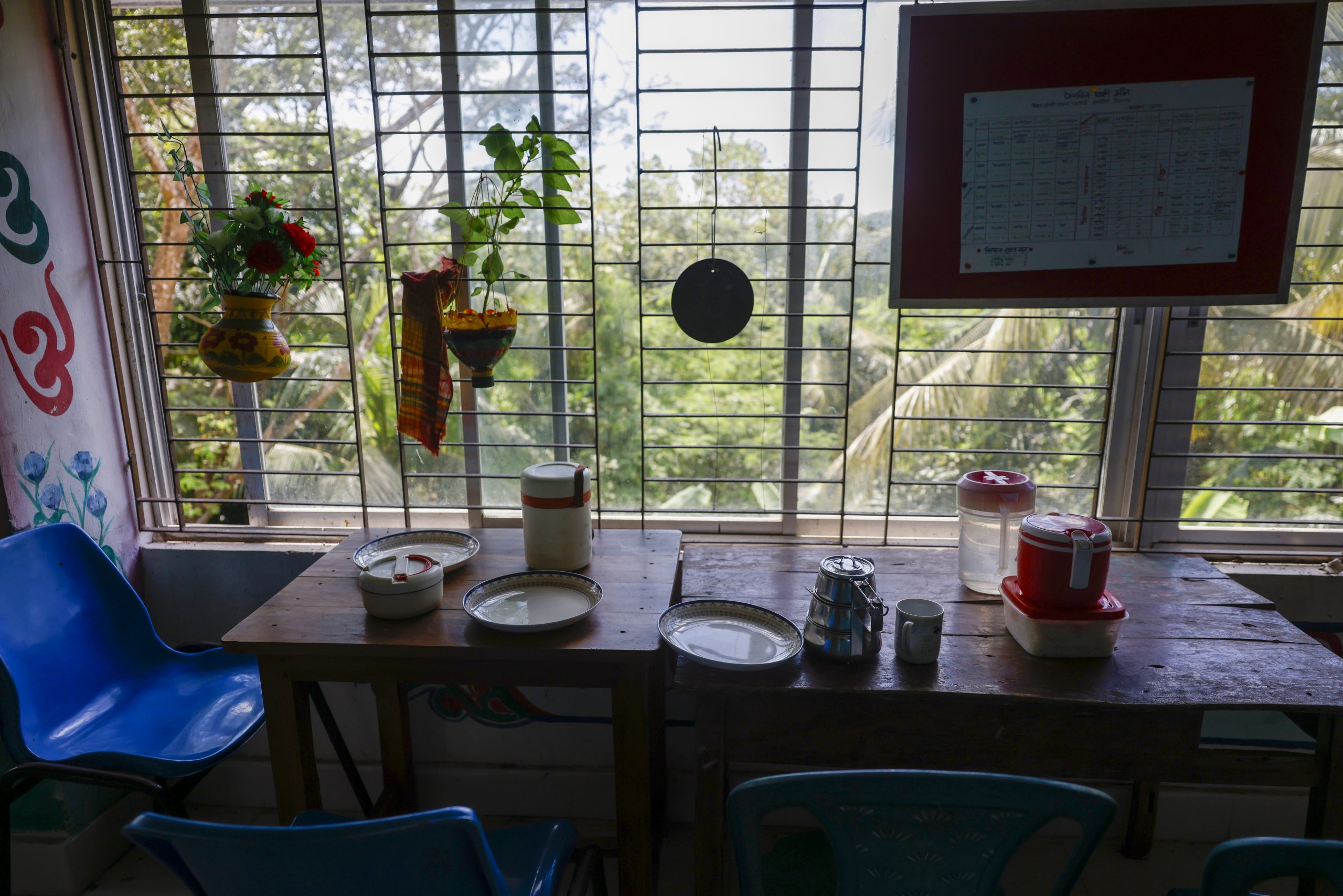
The gap has left children from poorer families without any regular food support during the four to four-and-a-half hours they spend at school, with teachers and parents saying many children cannot afford to bring food from home.
“Students are encouraged to bring food from home, but not all families in the village are equally well-off. As a result, it is not possible for every student to bring food to school every day,” headteacher Sushanta Pal told TIMES of Bangladesh.

The school has 32 pupils in Classes Three to Five. About two years ago, the government provided funds for educational materials, part of which was used to give students tiffin boxes.
Dacope excluded from new programme
The situation is the same across Dacope, according to the local education authorities.
Islamul Haque Mithu, assistant education officer in Dacope, said no school in the upazila has been brought under the new midday meal programme.
“As a result, children in Dacope are waiting for the new midday meal programme while also losing the benefits of the old biscuit programme,” he told TIMES.



He said the authorities had been informed about the need to introduce the programme in Dacope, but no decision had been taken.
The government-funded National School Feeding Programme was initially scheduled to begin in July 2025, but its launch was delayed because the tender process was not completed on time. A revised plan was then made to begin the programme in September.
The first phase eventually began in 150 upazilas, covering 19,419 government primary schools. Dacope was not among them.
In Khulna division, Paikgachha is the only upazila included in the programme, according to the local education official.
The exclusion is particularly significant in Dacope, a coastal area where poverty is widespread and many families depend on irregular labour income. For such households, providing food for children to take to school every day can be difficult.
The biscuit-based school feeding programme, meanwhile, had provided a safety net for children in poorer communities. It was introduced in 2001 with assistance from the World Food Programme (WFP) and later operated in poverty-stricken areas from 2010 to 2022.
In 2018, the programme covered 234 schools in Dacope and neighbouring Batiaghata upazilas, providing children with 75-gram packets of packaged biscuits. The Directorate of Primary Education was the main government authority responsible for implementation, while NGO partner Shushilan worked at field level.
With the old programme discontinued and the new one yet to reach Dacope, families are now expected to provide school meals themselves.
Children struggle to learn when hungry
The consequences extend beyond children simply missing a meal.
Unicef’s “State of the World’s Children 2019” report says food provides children with the energy needed to maintain concentration and participate in school activities. Children who attend school hungry or do not receive adequate food can struggle to concentrate and complete tasks.
The report also links iron deficiency with poorer test performance and notes that anaemia can cause fatigue, making it harder for children to remain attentive in class.
The World Health Organization’s 2026 guidelines similarly identify schools as an important setting for improving children’s nutrition and addressing nutritional inequalities, noting that school meals can support healthy eating habits as well as learning and long-term health.
The government’s new school feeding programme is a major undertaking. Its estimated cost for three years is more than Tk5,452 crore, while expanding it nationwide in phases could cost around Tk12,000 crore.
On 4 June, the state minister for primary and mass education said the government planned to introduce midday meals in all government primary schools across the country by 2026.
For the children of Dacope, however, that promise has yet to translate into a meal at school.