Nepal’s first female chief justice Sushila Karki stepped out of retirement to lead the country as prime minister after deadly anti-corruption protests toppled the government, guiding the Himalayan nation through one of its most turbulent periods since the end of the civil war in 2006.
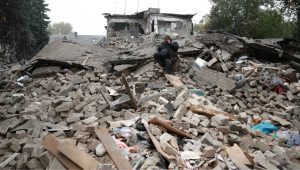
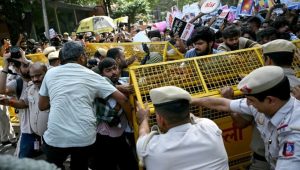
She took charge as interim leader at a time when the prime minister’s office, along with parliament and several government buildings, had been burnt during the September 2025 violence that left 77 people dead. Her name was proposed by a Gen Z protest movement through the online platform Discord, despite her repeated reluctance to take the role, reports AFP.
When I assumed this responsibility, I was filled with fear and uncertainty,” the 73-year-old said in a farewell broadcast. “But I came here with the confidence that I could light some lamp of hope at a time when the country was in crisis.”

She said she accepted the role at the request of the young generation to oversee elections and, on Thursday night, sought leave “with some satisfaction and a lot of hope”.
One of her first decisions was to form a commission to investigate the violence, which later recommended prosecuting her predecessor KP Sharma Oli, a four-time prime minister who was ousted.




Balendra Shah, 35, who becomes the new prime minister, praised her leadership in a social media post after voting on March 5, saying democracy had triumphed under her leadership. An editorial in The Kathmandu Post described her tenure as a “job well done”, citing the swift transition from street unrest to the ballot.
Born in 1952 in Biratnagar, Karki studied political science in India and law in Kathmandu before beginning her legal career in 1979, building a reputation as a fearless advocate.
Her tenure as chief justice from 2016 to 2017 challenged gender barriers and confronted political interference. In 2012, she was among two Supreme Court judges who jailed a serving minister for corruption, a first in Nepal.
In 2017, she faced an impeachment attempt after overturning the government’s choice for police chief, which the United Nations described as politically motivated. The move was blocked, and she stepped down upon retirement.
Nepal’s transition from a decade-long Maoist insurgency that ended in 2006 and the abolition of its 240-year monarchy in 2008 was marked by political instability and delayed justice for wartime abuses. During her time as chief justice, a court in 2017 sentenced three soldiers to 20 years in prison for the murder of a teenage girl, only the second war crimes conviction in the country.
Karki became Nepal’s first woman prime minister, though not its first female leader, as Bidya Devi Bhandari served as president from 2015 to 2023.