The government is facing a complex, multi-layered crisis as fuel shortages disrupt daily life, industrial output slows, agriculture comes under pressure and a rise in measles cases claims young lives, raising wider concerns about governance and stability.
Analysts say the government’s response so far has not matched the scale of the challenges, warning that swift and effective implementation of policies is now critical to prevent further deterioration.
Experts point to a combination of global and domestic factors behind the unfolding crisis.
They say the ongoing conflict in the Middle East has disrupted energy markets, exacerbating fuel and power shortages, while pre-existing economic vulnerabilities and tensions with the International Monetary Fund (IMF) over loan disbursements have compounded the situation.
In recent weeks, signs of stress have become visible across key sectors.
Although the fuel supply shortage has eased somewhat after the government raised fuel prices, the crisis is far from over, with the hike also pushing up transport fares and the cost of essential goods.
The Bangladesh Chamber of Industries has warned that export orders are being diverted to other countries due to the disruption in energy supply.
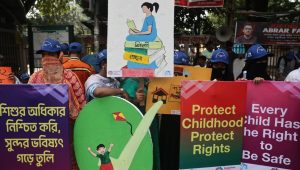
At the same time, a surge in measles infections has sparked alarm.
A series of child deaths linked to the disease has intensified public concern, with 11 children reported dead nationwide on Saturday alone, taking the overall toll to more than 250.
The outbreak has raised questions about the prioritisation of public health responses, even as the new government remains in its early months in office.
Political tensions are also adding to the strain.

Violence involving student groups aligned with both the government and opposition has increased on university campuses in recent days, fuelling fears of broader instability.
Opposition parties have stepped up street protests over the implementation of the “July Charter”, further heightening the risk of confrontation.
Concerns have also persisted over the continued use of “mob” attacks in political disputes.
Energy crisis demands holistic response
The government has moved to address the worsening energy crisis by forming a 36-member advisory committee to guide economic development, policy reforms and long-term planning.
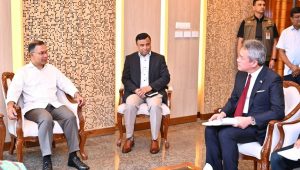
In parallel, Prime Minister Tarique Rahman has initiated efforts to set up a 10-member joint committee comprising members from both the government and opposition to coordinate responses to the crisis.
Speaking in parliament on Thursday, the prime minister said BNP was ready to engage in discussions on issues of national importance, including the energy shortage, to find solutions through dialogue.
Analysts have described the initiatives as a positive step but say their success will depend on how quickly and effectively they are implemented.
Policy Exchange Bangladesh Chairman and economist M Masrur Reaz told TIMES of Bangladesh that recognising the scale of the crisis was the first step.




“The government has already acknowledged the situation and taken some measures, but key reforms in the banking sector are still pending,” he said.
Masrur Reaz said recent measures such as fuel rationing and price adjustments were necessary but temporary.
“To avoid recurring crises, the country must strengthen its own energy and power generation capacity through long-term planning,” he said.
He added that investment in renewable energy, new power plants and expanded exploration of onshore and offshore gas fields would be essential, noting that progress in these areas had been limited over the past decade.
Business leaders warn of worsening outlook
At a pre-budget discussion with the National Board of Revenue on Wednesday, Bangladesh Chamber of Industries President Anwar-ul-Alam Chowdhury said expected export orders for July and August had stalled.
“Orders that were due in the coming months have already stopped, and within the next two to three months the energy crisis could intensify further,” he said.
He added that continued fuel shortages were forcing buyers to shift orders to competing markets such as India, exposing the country’s industrial sector to significant losses.
Manufacturers say the crisis is already evident on the ground.
Bangladesh Knitwear Manufacturers and Exporters Association President Mohammad Hatem said although the oil and gas shortage had global roots, domestic supply constraints were clear.
He said the authorities needed to accelerate efforts to secure alternative energy sources, although some interim steps had been taken.
“The government and Bangladesh Petroleum Corporation have introduced digital cards, which are allowing us to access diesel for now,” he said.
“These measures need to be sustained to ensure stability.”
The crisis is unfolding as the government continues negotiations with the International Monetary Fund over the next tranche of its loan programme.
The IMF has attached a series of conditions to the disbursement, including reforms that could add pressure to the economy.
The recent increase in fuel prices is seen as part of those conditions.
M Masrur Reaz said the IMF funding remained important for maintaining macroeconomic stability.
“At this moment, the IMF support is necessary,” he said.
“Our balance of payments and foreign exchange reserves have shown some improvement over the past year and a half, but they are not yet strong.”
He said Bangladesh had room to negotiate the terms rather than accept all conditions unconditionally.
However, he warned that a breakdown in talks with the IMF could send negative signals to other global partners and investors, potentially complicating the country’s economic recovery.
Political tensions rise
The country’s political landscape is heating up as disagreements over reforms and legislative setbacks add to an already fragile environment.
A total of 20 key ordinances introduced by the interim government have lapsed after failing to secure approval within the stipulated time.
The measures included provisions on referendums, enforced disappearance prevention, strengthening the Anti-Corruption Commission, forming a police commission and reforms related to the Supreme Court, including judicial appointments and the creation of a separate secretariat.
Opposition parties have stepped up their activities, demanding the implementation of the “July Charter” and warning of tougher protests.
At a rally in Dhaka on Saturday organised by Jamaat-e-Islami, leaders of the 11-party alliance threatened stricter programmes if the government failed to act promptly.
The event brought together individuals described as “July fighters”, as well as those injured and their families.
Experts say the dispute risks further destabilising the political climate.
Sushashoner Jonno Nagorik Secretary Badiul Alam Majumdar told TIMES that reopening settled reform issues could deepen tensions.
“In the context of ongoing global challenges, if the government revisits already resolved reform matters, it will increase political instability,” he said.
He added that the administration formed after a mass uprising was expected to implement reforms consistently. He stressed the need for unity to navigate the crisis.