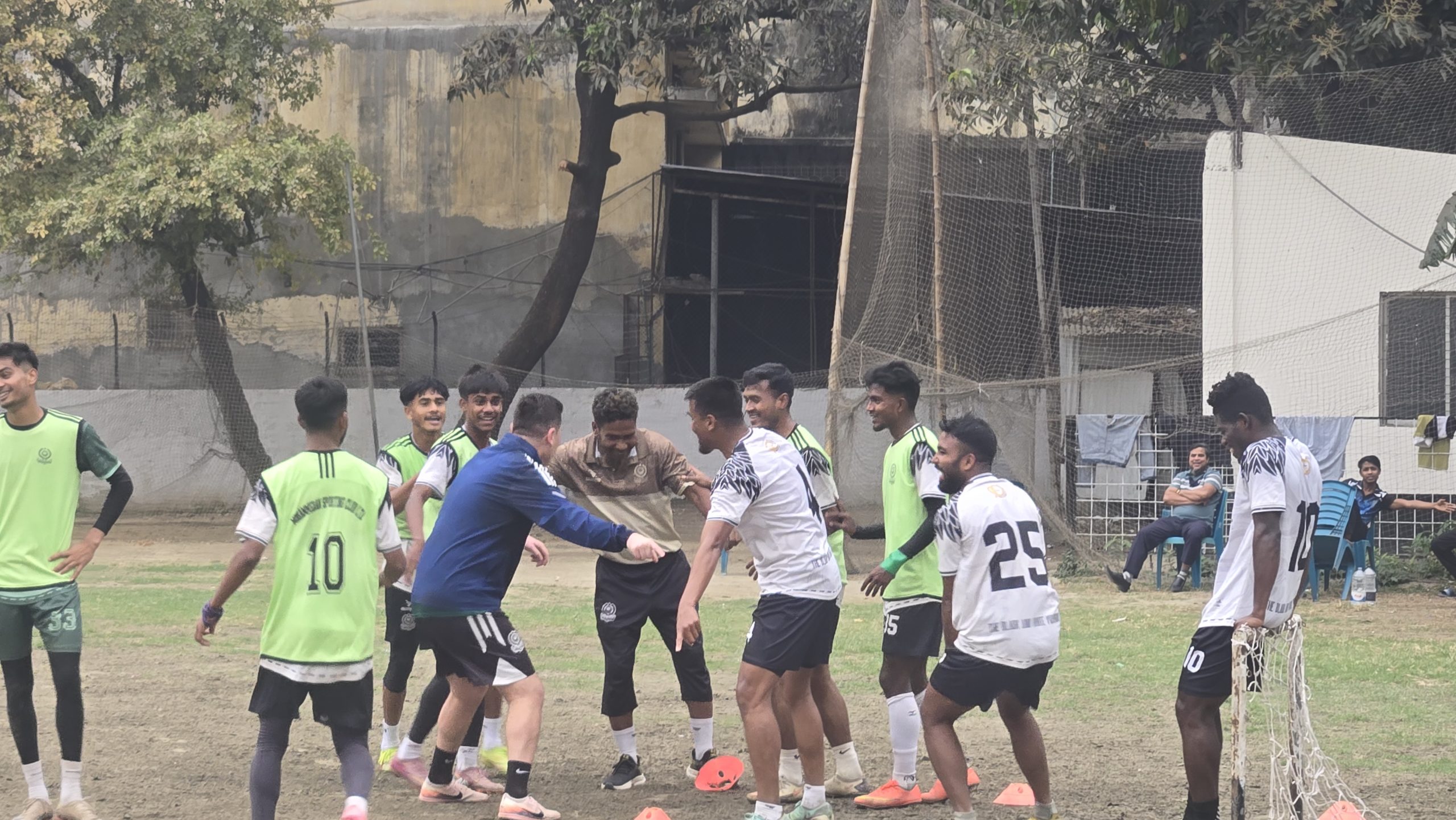



Mohammedan Sporting Club players finally returned to training on Tuesday afternoon after days of tension over unpaid salaries. The Bangladesh Football League first phase ended on 3 January, the second phase starts on 6 March, yet uncertainty still hung over the club on 24 February. The drama unfolded at the training ground, where money, not tactics, dictated attendance.
Tuesday morning painted a grim picture. Senior players stayed away from practice, making their stance clear before the session even began.
One senior footballer spelled it out bluntly. “If the salary issue is not solved, I will not take part in training.” That line summed up the mood inside the camp and exposed how fragile motivation becomes when contracts lose meaning.

The scene shifted after 3pm. All players walked onto the pitch following discussions between the squad and club officials.
Earlier, only 12 players trained, including foreign recruits Muzaffar Muzaffarov, Samuel Boateng and Emmanuel Eli Keke. By the afternoon, another 19 players joined, turning an empty protest into a full session.




A club official, speaking on condition of anonymity, tried to lower the temperature. “These problems are common in Bangladesh football, but for now the players and management have reached an understanding, which is why they returned to training.” The word “for now” carried more weight than the rest of the sentence.
This crisis did not appear overnight. On Monday, focus inside the club remained firmly on elections scheduled for 9 March, the first in five years since the last vote on 6 March 2021. Meanwhile, players struggled with unpaid dues and financial uncertainty.
The result showed on the training pitch. Players boycotted sessions after failing to receive promised salaries, leaving only a handful of foreign footballers and fringe players to train.
This is not just a Mohammedan issue. It reflects a wider sickness in Bangladesh club football, where professionalism often collapses under poor financial planning.