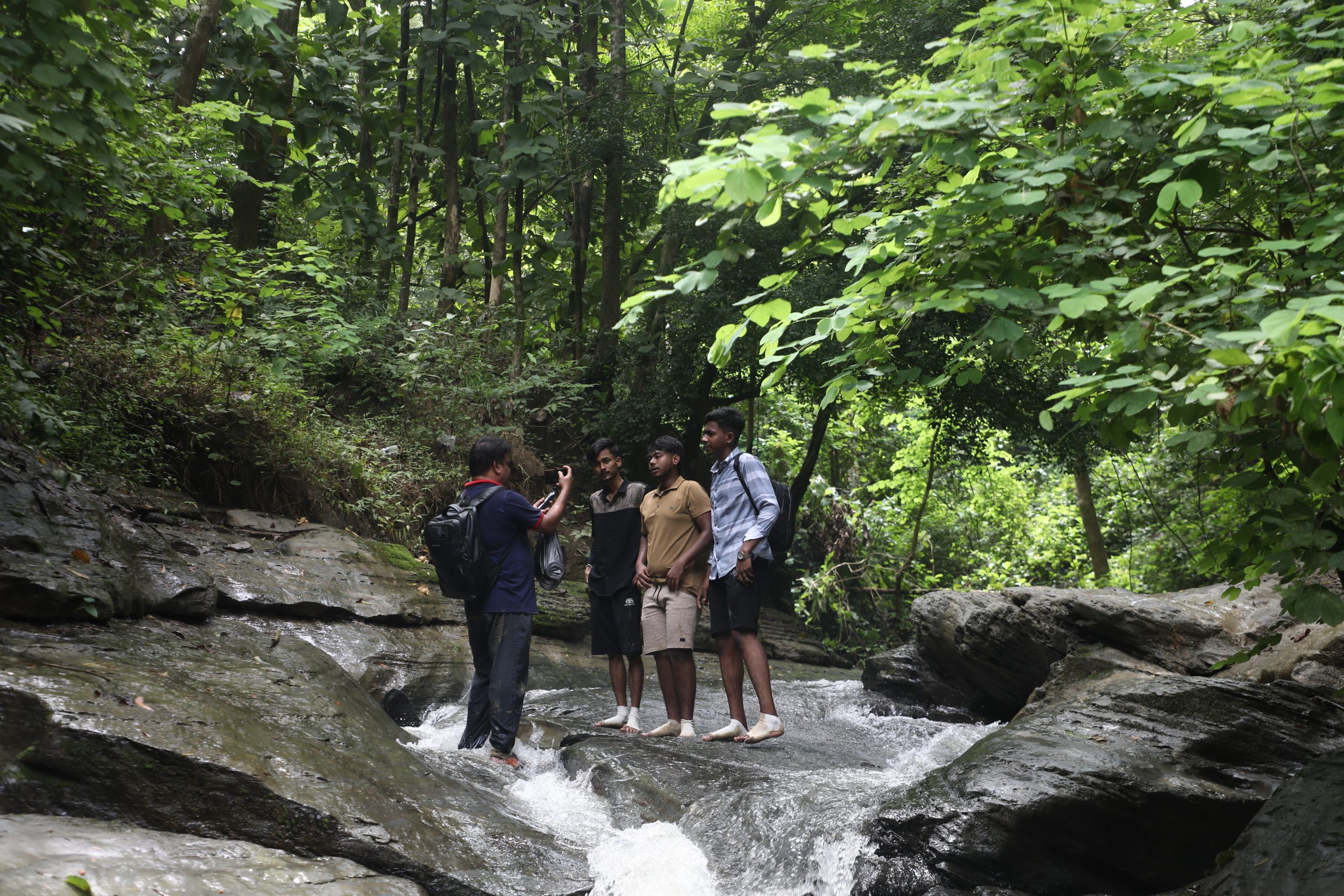

For years, Mirsarai’s waterfalls in Chattogram were seen as jewels of nature. Khoiyachora, Napittachora, Ruposhi, Mahamaya, Baowachora are names that once evoked excitement among travellers planning a weekend escape. Families, friends, and office groups would trek the rugged trails, their fatigue washed away by the roar of falling water.
But today, that excitement is fading. Despite being blessed with some of Bangladesh’s most spectacular natural cascades, Mirsarai is struggling to hold on to visitors. Poor waste management, lack of basic facilities, and unsafe trekking paths are slowly dimming its appeal.
At Khoiyachora, the crown jewel of the region, plastic bottles are lodged between rocks, food wrappers drift downstream, and the ground around picnic spots is littered with polythene. Streams that once sparkled with fresh mountain water now carry traces of human neglect.

“It’s heartbreaking,” said Nahiyan Ahmed, 24, a university student who last visited in August. “We came to see nature, but all we saw was trash. It feels like the place is being ruined.”




The problems run deeper than litter. Tourists complain of broken trails, unmarked routes, and no safety infrastructure. There are no proper toilets, dustbins or information centres. In the monsoon, the treks become treacherous, yet no trained guides or rescue teams are available to handle emergencies. Over the last five years, at least 14 lives have been lost and dozens more injured, a toll that has further discouraged travellers.
Local residents who once benefited from steady crowds now admit that business has slowed. Experts warn that without intervention, Mirsarai could lose its place on Bangladesh’s tourism map.
For now, the sound of water still echoes through the hills, but the crowds are thinning. Mirsarai remains a natural wonder, but one that risks being forgotten if neglect continues to overshadow its beauty.