
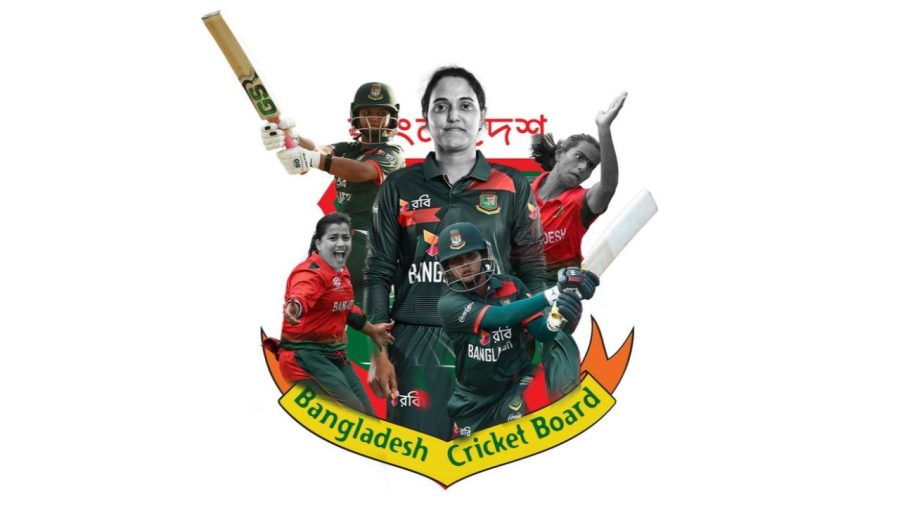



Eight years after beating India to win the Women’s Asia Cup, Bangladesh women’s cricket team is still struggling to turn that landmark triumph into sustained success. Despite better pay, central contracts and improved facilities, recent failures have exposed deeper problems with selection, continuity and team culture, according to former players and people familiar with the women’s setup.
Bangladesh won two matches at this year’s T20 World Cup, offering some hope of progress, but defeats to India in the Women’s Asia Cup and Asian Games semi-finals, followed by a 31-run loss to Pakistan in the Asian Games bronze-medal match, left the team without a medal for the first time in the women’s competition. More recently, they lost their first bilateral series in Australia, suffering a 3-0 whitewash.
“Had we remained stuck in 2018, that would actually have been better. At least we could have beaten India. We are not even at that level anymore. We have fallen much further behind,” Rumana Ahmed, a member of the 2018 Asia Cup-winning team and player of the match in the final, told TIMES.
The former leg-spinner, who played 50 ODIs and 87 T20Is, believes the problem lies in the system and the absence of a consistent winning process.
“The shortcomings are systemic. But, to me, the biggest problems are with the processes. We have not had the kind of winning process that is necessary since then,” she said.
The decline has come despite improvements in support for women cricketers. The Bangladesh Cricket Board (BCB) has increased payments, brought all national players under central contracts, raised domestic match fees and upgraded travel arrangements from economy to business class. Yet results have failed to reflect that investment.

Rumana believes inconsistent selection, the treatment of senior players and a lack of accountability have prevented Bangladesh from building a healthy team environment.
“Winning requires a culture. You can see how Australia and India perform consistently, and cricketing culture is a major part of that. Those things are missing from our team,” she said.
The concerns also extend to selection continuity. Taj Nehar, brought into the setup as a hard-hitting batter, played one match at the last T20 World Cup but was subsequently left out of the Asia Cup and Asian Games squads.
Women’s chief selector Sajjad Ahmed Shipon defended her inclusion, describing her as a versatile batter capable of filling several positions.




“Taj Nehar is a versatile batter who can bat anywhere from No. 1 to No. 6. In particular, we have struggled to score runs in the final five overs, and she could play an effective role in addressing that problem,” Shipon said.
Rumana, however, sees such decisions as part of a wider pattern of bringing players in for major tournaments without a clear long-term plan.
“Before every World Cup, you see players making sudden appearances and others being selected despite having no significant performances,” she said. “Sometimes, players who last played seven or eight years ago are suddenly brought back for a World Cup. They appear in one or two tournaments and then disappear again,” she said.
“Players are suddenly brought into the team and suddenly dropped, with no accountability. Is dropping senior players like this, without even maintaining contact with them, part of a proper cricketing culture? No. These players have done so much for the team. At the very least, someone should speak to them and explain what the problems are,” Rumana added.
But allegations of factionalism and mismanagement continue to cloud the team’s environment. ODI skipper Nigar Sultana Joty has been named in allegations that players outside her close circle were marginalised, while former captain Jahanara Alam has publicly claimed that her international career ended because of her strained relationship with Joty. These claims have not been independently established in every instance.
A BCB women’s wing official, speaking on condition of anonymity, blamed internal divisions for damaging the team.
“By forming groups and engaging in factionalism, they have completely ruined the team. If this had not happened, the team would not be in this condition,” the official told TIMES.
Former team manager SM Faiyaz has also faced allegations of factionalism, bullying and mishandling players’ allowances. Emerging-team cricketer Ishma Tanzim reportedly attempted suicide after being dropped from a camp and accused Faiyaz of bullying. Faiyaz was not part of Bangladesh’s first tour of Australia, with Bulbul Bashar taking on the team-management responsibilities instead.
A former women’s cricketer, speaking on condition of anonymity, said she had not personally experienced such behaviour but had seen several younger players complain about Faiyaz.
“I saw many girls complaining about him and raising various issues. Several players alleged that he had taken their money,” she told TIMES.
“Alongside the allegations of mental harassment, the financial complaints are particularly disturbing. The girls already receive limited money for food, so allegations that even that money was being taken from them are difficult to hear,” she added.
The shortcomings have extended beyond results and selection. The recent Asian Games exposed tensions between former head coach Sarwar Imran and the team. Sarwar was later replaced by David Hemp, with his contract due to expire the following month.
BCB women’s wing chairman Rafiqul Islam Babu said the board was aware of the issues and was working to address them.
“Yes, we are aware of these issues and whatever the complaints, are addressing them,” he said.
He also commented that the board would provide the players with all the support they needed, while stressing that the cricketers also had to perform and work hard.