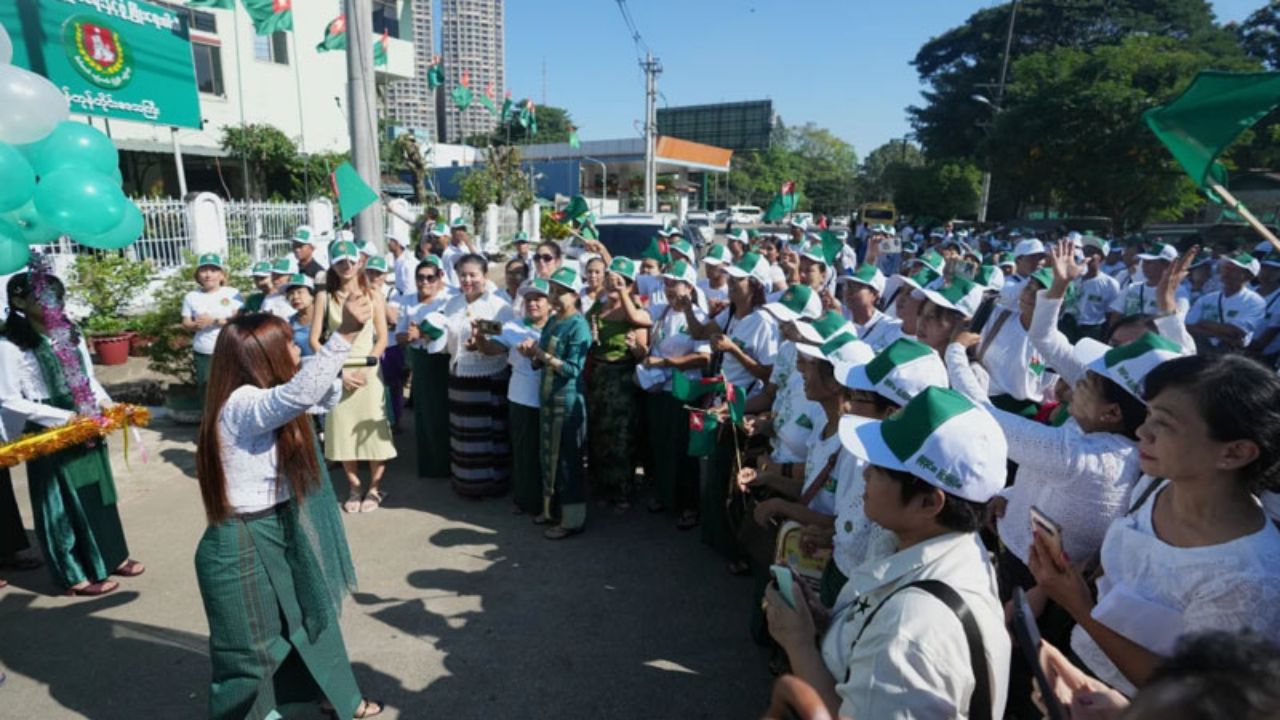



Myanmar’s military-backed Union Solidarity and Development Party (USDP) has achieved a sweeping victory in the country’s three-phase general election, consolidating control in a vote held amid civil war and widespread unrest.
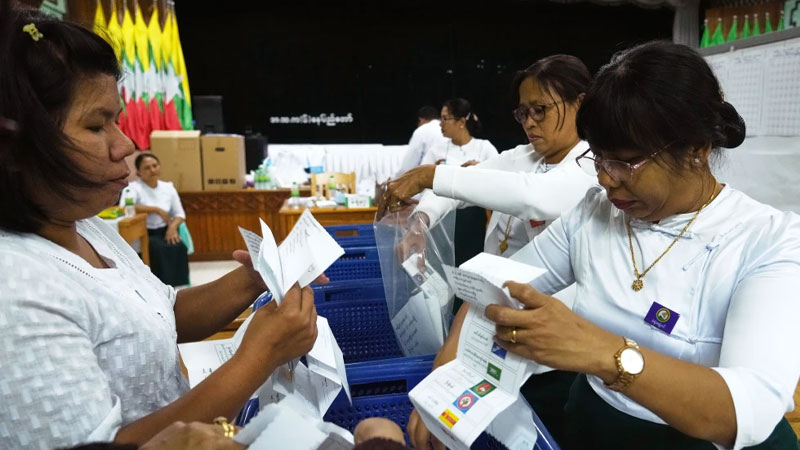
According to The USDP dominated all stages of polling, winning a commanding majority in both chambers of parliament. In the lower house, Pyithu Hluttaw, it secured 232 of 263 seats, while in the upper house, Amyotha Hluttaw, the party has so far claimed 109 of 157 seats, according to official results released on Thursday and Friday.
The new parliament is expected to convene in March to elect a president, with the newly elected government due to assume office in April, pro-military Eleven Media Group reported, citing junta spokesman Zaw Min Tun.
The elections marked Myanmar’s first general vote in over four years following the military coup that toppled the elected government of Nobel laureate Aung San Suu Kyi in 2021.

Since then, the country has been mired in political turmoil. Pro-democracy protests triggered a nationwide rebellion, leaving around 3.6 million people displaced, according to the United Nations.
Critics argue the polls were largely controlled by the military. The Association of Southeast Asian Nations (ASEAN) said it would not recognise the election, and several Western nations labelled it a sham. The UN also noted that significant portions of the population, including displaced ethnic minorities such as the Rohingya, were excluded from voting. At least 170 civilian deaths from air strikes and roughly 400 arrests have been verified during the election period.




UN Human Rights Chief Volker Turk said fear influenced many voters’ choices, with people deciding whether to participate largely under duress.
The military government maintains the polls were fair and widely supported. The junta has not responded to international requests for comment on electoral violence.
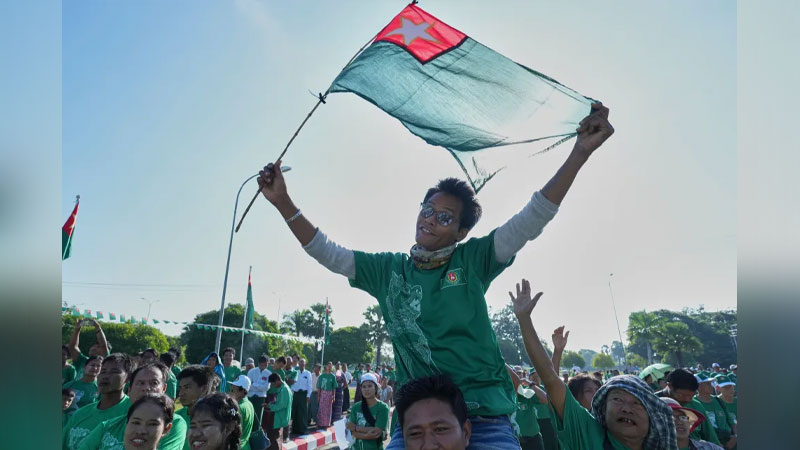
Suu Kyi’s National League for Democracy (NLD) was dissolved alongside dozens of other parties, while some smaller parties declined to contest, leaving no substantial opposition. Observers argue the process was designed to cement military rule.
Myanmar’s constitution guarantees the Tatmadaw 25 percent of parliamentary seats, ensuring the armed forces retain significant influence even after transferring formal powers to a civilian administration.
The USDP was founded in 2010 under a retired brigadier general, decades after prolonged military rule. Designed as a proxy for the Tatmadaw, the party fielded 1,018 candidates, roughly a fifth of all registered contestants.
Military chief Min Aung Hlaing is expected to play a central role in the new government. He defended the polls as a step towards national stability and reaffirmed that the Tatmadaw would continue to uphold defence and security responsibilities faithfully.
Voter turnout over the three phases reached around 55 percent, down from approximately 70 percent in 2015 and 2020 elections. Voting occurred in 263 of 330 townships, with some areas remaining under armed opposition control.
Polling was cancelled in several regions due to clashes between the military and ethnic armed groups, as well as local resistance movements that emerged after the 2021 coup.