



Twenty years ago to the day, an 18-year-old from Rosario pulled on the No.19 shirt and announced himself to the world with a goal against Serbia and Montenegro at the 2006 World Cup in Germany. Few could have imagined then what would follow. On 16 June 2026 (17 June BST), in front of nearly 70,000 fans at Kansas City Stadium, Lionel Messi marked that exact anniversary by scoring his first-ever World Cup hat-trick, drawing level with Miroslav Klose as the all-time leading scorer in men’s World Cup history, and reminding a global audience that, at 38, he remains utterly, impossibly untouchable.
Argentina defeated Algeria 3-0 in their Group J opener, and while the scoreline told one story, the evening belonged entirely to one man.
Messi had a goal ruled out for offside in the fourth minute, a marginal call that barely slowed him down. Thirteen minutes later, he collected Rodrigo De Paul’s precise pass, drove through Algeria’s defensive shape and slammed a long-range effort into the top-right corner. It was his 14th World Cup goal, drawing him level with Kylian Mbappe, who had scored twice for France against Senegal earlier the same evening.
His second came on the hour mark. Algeria goalkeeper Luca Zidane, son of French legend Zinedine who watched from the stands, could only parry Alexis Mac Allister’s low effort, and Messi was quickest to react, tucking home with his right foot. His third, in the 76th minute, was the most Messi of the three, exchanging passes with substitute Nico Gonzalez before curling a trademark finish into the bottom-left corner.
The hat-trick took him to 16 World Cup goals, level with Klose’s long-standing record. In a single night, he had leapfrogged Gerd Muller, Brazil’s Ronaldo and Mbappe to reach the summit of the all-time charts. One more goal in this tournament and the record is his alone.

The records did not stop there. By simply taking the field, Messi became the first man in history to appear at six World Cup finals, a feat that Cristiano Ronaldo is set to equal when Portugal play their opener. It was also his 200th international appearance for Argentina, making him only the third male player to reach that milestone alongside Ronaldo and Kuwait’s Bader Al-Mutawa. His 24 World Cup goal contributions, 16 goals and eight assists, extend his own all-time record, placing him four clear of Pele. He also became the first player to score against 11 different nations at the World Cup, and joined Ronaldo as only the second to score in five separate tournaments.
At 38 years and 357 days old, he is now the oldest player to score a World Cup hat-trick, surpassing Ronaldo’s record set against Spain in 2018. He is also, simultaneously, both the youngest and oldest Argentine to score at a World Cup, the former earned in 2006, the latter claimed on this very same date two decades later.
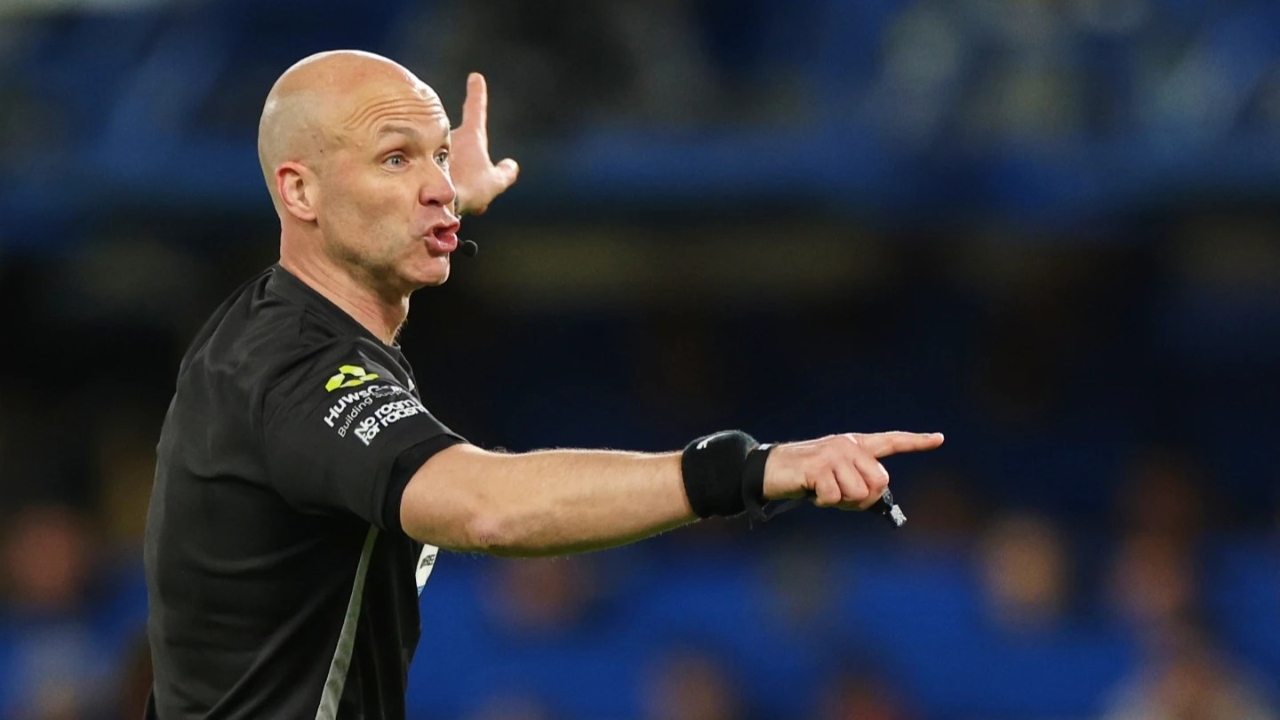
The night was not without its contentious moments. Between his first and second goals, Messi caught Algeria captain Aissa Mandi on the calf and Achilles tendon with studs raised. Referee Szymon Marciniak awarded only a free kick, VAR did not intervene, and Messi stayed on the pitch to complete the hat-trick. The incident drew considerable reaction online, with many arguing a yellow card was the minimum warranted.
What stood out, even by his own standards, was how little of the pitch Messi actually covered. By the time he was substituted in the 80th minute, having done what he needed to do, he had walked, jogged and sprinted a combined 6.81km, according to FIFA tracking data. Mbappe, for context, covered 9.7km across the full 90 minutes against Senegal, while Erling Haaland racked up 9.6km for Norway. For long passages of the game, particularly in the opening half hour, Messi was content to stroll, conserving energy for the moments he judged worth spending it on. It is a pattern familiar to anyone who watched him at Barcelona or with Argentina across the last decade, and one Scaloni’s side are built to accommodate.
That accommodation was visible whenever Algeria had the ball in their own defensive third. Rather than dropping to press from the front in the first half, Messi would simply stay high alongside Lautaro Martinez, cutting off central passing lanes without ever sprinting to do so, happy to let his positioning do the work his legs were being spared. The graft elsewhere in the team made this possible. Mac Allister, less explosive than he was four years ago in Qatar, operated as the metronome screening the back four, while Enzo Fernandez offered a more progressive presence than in 2022 and De Paul, as has become his trademark, did the running of two men, shadowing Messi’s zones and recycling possession whenever the No.10 drifted away from the centre of the pitch.
Argentina’s opener was the clearest illustration of this dynamic in action. With Algeria’s midfield deliberately compressed to choke off the space in front of their defence, Messi dropped towards his own half to try to drag a marker out of position and open a passing lane. Mac Allister, surrounded by green shirts, could not find an angle to lay the ball back, but De Paul threaded a pass straight through four Algerian players to Messi’s feet regardless, helped by Lautaro’s run pulling the back line away from the ball. The result was Messi in space with nobody within five yards of him, the kind of scenario Algeria would have spent the entire build-up trying to prevent, and he finished it without fuss, curling the ball inside the far post with the inside of his left boot.
But the football, when Messi was in full flow, made such debates feel beside the point. He finished the match with six shots, more than any other player on the pitch, pressed relentlessly in the second half, won the ball back in his own half, and created two chances for teammates. This was not a passenger riding on reputation. This was a footballer operating at the peak of his powers.
Zidane, wearing a protective mask for a broken jaw sustained earlier in the spring, endured a torturous World Cup debut. He could have done better with the first goal and was badly at fault for the second. Argentina made history of their own as a team too. This was only the third time they have entered a World Cup as defending champions, and the first time they have avoided defeat in their opening match as holders, having lost to Belgium in 1982 and Cameroon in 1990.
After the final whistle, Messi was asked about the tears he shed after his opening goal. His answer was quiet and revealing. “A matter totally unrelated to sport,” he said. “I went through some difficult, complicated days.” He kept the details private but was generous in his praise of those around him. “I am grateful to the entire delegation, to my teammates. They made a lot of effort to make sure I am doing well.”
On the records, he was characteristically understated. “It is an honour to be up there, to be alongside Klose and those who are there. In the end, it is just statistics and nothing more. Ronaldo, from what I have seen, is one of the greatest, and he is not first.”
He closed with a reflection that spoke to something deeper than football. “I am watching the Rafael Nadal series and I identify with it a lot,” he said. “I think we are very similar in that sense, we always want to give our maximum.”
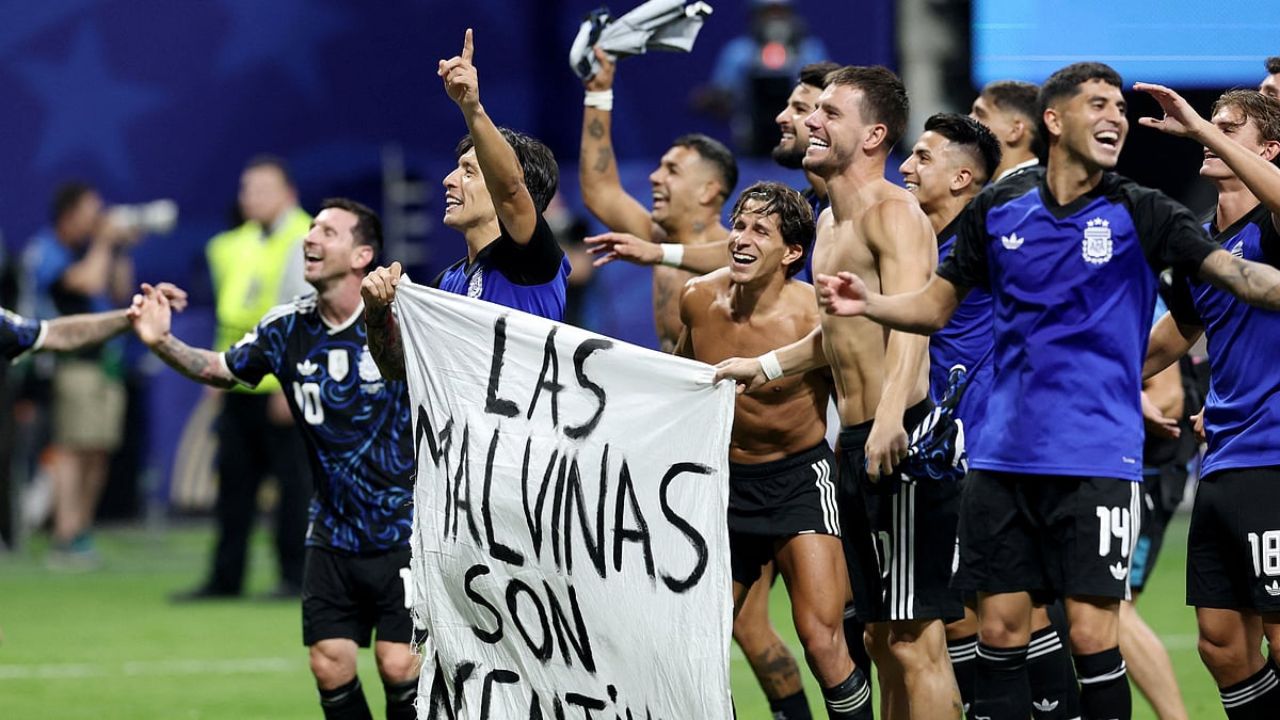
With Austria next in Dallas and Jordan to follow on 27 June, Argentina are well placed to advance from Group J with little difficulty. In a tournament where Brazil and Spain have made unconvincing starts, Lionel Scaloni’s side look every bit the team to beat. Questions about over-reliance on Messi will persist, but on a night like this, they are difficult to take seriously.