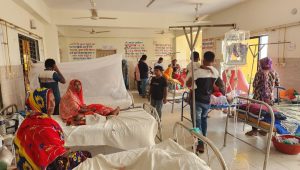
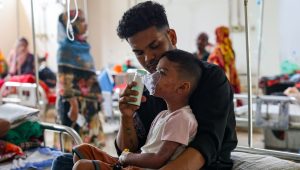
For millions of low-income families in Bangladesh, buying essential medicines is no longer a routine expense but a monthly crisis. As drug prices creep upward and supplies fluctuate, many households are being forced to ration treatment—sometimes abandoning it altogether—raising urgent questions about state oversight and the right to healthcare.
At a small pharmacy in Dhaka’s Badda neighbourhood, 62-year-old Rahima Begum waits quietly with a prescription for her husband’s heart condition. Minutes later, she leaves with only half the medicines.
“Every month we cut back on rice, fish, vegetables—and now even medicines,” she says. “How long can we live like this?”
Her story echoes across the capital and beyond.
In Kathalbagan, a customer confronts a pharmacist over rising costs. “I used to spend Tk4,500 a month on my mother’s medicines,” he says. “Now it’s Tk6,500. Are prices rising, or are you charging extra?”
For families already living on the edge, the difference is academic. The impact is immediate and punishing.
Rising prices, unstable supply
Pharmacy owners say prices of commonly prescribed medicines have risen steadily in recent months, driven by irregular supply and higher wholesale rates.
“When supply becomes unstable, wholesalers raise prices,” said a pharmacist in Kathalbagan. “Retailers are left with no choice.”

Market checks at neighbourhood pharmacies show that Xyflo 10 mg, used for respiratory conditions, has risen from Tk15 per tablet two months ago to Tk17–18. Azmasol and Sultonin inhalers increased from Tk220 to Tk250. Over the past year, Afrin nasal drops rose from Tk50 to Tk70, Seclo 20 mg from Tk50 to Tk60, and Alatrol from Tk20 to Tk30 for a strip of 10 tablets. Buyers note that inhaler prices often climb ahead of winter, when demand spikes.
Pharmaceutical companies deny coordinated price hikes. Muhammad Zahangir Alam, chief financial officer of Square Pharmaceuticals, said the company had not raised prices, noting that any revision requires approval from the Directorate General of Drug Administration (DGDA). He declined to comment on whether prices may be inflated at the retail level.
Others point to structural pressures. Mohammed Nezam Uddin, CEO of Albion Laboratories Ltd, said price adjustments have occurred gradually due to rising production costs linked to the dollar exchange rate and global supply pressures. He also criticised what he described as prolonged regulatory inertia.
“For a long time, there have been no regular meetings with the DGDA,” he said. “Authorities have remained relatively calm and quiet. In this situation, no one wants to take risks.”
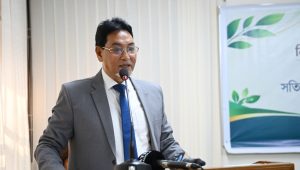
As asked, Md Akter Hossain, a DGDA director, said no formal policy directive has been issued on recent drug price regulation, and as a result, no official price-setting meeting has been held in recent months.


He said drug price determination follows a committee-based process once a policy is issued, involving discussions with pharmaceutical companies. “We are waiting for the policy. Once it comes, a committee will be formed and the process will move forward,” he said.
Regarding claims of medicine price hikes despite companies denying any increase, Hossain stressed that regulatory action requires concrete, market-based evidence.
“If prices have increased, proof must be provided,” he added.
Regulation gaps and delayed decisions
Bangladesh’s pharmaceutical sector is often presented as a national success story, supplying nearly all domestic demand and exporting to 157 countries. Yet beneath this achievement lies a fragmented pricing regime.
Although more than 310 manufacturers produce over 35,000 branded medicines, the government controls prices for just 117 essential generics. The rest are priced by companies, leaving wide room for variation.
According to IQVIA, a US health information and clinical research firm, Bangladesh’s domestic pharmaceutical market was valued at Tk36,963 crore in the second quarter of 2025. But growth has not translated into affordability.
A World Health Organization report shows that 24 percent of households in Bangladesh face financial catastrophe due to medical costs. Each year, healthcare expenses push an estimated 6.2 million people below the poverty line, while 16 percent of households avoid treatment altogether.
Against this backdrop, a High Court directive ordering the government to fix prices for 739 life-saving medicines remains stalled.
Md Asraf Hossain, another DGDA director, said the court’s instructions make price-setting mandatory but that the ministry has yet to issue final guidelines. “Without formal policy, we cannot implement revisions,” he said, citing the need for detailed cost and raw-material analysis.
Officials at the Ministry of Health and Family Welfare say drafting is ongoing and a policy will be finalised “soon”. Attempts to reach the ministry’s adviser, Nurjahan Begum, for comment were unsuccessful.
Rights on paper, hardship in reality
Consumer rights groups argue that the law already provides safeguards—if enforced.
AHM Shafiquzzaman, director of the Consumer Association of Bangladesh (CAB), said selling medicines above the printed maximum retail price is punishable under the Consumer Rights Protection Act. “Charging more than the prescribed price is a direct violation of consumer rights,” he said.
DGDA Director Md Akter Hossain said the authority has instructed that prices of the 739 listed medicines must remain unchanged until the court case is resolved. He added that pharmacies are monitored and complaints investigated.
“We have not approved any price increases in over a year,” he said. “If higher prices are being charged, it is due to malpractice by a few sellers.”
Yet enforcement appears fragmented. The Directorate of National Consumer Rights Protection says it does not regulate medicine prices at all, focusing instead on expiry and labelling.
For patients like Rahima Begum, these distinctions offer little comfort. At neighbourhood pharmacies, prices continue to rise, and shortages widen the gap between official assurances and daily reality.
Health economists say the impasse reflects a deeper failure of policy coordination.
“The government can keep drug prices fixed only through subsidies,” said R Syed Abdul Hamid, a health economics professor at Dhaka University. “Otherwise, rising production costs require adjustment. What’s missing is regular review and timely intervention.”
For millions of low-income families, the cost of delay is counted not in policy drafts, but in untreated illness—and the quiet erosion of a basic right.