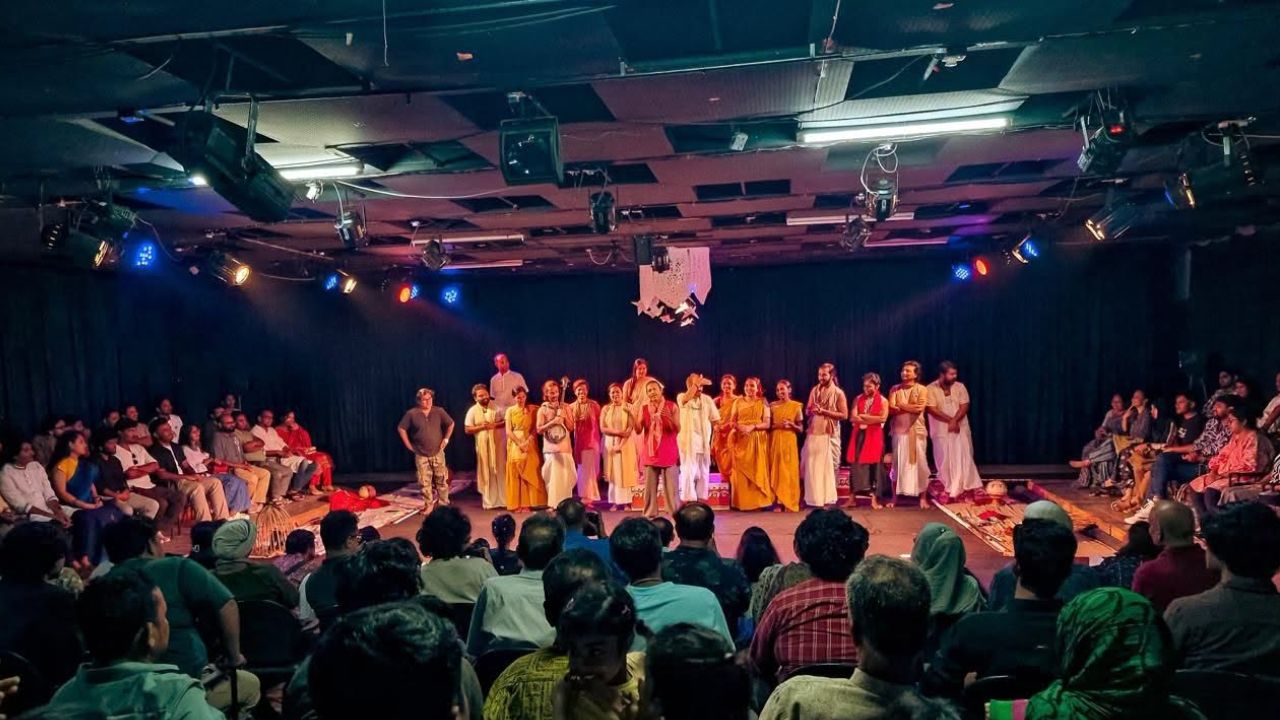

More than a century after its publication, Maimansingha Gitika remains one of the richest sources of inspiration for theatre in Bangladesh and beyond, with its timeless tales of love, sacrifice, separation and heroism continuing to captivate new generations of audiences.
The collection of folk ballads was compiled by Chandra Kumar De, who travelled across villages in present-day Netrokona, Susang-Durgapur, the Garo Hills, Kishoreganj, Bajitpur and Kendua to collect oral narratives from traditional performers, boatmen and folk singers.
It was later edited and published in both Bengali and English in 1923 by Dr Dinesh Chandra Sen of the University of Calcutta, introducing the literary treasure to a wider audience.
The work has since earned admiration from renowned scholars.
French Nobel laureate Romain Rolland praised the character of Madina as an outstanding artistic creation, while Rabindranath Tagore described Maimansingha Gitika as a spontaneous stream of heartfelt emotion flowing from the depths of rural Bengal.
In recent years, theatre groups across Bangladesh have continued to reinterpret the ballads through modern productions.

One of the latest adaptations is Malua, staged by the newly formed Theatrical Company as its debut production.
Based on the celebrated ballad by Chandrabati, widely recognised as the first Bengali woman poet, the production has been adapted and directed by Saiful Journal, with music rooted in traditional folk forms.
Other theatre companies have also presented their own interpretations of Malua, including Methopath Theatre, whose production Maluar Premakhyan was written by Md Anwar Hossain Rony and later reimagined by Shamima Akter Mukta and Robin Basak.
Chandrabati’s Dasyu Kenaram has also enjoyed renewed interest.




The psychological folk narrative has been staged by Ishwarganj Prabhati Sangskritik Sangsad under the direction of Aminur Rahman Sultan, while students at Jahangirnagar University have also produced the play.
Several other stories from Maimansingha Gitika have found lasting success on the stage.
Sonai Madhab has been produced by multiple folk theatre groups, including Loknatya Dal (Siddheswari) and Loknatya Dal (Banani), each offering its own musical and theatrical interpretation.
The tragic romance Mahua, written by Dwija Kanai, has been staged by students of the University of Dhaka’s Department of Theatre and Performance Studies and Jahangirnagar University’s Department of Drama and Dramatics.
Renowned playwright Selim Al Deen also directed a production of the ballad in the early 1990s.
Meanwhile, Kamala Sundari, originally written by Dwija Ishan, has been adapted by theatre groups in both Bangladesh and India.
Natyatirtha staged the play under the direction of Tapan Hafiz, while acclaimed Indian theatre personality Gautam Halder directed another adaptation in Kolkata.
The story of Madhab-Malanchi Koinya has similarly crossed borders. Indian director Bibhas Chakraborty created a modern theatrical version later staged in Bangladesh by Rokeya Rafiq Baby of Theatre Art Unit.
The production has also been performed by students at the National Poet Kazi Nazrul Islam University.
Other notable adaptations include Joytun Bibir Pala, written and directed by Sayik Siddiqui, Ayna Bibir Pala, directed by Rabiul Alam, and Kajalrekha, which has been staged by Jahangirnagar University and numerous local theatre groups.
The influence of Maimansingha Gitika extends beyond the theatre.
Its stories have inspired jatra, dance dramas, television productions and films for decades.
According to M A Majid, a researcher of Bangladeshi folk theatre, the ballad Kajalrekha became one of the country’s most celebrated jatra productions from the 1940s onwards, performed by several renowned troupes and artists over the decades.
Although the ballads were composed between the sixteenth and seventeenth centuries and first published more than 100 years ago, Maimansingha Gitika continues to evolve through new interpretations.
Its enduring themes of love, resilience, sacrifice and human emotion ensure that the literary masterpiece remains a vibrant part of Bangladesh’s cultural and theatrical heritage.