A disturbing allegation of sexual assault involving an eight-year-old student at a Qawmi madrasa in Kurigram’s Phulbari surfaced on the night of 5 April, drawing local outrage but no formal legal action.
The accusation, levelled against a teacher, has not resulted in a police case. Phulbari police station Officer-in-Charge Mahmudul Hasan Nayeem told TIMES of Bangladesh that despite urging the victim’s family to file a complaint, they chose not to pursue legal action.
“We advised the family to file a case, but they have not taken any legal steps,” he said.
The incident reflects a broader pattern in which allegations of sexual abuse in madrasas — particularly Qawmi institutions — often fail to reach the courts.
Even when such cases attract media attention or provoke local anger, responses are typically confined to informal village arbitration or the dismissal of the accused, with little recourse to formal justice.
Discussions around these incidents largely remain confined to individuals or local communities, with little evidence of coordinated institutional action.
The Qawmi madrasa education board, Befaqul Madarisil Arabia Bangladesh, has not taken any visible steps to address the issue. A senior leader of the board told TIMES that such incidents occur across all types of educational institutions, not just madrasas.
Legal barriers have also historically complicated the pursuit of justice. Even when general diaries or formal cases are filed, convictions have been rare.
Until recently, sexual assault against boys was not legally classified as rape under Bangladesh law. However, amendments to the Women and Children Repression Prevention Act by the interim government have now brought such offences within the legal definition of rape.
Supreme Court lawyer and Ain o Salish Kendra legal officer Md Shahinuzzaman noted that prolonged legal proceedings often discourage families from seeking justice.

“Delays in trials are common in such cases. As a result, local elites attempt to resolve matters through informal arbitration, often involving financial penalties or social humiliation,” he said.
Professor Farzana Ahmed of Jagannath University’s Department of Psychology warned of the long-term psychological consequences of such abuse, particularly when it occurs at the beginning of a child’s education.
“In some cases, victims even take their own lives. The trauma affects not only the child but also their family and the wider community,” she said.
Most cases remain hidden
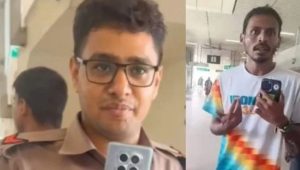
On 7 December last year, relatives of a student handed over a madrasa teacher to police in Barishal after allegedly assaulting him. They claimed the teacher, Rezaul Karim, had sexually abused the student for three years.
He was sent to Barishal Central Jail the following day by court order. However, Barishal Kotwali police station Officer-in-Charge Al Mamun-ul Islam said he was unaware of the current status of the case.
Data analysis by Ain o Salish Kendra (ASK) reveals that between 2020 and 2025, 211 incidents of rape or sexual assault by teachers in educational institutions came to light. Of these, only 40 resulted in legal cases — meaning 82% saw no legal action.




ASK senior coordinator Abu Ahmed Faizul Kabir told TIMES that the majority of such incidents occurred in Qawmi madrasas.
Shaheena Haque, a prosecutor at Dhaka’s Women and Children Repression Prevention Tribunal-1, said many victims come from disadvantaged backgrounds and lack the education or awareness needed to pursue legal remedies.
She stressed that exemplary punishment is essential to deter such crimes.
Human Rights Monitoring Organisation chairperson Tahmina Akter said families often lose interest in pursuing cases due to delays in the justice system.
“Another factor is financial settlement. Offenders know they can resolve matters with money, which encourages further crimes,” she said.
Five victims, settled through arbitration
In November last year, allegations emerged against the head teacher of a Qawmi madrasa in Siddhirganj, Narayanganj, involving the sexual assault of five students.
Following public outrage, locals detained and beat him before convening an arbitration led by community elders. A local political figure was also brought into the process. On 11 November, a settlement was reached.
Initially fined Tk 10 lakh, the amount was later reduced to Tk 4 lakh. Four victim families received Tk 25,000 each, while allegations surfaced that the remaining money was shared among local intermediaries.
Siddhirganj police station Officer-in-Charge Emdad Hossain said no complaint had been filed with police.
Legal expert Shahinuzzaman described such arbitration in criminal cases as unlawful.
“Attempting to resolve these matters through informal arbitration is itself a crime,” he said.
Yet such practices persist.
In Barguna’s Taltoli, a teacher accused of sexually assaulting a student reportedly escaped with a public beating but no legal consequences. The allegation, made on 15 November 2024 against the person, involved a 10-year-old student at a local madrasa.
The child reportedly fell ill, and the family sought treatment discreetly while the accused attempted to suppress the matter. After it became public, a local arbitration chaired by a union parishad member resulted in corporal punishment for the accused. No further legal steps were taken.
Legal reform opens path to justice
Recent amendments to the Women and Children Repression Prevention Act have redefined sexual assault against boys as rape, closing a significant legal gap.
The ordinance, passed by the BNP-led parliament, increases penalties and raises the maximum fine from Tk 1 lakh to Tk 20 lakh.
Rashedul Islam, deputy director of Bangladesh Legal Aid and Services Trust (BLAST), said the previous law did not recognise sexual assault against boys as rape, making prosecution difficult.
He expressed hope that stricter punishment would help address the issue.
Nusrat Jahan, deputy director of SOS Children’s Villages Bangladesh, stressed that sexual abuse of children is a grave crime regardless of the type of educational institution.
“Whether in madrasa, school, or elsewhere, ensuring strict monitoring and accountability is essential,” she said.
‘Happens in all institutions’
Responding to criticism over the apparent inaction of the Qawmi madrasa board, Befaqul Madarisil Arabia Bangladesh vice-president Musleh Uddin Raju said they maintain a “zero tolerance policy”.
“Not all incidents come to our attention. When they do, we take immediate action,” he said.
He also argued that such incidents are not unique to madrasas.
“These occur in schools and colleges as well,” he added.
When asked about allegations that institutions or communities often shield suspects, he acknowledged that local actors sometimes impose punitive measures through informal processes.
“In many cases, local community members take disciplinary action. We also provide guidelines,” he said.
When contacted, Religious Affairs Minister Kazi Shah Mofazzal Houssain Kaikobad told TIMES, “This is a social ill. It must be eradicated. Alongside government initiatives, everyone in society must come forward. Only then will it be possible to eliminate it.”