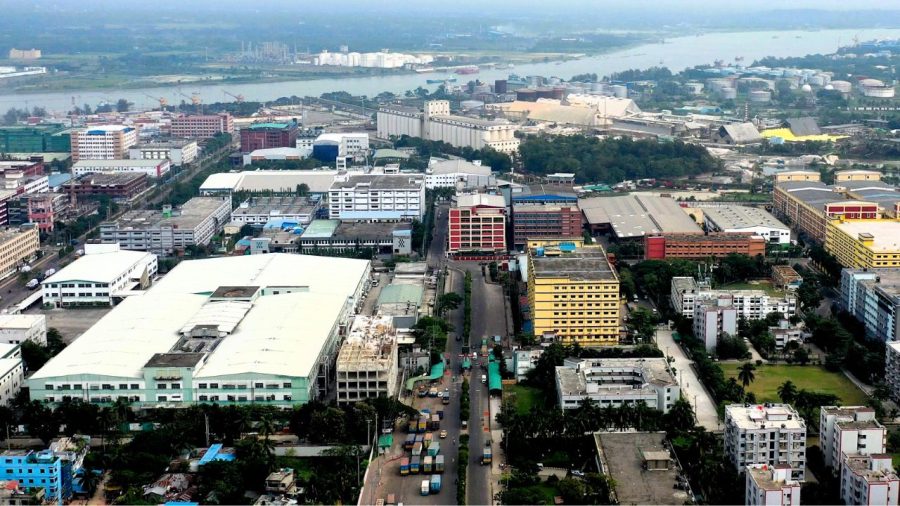

From a derelict steel mill site to a major export-oriented industrial hub, Karnaphuli Export Processing Zone (KEPZ) has emerged as a significant contributor to Bangladesh’s industrialisation.
The EPZ, inaugurated by then Prime Minister Begum Khaleda Zia on 12 September 2006, officially began operations on the same day.
It marked its 20th anniversary on 12 September 2026, with the zone now hosting industries linked to some of the world’s leading brands and global supply chains.
According to KEPZ data, total investment in the zone stood at $787.33 million as of August 2026, while cumulative exports surpassed $14.15 billion.
Around 80,000 people are currently employed directly, with the livelihoods of an estimated 100,000 more people indirectly linked to the zone.

From $1.91m investment to $787m
The transformation is reflected in the scale of growth recorded since the EPZ began its journey.
Mahbub Ahmed Siddiq, Executive Director of Karnaphuli EPZ, said investment had risen from just $1.91 million at the beginning to $787.33 million, while annual exports grew from $9.86 million in the first year to cumulative exports of more than $14.15 billion.
Employment, meanwhile, increased from only 174 workers to around 80,000.
“These figures are more than just statistics of growth; they tell the story of the rebirth of an industrial zone,” Siddiq said.


The site, once associated with a defunct steel mill, has been transformed into an export-processing centre connecting Bangladesh’s manufacturing sector with international markets.
The zone now supports thousands of families while contributing to the country’s export earnings and industrial capacity.
Global investors, diversified industries
Abu Syeed Md Anwar Parvez, executive director (Public Relations) of BEPZA, said investors from a wide range of countries have established industries in the zone.
These include China, Taiwan, Hong Kong, South Korea, India, Sri Lanka, Japan, the UK, the USA, the Netherlands, Malaysia and Canada, alongside Bangladeshi investors.
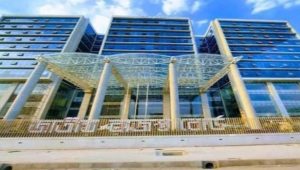
Spread over 209.06 acres, Karnaphuli EPZ has 258 industrial plots and five standard factory buildings.
At present, 40 enterprises are in production, including 29 wholly foreign-owned companies, three joint ventures and eight domestic enterprises. Another five enterprises are under implementation.
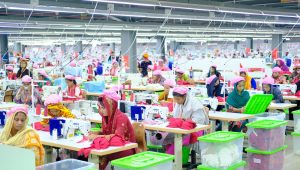
The industrial base has also expanded beyond traditional garment manufacturing. Products made in the zone include apparel, undergarments, tents and camping equipment, bicycles, leather goods, furniture, bags, fashion footwear and safety footwear, among others.
Several manufacturers operating in the EPZ are integrated into the supply chains of globally recognised brands, including Timberland, H&M, Zara, Uniqlo, Next, Nike, Adidas, Puma, Decathlon and Ralph Lauren.
Employment becomes a defining success
Job creation has become one of Karnaphuli EPZ’s most significant achievements.
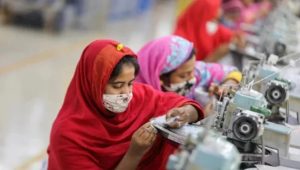
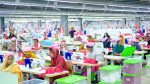
The zone started with just 174 workers but now provides direct employment to around 80,000 people, with women accounting for nearly 60 percent of the workforce.
The employment impact is expected to increase further as new factories begin operations.
BEPZA officials expect direct employment in Karnaphuli EPZ to cross 100,000 once the enterprises currently under construction come into production.