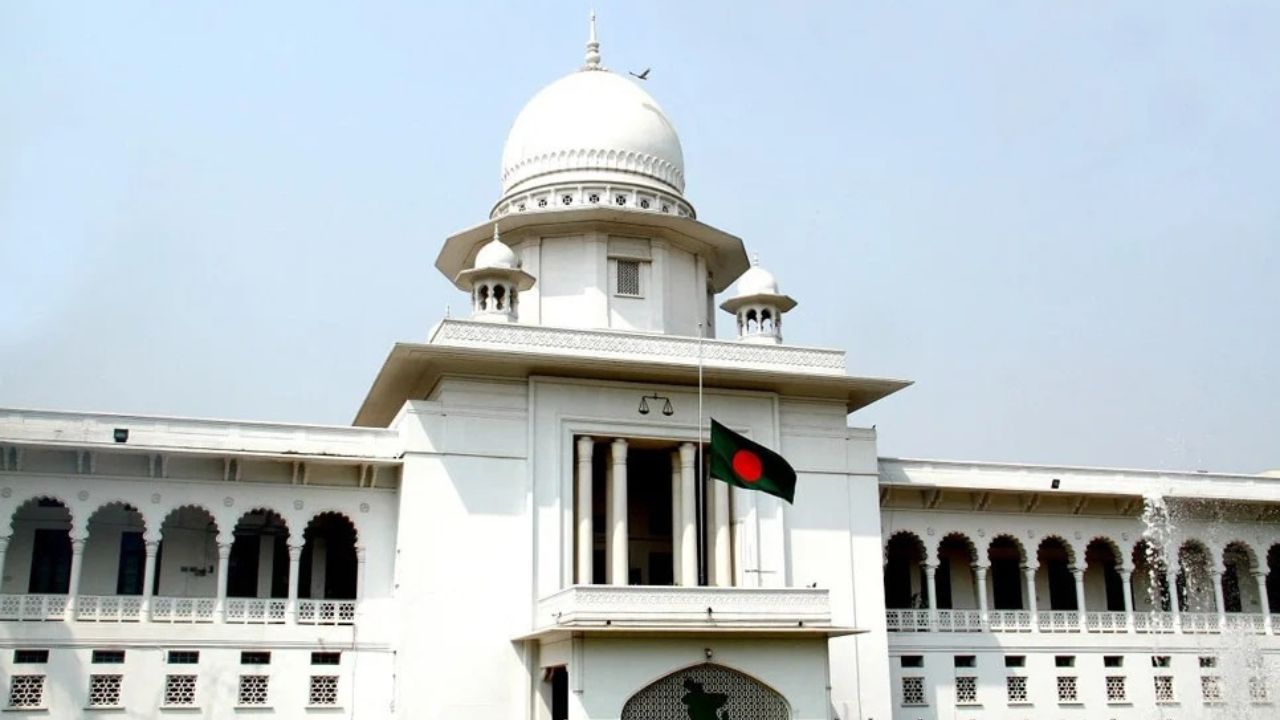





The International Crimes Tribunal-2 (ICT-2) has concluded the hearing of arguments in a case involving crimes against humanity committed during the July mass uprising, keeping the verdict pending for any day.
The seven accused include Awami League General Secretary and former minister Obaidul Quader, along with six other top leaders of the party and its affiliate organisations.
On Monday, 17 August, the tribunal placed the case under CAV (verdict awaiting delivery) status following the conclusion of arguments from both the prosecution and the defence. While the prosecution has demanded the death penalty for all seven accused, the defence has sought their total acquittal.
Prosecutor Mizanul Islam argued that various state meetings were used to plan and conspire to kill people during the mass uprising.
He further stated that audio-visual evidence submitted to the court proves that Obaidul Quader ordered security forces to “shoot on sight” any protesters, which resulted in indiscriminate killings until 5 August.
The other accused in the case are Awami League Joint General Secretary AFM Bahauddin Nasim, former state minister for information Mohammad Ali Arafat, Jubo League Chairman Sheikh Fazle Shams Parash, General Secretary Mainul Hossain Khan Nikhil, Chhatra League President Saddam Hussain, and General Secretary Sheikh Wali Asif Inan.
State-appointed counsel M Hasan Imam, representing Quader, Nasim, and Arafat, argued that the prosecution primarily based its case on “command responsibility.”
The defence contended that the “shoot at sight” order was intended only to protect public lives and property, and that these three leaders held no commanding positions and gave no orders to kill.
Similarly, lawyer Ishrat Jahan, representing the Jubo League and Chhatra League leaders, argued that the names of Saddam, Inan, Parash, and Nikhil did not surface among those leading the suppression at Dhaka University.
She further claimed the prosecution failed to prove the charges and requested their acquittal.
Prosecutor Gazi MH Tamim highlighted the “Joint Criminal Enterprise” aspect, asserting that if even one person died during the suppression efforts, the accused must be held legally liable.
Chief Prosecutor Md Aminul Islam said the prosecution has successfully proven all four charges and that the accused bear responsibility for the deaths and injuries during the movement.
The Chief Prosecutor urged the court to show no leniency and award the maximum punishment, describing the accused as “miscreants, corrupt, and criminals” operating under the guise of political leadership.
He specifically emphasised that Obaidul Quader’s “irresponsible and provocative” speeches incited members of the Awami League, Jubo League, and Chhatra League to act against protesters.
According to the prosecution, police and other law enforcement agencies were assisted by these political activists as an auxiliary force to carry out killings, torture, and mutilation.
The tribunal had issued arrest warrants for the seven accused on 18 December. As law enforcement agencies could not apprehend them, the trial proceeded in absentia with state-funded legal representation as per legal provisions.
Charges were formally framed on 22 January, and the final arguments in the case began on 4 August.


