Iran has created a new government body to vet and tax vessels seeking passage through the Strait of Hormuz, a move that has heightened concerns over freedom of navigation in one of the world’s most critical shipping lanes.
The announcement comes as Tehran reviews the latest United States proposals aimed at ending the two-month conflict between the two nations.
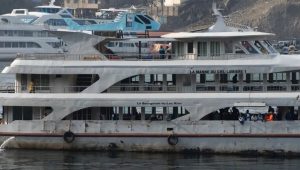
According to shipping data firm Lloyd’s List Intelligence, the newly formed Persian Gulf Strait Authority is positioning itself as the sole valid entity authorised to grant transit permission to ships navigating the strategic waterway. The authority has reportedly circulated application forms to shipping companies seeking passage, formalising a previously informal vetting process conducted in waters near Iran’s coastline.
The development has raised fresh alarms among maritime experts and international trade organisations. Hundreds of commercial vessels remain bottled up in the Persian Gulf, unable to reach open seas, as Iran effectively controls the strait while the United States maintains a blockade of Iranian ports. The disruptions have contributed to volatile global fuel prices and heightened economic uncertainty.
Legal concerns over navigation rights
Maritime law specialists argue that Iran’s demands to vet or tax vessels contravene international law. The United Nations Convention on the Law of the Sea requires coastal states to permit innocent passage through territorial waters. Experts warn that formalising unilateral control over the strait could set a troubling precedent for other chokepoints critical to global commerce.

“The Strait of Hormuz is not Iran’s private toll road,” said one London-based maritime lawyer, speaking on condition of anonymity. “While coastal states have certain rights, they cannot impose arbitrary conditions on peaceful transit that undermine the fundamental principle of freedom of navigation.”
Peace negotiations remain in limbo
Iranian officials confirmed they are still examining the most recent US proposals for ending hostilities. Esmaeil Baghaei, spokesperson for Iran’s Foreign Ministry, told state television that Tehran had “strongly rejected” certain provisions reported by news outlets, including a moratorium on uranium enrichment and conditions tied to the release of frozen Iranian assets.


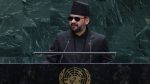
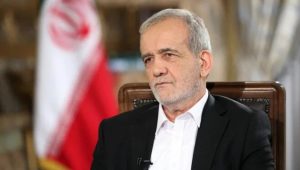
President Masoud Pezeshkian said he recently held a meeting lasting more than two hours with Supreme Leader Mojtaba Khamenei, who has played a central role in overseeing negotiations despite remaining out of public view since being wounded early in the conflict. Pezeshkian praised the supreme leader’s “sincere” engagement during what he described as a substantive in-person discussion.
In Washington, the Trump administration has sent mixed signals regarding its strategy to conclude the war. While a tenuous ceasefire has largely held since 8 April, new threats of military action have emerged amid stalled diplomatic progress. President Donald Trump stated this week that he believed Tehran was eager to reach an agreement, though he offered no specifics on the terms under discussion.
Diplomatic efforts and regional tensions
Pakistan, which hosted in-person talks between US and Iranian representatives last month, expressed cautious optimism about a potential breakthrough. “We expect an agreement sooner rather than later,” said Foreign Ministry spokesperson Tahir Andrabi. “We hope the parties will reach a peaceful and sustainable solution that will contribute not only to peace in our region but to international peace as well.”
Andrabi declined to provide a timeline or comment on the movement of diplomatic messages, underscoring the sensitivity of ongoing negotiations. Pakistani Prime Minister Shehbaz Sharif affirmed that Islamabad remained in “continuous contact with Iran and the United States, day and night” to extend the ceasefire and halt hostilities.
At the Vatican, US Secretary of State Marco Rubio discussed Middle East peace efforts with Pope Leo XIV, whose public opposition to the Iran conflict has led to open disagreement with President Trump. Rubio’s visit followed Trump’s criticism of the Pope’s stance on the war.
Saudi Arabia distances itself from US naval initiative
A Saudi official, speaking on condition of anonymity, confirmed that the kingdom did not support the US military’s short-lived effort to establish a safe passage for commercial ships through the Strait of Hormuz. The initiative, dubbed Project Freedom, was suspended after two days following limited participation and regional pushback.
“We told them that we are not part of this and that they cannot use our territories and bases for this,” the Saudi official said. The kingdom also conveyed to Iran that it would not be involved in any US military actions related to the strait initiative.
Only two American-flagged merchant vessels are known to have transited the US-guarded route before the operation was paused. The US military reported sinking six Iranian small boats that it said posed threats to civilian shipping during the brief deployment.
Market reactions and economic implications
Global oil markets responded cautiously to the latest developments. Brent crude prices fell to approximately $97 per barrel on Thursday, down from peaks above $115 earlier in the week, as traders weighed the prospects of a diplomatic resolution against persistent risks to energy supplies.
The Strait of Hormuz handles roughly one-fifth of global oil shipments and significant volumes of liquefied natural gas, fertiliser and other petroleum products. Any prolonged disruption to traffic through the waterway continues to pose substantial risks to global supply chains and economic stability.