


Iran has issued a stern warning of unrestrained counter-strikes in the event of an attack, even as international mediators attempt to prevent a fresh conflict from erupting between Tehran and Washington.
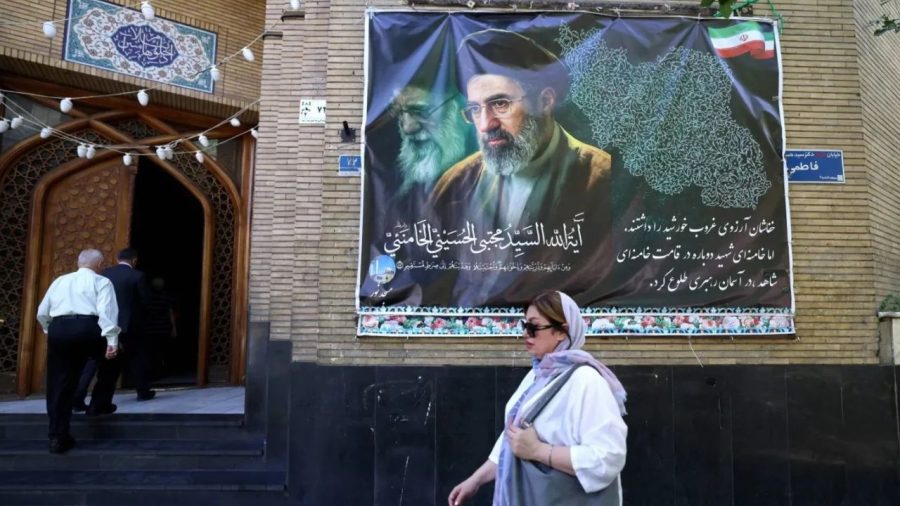
Mojtaba Khamenei, who succeeded his father, Ayatollah Ali Khamenei, following his assassination in March, has not been seen or heard from since taking office. On Saturday, his office announced that he had met with high-ranking military commanders to issue vital strategic directives, reports Al Jazeera.
According to an official statement, the Supreme Leader called for “maximum deterrence” by maintaining complete readiness to launch an “immediate and effective response, without geographical restriction” should Iran face further military aggression.
Iranian authorities stated that their forces stand ready to react decisively amidst reports indicating that American and Israeli forces are preparing potential new strikes against Iranian targets.
Diplomatic initiatives to avert a wider war are underway, with senior Qatari diplomats holding extensive negotiations in Tehran on Friday and further discussions anticipated on Saturday.

These mediation efforts follow a written communication sent days earlier by US Vice-President JD Vance to Tehran. The communication was reportedly directed to Mohsen Rezaei, leader of the Supreme National Security Council, who has emerged as a central figure in Iran’s strategic decision-making despite failing over several decades to win elective public office.
Whilst the precise contents of the letter remain unconfirmed, Vance is understood to have called for nuclear commitments from Iran, including allowing international inspectors to monitor the country’s nuclear programme and determining the fate of Tehran’s highly enriched uranium, which Iranian officials insist will not be shipped abroad.
Iranian local media verified that Tehran had received the letter, though they did not state whether an official reply had been dispatched through mediators. However, US President Donald Trump disputed reports that he had authorised renewed peace talks, claiming without further elaboration that Vance’s letter focused solely on permitting medical supplies to enter Iran.


According to Iranian media reports, Tehran’s baseline condition for mediated talks relies on its proposal to reopen the Strait of Hormuz within several days in exchange for restoring the memorandum of understanding established in June.
The demands put forward by Tehran encompass the lifting of an American naval blockade on Iranian ports, granting waivers on oil export sanctions, and establishing a truce across regional conflicts, including in Lebanon, where Israeli forces continue to occupy the country’s southern territory.
Meanwhile, the state-linked Iranian newspaper Jomhouri-e Eslami (“Islamic Republic”) published an editorial on Saturday evaluating the diplomatic outlook. The publication acknowledged that whilst prospects for achieving an agreement with Washington are slim and fighting could erupt following the US midterm elections on 3 November, it remains imperative for Iran to give a positive response to upcoming meetings and negotiations. The editorial stressed that war must not be allowed to be accepted as the inescapable fate for Iran.
Maritime Confrontation in the Strait of Hormuz
At sea, both Iran and the US continue their attempts to assert control over the strategic Strait of Hormuz. The Islamic Revolutionary Guard Corps (IRGC) has sustained attacks on merchant shipping and warned of ongoing hazards from alleged naval mines, whilst the US military provides operational guidance and cover for a shuttle system designed to transport crude oil out of the waterway from Arab nations.
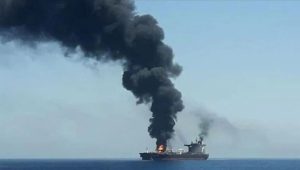
Tension flared further on Saturday afternoon when local authorities reported that a US drone bombed two Iranian fishing boats south of Qeshm island in southern Iran, injuring several fishermen. Late on Friday, Iranian state television claimed that a minimum of six oil tankers, amongst them a very large crude carrier bearing two million barrels of oil, suffered explosive damage in recent days after navigating “unauthorised” routes in the strait and allegedly striking mines. State media also broadcast video footage recorded from a small vessel operating close to a larger ship dealing with an onboard fire.

Adding to the maritime hazards, the United Kingdom Maritime Trade Operations (UKMTO) reported on Friday that a new form of attack was deployed against shipping a day earlier northeast of Oman’s Khasab. The UKMTO stated that a small craft approached a commercial tanker and attached two explosive devices to its hull above the waterline, triggering a detonation that caused an engine room fire and temporarily disabled the ship.
Dwindling Traffic and Counter-Claims
The UKMTO revealed that commercial traffic through the Strait of Hormuz has fallen dramatically, recording 155 inbound and 122 outbound vessel transits during the week ending 28 October—a 70 per cent decline compared to pre-war levels.
Contradicting claims of Iranian maritime control, General Brad Cooper, commander of US Central Command, released a video message on Friday detailing an aerial reconnaissance flight over the strait. General Cooper stated that he observed dozens of commercial vessels carrying crude oil, liquefied natural gas, and general cargo operating under the protection of US aircraft and sea drones.
“I didn’t see the IRGC out there at all,” General Cooper stated.
“They patrolled the Strait of Hormuz and surrounding waters for decades, harassing and threatening and seizing commercial vessels at will. But they were not out there because Iran’s navy is all at the bottom of the sea”.