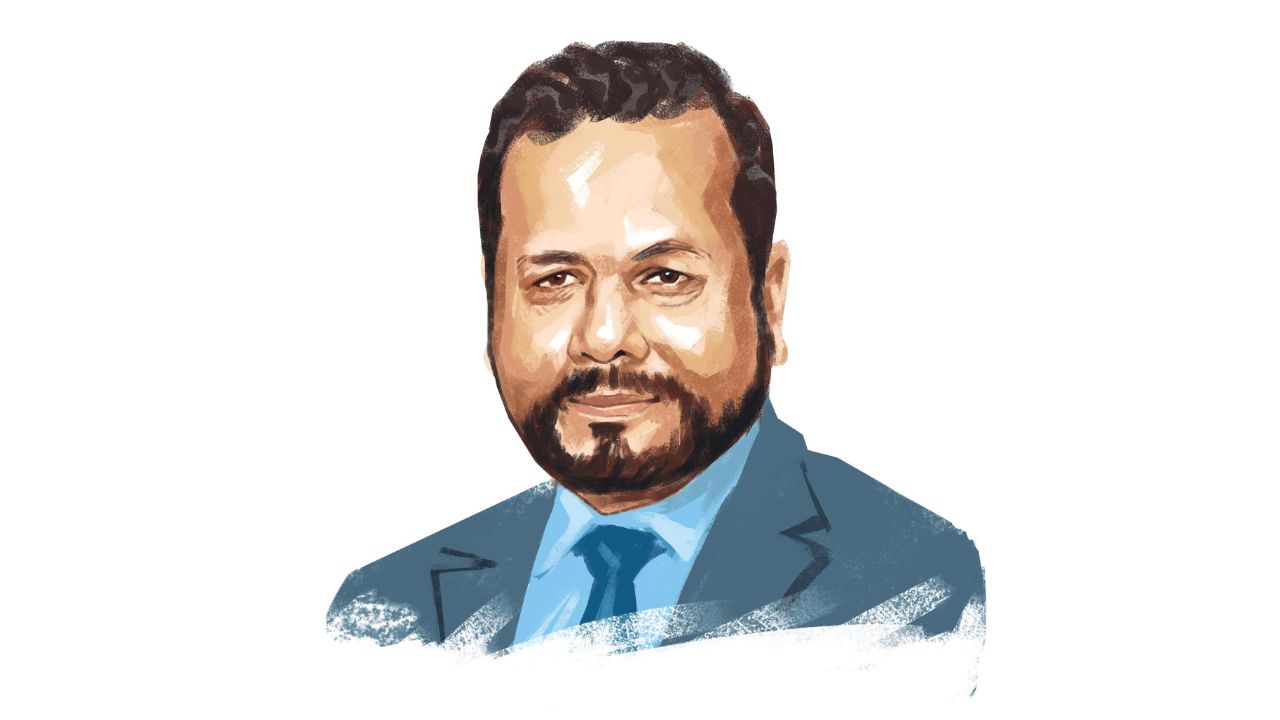

Foreign investment in Bangladesh has seen limited progress despite initial optimism about reforms, as overseas investors remain reluctant to place their full confidence in the country’s investment climate, according to Brummer & Partners (Bangladesh) Ltd CEO Muallem A Choudhury.
In an interview with TIMES of Bangladesh, the Bangladesh head of the Stockholm-based global investment manager attributed the trust deficit to a prevailing culture of fear, concerns over reputational risk, and shortcomings in the pace and quality of reforms — factors that continue to undermine business confidence.
He explained that foreign investment in Bangladesh primarily flows through two channels—direct equity investment and capital market participation—yet neither has shown meaningful progress in recent years.
Direct equity investment, which can be made on a 100% ownership basis or through joint ventures, has seen no visible growth, a trend also reflected in data from the Bangladesh Investment Development Authority (Bida).
While acknowledging Bida’s efforts to attract foreign investors, he said that the results have been minimal due to “a prevailing lack of confidence in Bangladesh’s investment climate.”
According to him, before committing their capital, prudent investors closely monitor how multinational companies already operating in the country are treated.
“Corporate experiences influence investor decisions,” he said, adding, “Procter & Gamble has already exited Bangladesh, and others may follow.”
He added that the recent incident involving Nestlé Bangladesh, where a Food Safety Court issued an arrest warrant against its managing director, has been extremely damaging to investor sentiment.

Such actions, he said, raise serious concerns among investors and cause significant reputational harm, reinforcing the perception that multinational companies and local fast-moving consumer goods manufacturers are not treated equally.
“Multinational firms typically do not engage with regulators in the same way some local companies do, leaving them more vulnerable within the regulatory environment,” said Choudhury, whose firm pioneered the deployment of foreign private equity capital into growing Bangladeshi companies.
Turning to the capital market, he said, “Its current weak condition cannot be attributed solely to the present government but stems from years of flawed policies, including price caps and other restrictive measures.”
As a result, most foreign investors have exited the market, with few new entrants as Bangladesh struggles to compete with regional peers on returns, market size, ease of operation, and overall attractiveness.
Reflecting on the reform agenda, he said initial optimism—particularly regarding taxation, the money market, and capital markets, has yet to translate into broad-based progress.




He acknowledged some positive outcomes, including halting the decline in foreign exchange reserves, improved forex availability and stabilisation of the exchange rate, alongside administrative steps such as removing police verification requirements for passport issuance.
However, he said that there has been no meaningful progress at the National Board of Revenue, where “a harassment-driven attitude among tax officials largely persists, with little visible improvement in behaviour or organisational culture.”
The most disappointing issue, he said, has been the delay in implementing the Public Issue Rules by the Bangladesh Securities and Exchange Commission, adding, “The draft framework appears overly complex and difficult to apply.”
Meanwhile, Bangladesh passed a year without any initial public offering.
He questioned, “Why Bangladesh does not adopt simpler, more effective models used by peer countries such as Vietnam, which he described as a proven success story.”
Bangladesh urgently needs “pragmatic and competitive policies rather than rigid control-and-command regulation.”
“No one will wait for us,” he said, emphasising that policies must be designed, implemented, and executed to attract and retain investors.
Reflecting on 2025, he noted that investors continue to face numerous challenges, beginning with a fear-driven culture stemming from weak law and order.
Declining consumption caused by high inflation and limited employment opportunities has further destabilised the investment environment, while “slow reforms, passive regulators, and entrenched corruption remain major obstacles.”
Port operations, he added, suffer from inefficiency and corruption, with steps taken to improve performance through privatisation or foreign participation being hindered.
Beyond facilitating entry, “Bangladesh must also ensure a hassle-free exit for investors, warning that excessive bureaucracy discourages capital inflows.”
He highlighted the requirement for central bank approval even for transactions between private parties, along with cumbersome procedures for capital and profit repatriation, as strong deterrents to investor confidence.
Comparing the situation with 2023–24, Choudhury noted that conditions have not exactly worsened, but expectations for rapid restructuring have failed to materialise, while law and order situation deteriorated.
He criticised the government for not positioning itself as “a benevolent authority that punishes wrongdoing and rewards good conduct.”
“Bureaucratic and policy reforms remained a distant dream, with no visible progress toward transforming bureaucracy into a true servant of the people.”
Looking ahead, Choudhury emphasised that overcoming investment bottlenecks will depend entirely on the commitment and effectiveness of policymakers.
Without definitive changes in workplace culture, coupled with sound policies and political stability, he warned, “meaningful improvement in investor confidence will remain uncertain.”
Alongside prudent policymaking, there must be a focus on improving the quality of manpower in investment authorities, the central bank and other regulatory bodies, suggested Choudhury.
“By actively listening to investors’ concerns and suggestions and reflecting their priorities in a constructive manner, significant progress can be achieved,” he added.