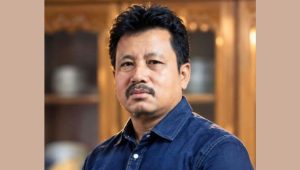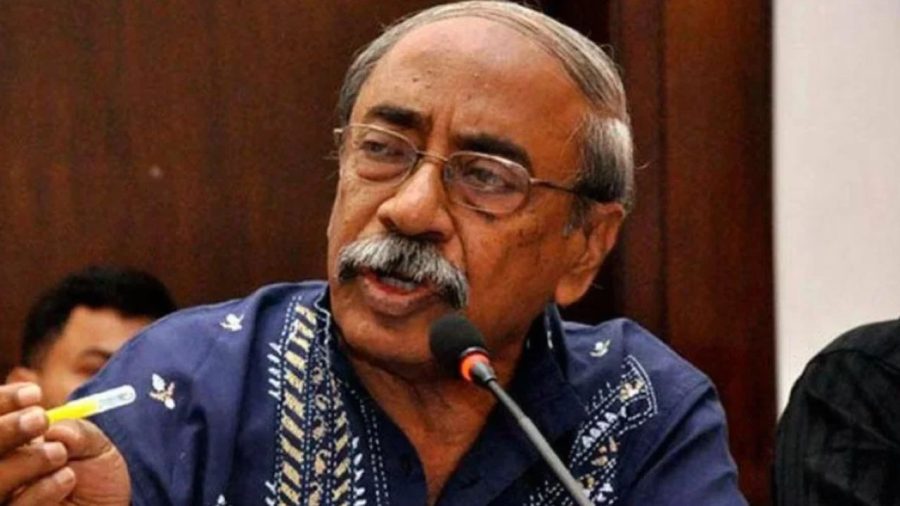



A coalition of ten international human rights and genocide prevention organisations has issued a joint open letter demanding the immediate release of Bangladeshi writer, journalist, and documentary filmmaker Shahriar Kabir on humanitarian grounds.
The joint statement, released on 15 October, expressed deep concern over the continued detention of the historical justice advocate, who has been held in prison since September 2024 on charges widely condemned as politically motivated.
The open letter was issued jointly by Genocide Watch (United States), chair of the Alliance Against Genocide; Raoul Wallenberg Centre for Human Rights (Canada); European Bangladesh Forum (UK and EU); International Crimes Strategy Forum (United Kingdom); South Asian Democratic Forum (Belgium); NEVER AGAIN Association (Poland); Greek Helsinki Monitor (Greece); Lemkin Institute for Genocide Prevention and Human Security (United States); Global Project Against Hate and Extremism (United States); and Anti-Discrimination Centre Memorial Brussels (Belgium).
The statement was endorsed by international scholars and human rights experts, including Irwin Cotler, former minister of justice and attorney general of Canada; Ben Kiernan, professor of history emeritus at Yale University and founding director of the Genocide Studies Program at Yale University; Jan Tomasz Gross, professor of history emeritus at Princeton University; Helen Jarvis, vice president of the Permanent People’s Tribunal in Cambodia; and Gregory H Stanton, founding president of Genocide Watch and chair of the Alliance Against Genocide.
Lifelong advocacy and legal charges
Kabir, born in 1950 and a recipient of the Bangla Academy Award, was arrested at his home in Dhaka on 17 September 2024 under the authority of the interim government led by Muhammad Yunus following political unrest and the fall of the government of Sheikh Hasina.
For decades, Kabir has documented the history and legacy of the 1971 Liberation War of independence, authoring over 70 books and 16 documentary films examining international crimes committed during the war, including the role of the Pakistani military and its local collaborators.

Kabir, who lost two close family members killed during the 1971 genocide, also serves as president of the advisory council of the Forum for Secular Bangladesh and Trial of War Criminals of 1971, Bangladesh’s leading civil society organisation campaigning for justice and accountability for the 1971 atrocities.
In total, 14 criminal cases have been filed against Kabir, comprising 12 under the Penal Code and two before the Bangladesh International Crimes Tribunal (ICT). The charges involve allegations of murder, attempted murder, abetment, rioting, and crimes against humanity linked to the 2024 student protest violence and a 2013 rally organised by the radical fundamentalist movement Hefazat-e-Islam at Shapla Chattar.
According to his lawyer and human rights monitors, no evidence has been submitted against Kabir in the murder cases, and the prosecution has failed to produce evidence in most other cases.


Although Kabir held no official government position or function, was not present at any site of violence, and has consistently used non-violent means throughout his decades of advocacy, he was formally charged before the ICT in July 2026.
The open letter highlighted that his prosecution before the ICT – a court initially established to prosecute 1971 war crimes – ironically targets a figure whose lifelong work focused on documenting those very atrocities.
UN findings and international appeals
In Opinion No. 40/2025, adopted on 25 August 2025, the United Nations Working Group on Arbitrary Detention concluded that Kabir’s detention was arbitrary under Categories I, II, III, and V, lacked a legal basis, and stemmed from his exercise of freedom of expression and his secular views opposing religious extremism.
The panel urged his immediate release, an independent investigation, and enforceable rights to compensation.
On 14 April 2026, five UN special rapporteurs reiterated serious concerns regarding his detention and due process, criticising authorities for failing to provide evidence and rejecting bail on humanitarian grounds.
Earlier, on 12 March 2026, leading global civil society organisations addressed an urgent appeal to Tarique Rahman, prime minister of Bangladesh in office since February 2026, while Reporters Without Borders also called for Kabir’s immediate release.
Kabir was previously detained between 2001 and 2002 after documenting attacks on Hindu minorities, during which Amnesty International recognised him as a prisoner of conscience before court proceedings dismissed all charges as baseless in 2008.
Deteriorating health and risk to life
The signatories raised severe concerns regarding Kabir’s deteriorating health, noting that he suffers from heart disease, diabetes, and kidney problems, and requires a wheelchair due to a leg injury sustained decades ago when he was shot by a fanatic.
While in custody, Kabir has suffered three mild heart attacks, experienced significant weight loss, and been consistently denied access to a wheelchair.
Despite his inability to walk or climb stairs, he has been placed on the second floor of Kashimpur Prison, severely restricting his access to food and medication.
Reports also detailed verbal abuse, humiliation, and mob attacks during court appearances, which the open letter identified as a violation of the UN Nelson Mandela Rules that puts his life at risk.
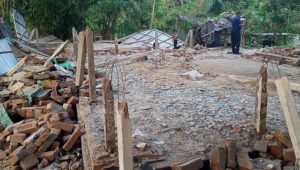
The joint statement contextualised Kabir’s prosecution within broader revisionist attempts since 2024 to erase or distort Bangladesh’s historical memory of the 1971 genocide through the destruction and alteration of Liberation War monuments and memorials.
The open letter called on the government of Bangladesh to immediately release Kabir on humanitarian grounds, ensure his safety and dignity, provide urgent specialist medical care, implement the findings of the UN Working Group, guarantee due process, and protect journalists, authors, and human rights defenders from intimidation and historical denialism.