The interim government allowed “police-style policing” on campuses under the guise of “pressure groups”, the University Teachers’ Network has alleged, as it expressed deep concern over the return of a culture of fear in educational institutions.
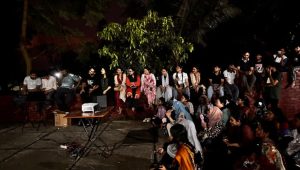
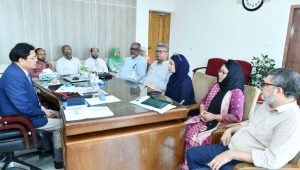
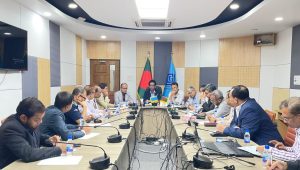
At a roundtable titled “Post-Uprising University: Recent Realities” held on Saturday at the International Mother Language Institute in Segunbagicha, speakers said that while the trial of July killings has become a farce, the interim government also permitted policing on campuses.
“As a result, we have seen a stagnation in the trial of those killed by mobs on one hand, and on the other, the emergence of elected student representatives as a new force attacking teachers and students,” the network said in a statement.
Culture of fear returns
Speakers noted that the initial conclusion of the July 2024 Mass Uprising occurred on 5 August with the fall of the authoritarian government. The incubator of Hasina’s fascist culture of fear was the public university campuses.

“By establishing the culture of common rooms and guest rooms in residential halls, the campuses became the main stage for suppressing dissent and fostering a ‘concentration camp’-based political culture,” they said.
However, after 5 August, the unity of July has been disrupted, and the ripple effects have reached the campuses. “Repression has begun to repeat, and the forces of resistance have become divided and weakened,” speakers added.
Attacks on media, cultural institutions
During the interim period, sculptures and Liberation War memorials were vandalised across the country, repeated attacks were carried out on the house at Dhanmondi 32, and arson was committed against important media houses and cultural institutions.


These acts were led by leaders of various student organisations claiming sole credit for the uprising, most of whom assume the identity of “ordinary students” or “Tawhidi Janata” when committing mob violence.
Students from Dhaka, Jahangirnagar, and Rajshahi universities beat to death four citizens, two of whom are former Chhatra League activists from JU and RU. Additionally, a Chhatra Dal leader from DU has been killed. Hundreds of teachers have been harassed, physically attacked, and ‘mobbed’ out of their institutions.
Student camps established dominance
During the 18 months of the Yunus government, the educational sphere entered a new level of culture of fear. Student camps claiming not to be appendages of political parties used all their power to bar others from campus and prohibit their politics, the network said.
“Most student parliaments went under their control. However, how they started ‘mobbing’ immediately after capturing the student parliament has shown us how to legitimise organised violence in the name of justice,” they added.
Student parliament leaders participated gleefully in attacks on the Daily Star and Prothom Alo. Calls to attack Udichi and Chhayanaut have come from elected student parliament leaders at Rajshahi and Jahangirnagar universities, causing grave concern among conscious circles.
Little change under elected government
The educational sphere became a mob’s haven during the interim period, and it does not seem to have changed much under the elected government, the network claimed.
“Under the elected government, the attack on Emi by Ducsu leaders, the attack by Azadi Mancha on citizens having tea at Shahbag, the attack by Chhatra Dal on Ducsu leaders, tensions arising from internal factional conflicts of Chhatra Dal on various campuses, and most recently, following a horrific attempted rape on a female student at Jahangirnagar University, the administration’s irresponsible role and the divisive attempts by two student organisations have multiplied our concerns manifold.”
The roundtable expressed solidarity with the ongoing anti-rape and anti-attempted murder movement at Jahangirnagar University.
Among the students who participated were Sumaiya Sikdar (Chittagong University), Jarin Tasmin Pushpa (Islamic University, Kushtia), and Abdul Kader (Dhaka University), a student leader of the July Mass Uprising.