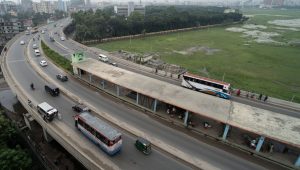

The interim government has begun work on the country’s first-ever integrated national transport master plan, with the goal of finalising the map by December.
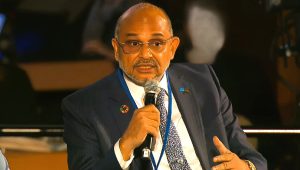
Sheikh Moinuddin, special assistant to the chief adviser on road transport, bridges, and railways, explained that the initiative intends to integrate all modes of transportation into a single coordinated framework.
This transport sector master plan represents a multi-modal approach, focusing on the development and integration of road, railway, and water transport. It aims to foster economic growth, enhance efficiency, and improve safety within the sector.
Key elements of the plan include expanding the railway network, modernising ports and waterways, and upgrading the road infrastructure along with better traffic management.
The plan also prioritises sustainability, with provisions for promoting public transport, electric vehicles, and large-scale investments in projects such as the Revised Strategic Transport Plan for Dhaka and the Railway Master Plan covering the next 30 years.

“We have already started creating the national map, and InshaAllah, by December, both the final map and the master plan will be completed. Our goal is to finalise and leave behind this master plan within the tenure of the current government,” Moinuddin shared in an interview with UNB.
He further noted that the master plan is being designed to be adaptable so that future governments can continue its development efforts.
“This will ensure the consistent implementation of long-term transport and infrastructure projects,” he said.


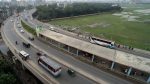
The special assistant added that, for the first time in Bangladesh, the plan will combine road, rail, aviation, and waterway transport into a single, cohesive framework.
“Every developed country has an integrated master plan, which we lacked until now. We are addressing that gap,” Moinuddin said.
He highlighted that the plan would streamline logistics and supply systems, including the transportation of goods from ports and economic zones. “For example, agricultural products from the northern districts often spoil due to transport bottlenecks. The master plan will help resolve such issues,” he explained.
Bangladesh is collaborating with the World Bank and the Asian Development Bank (ADB) to implement the master plan.
“We are conducting the feasibility study in-house, but both the World Bank and ADB are providing technical support and international expertise,” said Moinuddin.
While local experts bring deep understanding of the domestic context, foreign specialists contribute valuable global experience. “A professor from IUB is already working with us, and we plan to include more international experts to enhance the quality of the plan,” he added.
The objective, according to Moinuddin, is to spur balanced development across all districts. “Transportation will be the driving force for developing economically lagging regions. Once connectivity improves, industrial and economic growth will naturally follow,” he said.
He also pointed out that Bangladesh’s transport system has traditionally been Dhaka-centric, and the aim is to strengthen inter-district connectivity so that national development is no longer centred solely around the capital.
Officials noted that the country’s transport and logistics sectors have long struggled with fragmented planning, poor inter-agency coordination, and infrastructure concentrated around Dhaka.
Previous governments have launched isolated projects in roads, bridges, and railways, but without a comprehensive national framework.
The new integrated master plan, backed by international lenders, is expected to promote balanced regional development and ensure long-term sustainability.