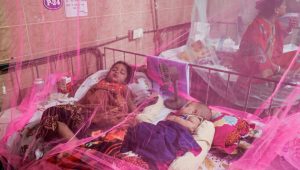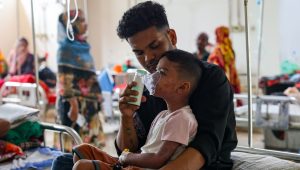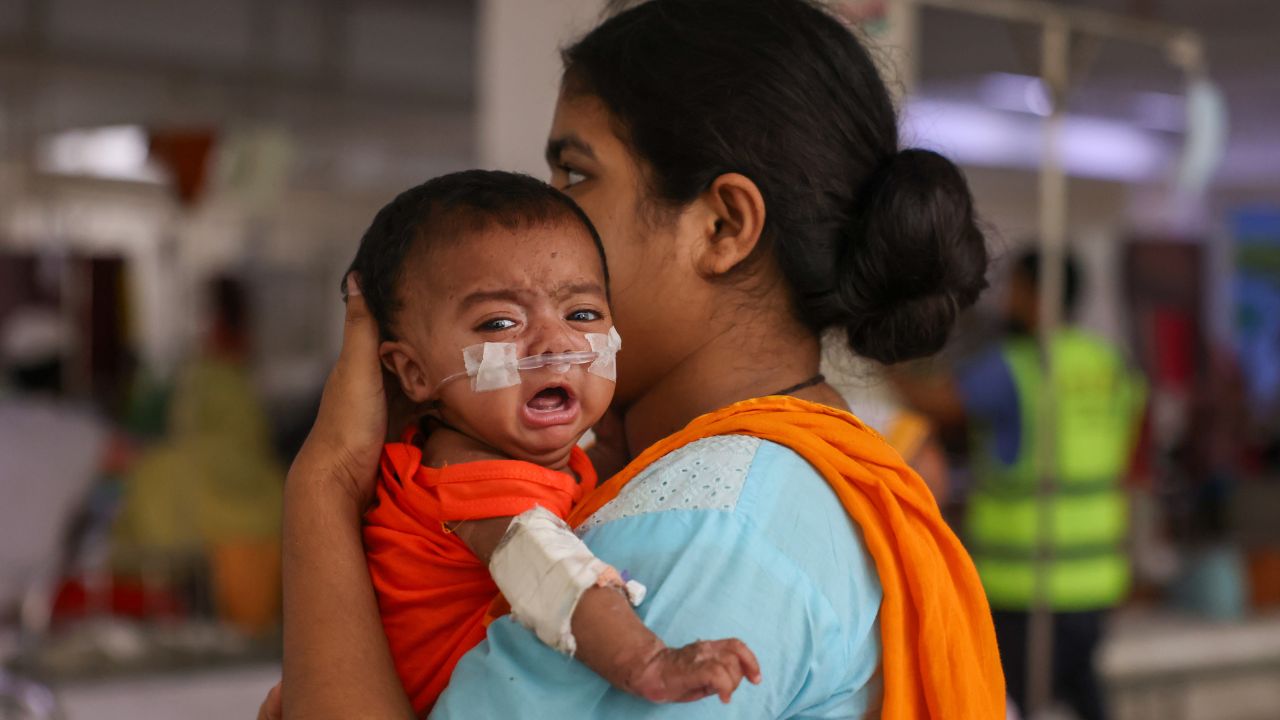

Afternoon sunlight streams through the windows of the measles ward at the Dhaka North City Corporation’s Covid-19 Dedicated Hospital, falling across rows of beds occupied by children battling the highly contagious disease.
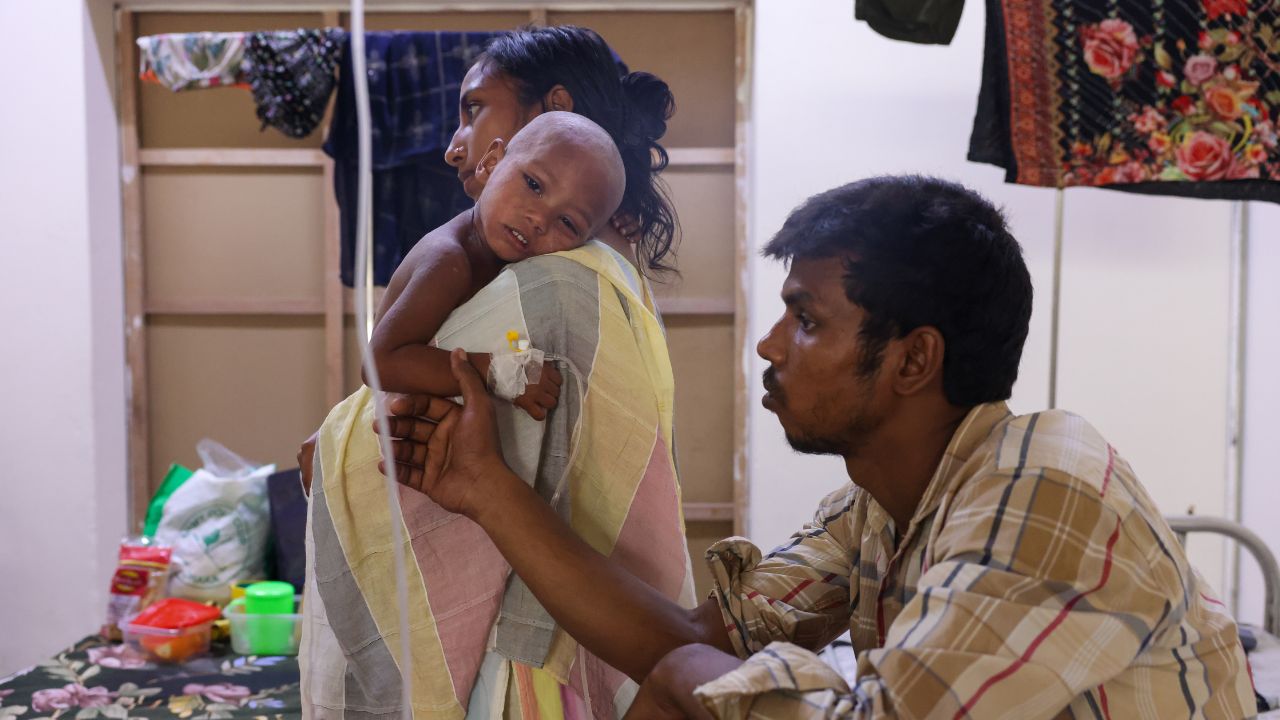
The ward echoes with the soft hum of nebulisers and the hiss of oxygen. Tiny faces disappear behind masks, while beside almost every bed sits a mother. One gently rests her hand on her child’s burning forehead.
Another patiently tries to feed medicine with a spoon. Some simply watch their children in silence, as if waiting for the reassurance of the next breath.
Every bed tells a story of fear, sleepless nights and unwavering hope.
Their struggle rarely ends after leaving the hospital. Even children who recover from measles often remain vulnerable to serious complications, leaving parents trapped in a cycle of anxiety.
Child specialist Dr Md Atiqul Islam says pneumonia has become one of the most dangerous complications following measles, often threatening children who initially appear to be recovering.
Research suggests that the burden extends far beyond the child. A study “Health of Mothers of Children with A Life-Limiting Condition: A Comparative Cohort Study” by Professor Lorna Fraser and colleagues at the University of York’s Martin House Research Centre found that mothers caring for children with life-limiting illnesses face significantly higher risks of depression, anxiety and other mental health conditions.

They are also more likely to develop cardiovascular disease, hypertension, type 2 diabetes and obesity, while their risk of premature death is more than 50 per cent higher than that of mothers of healthy children.
According to the Directorate General of Health Services (DGHS), the ongoing measles outbreak has claimed 840 lives. Behind every number is a family living with an irreplaceable loss.
For Kuheli Jahan, that loss has a name – her eight-month-old daughter, Mishkat.
When Mishkat was admitted to hospital on 13 April, she initially appeared to be recovering. Her fever subsided, and the rash slowly faded. Kuheli believed the worst was over.
Then everything changed.

Her daughter’s breathing suddenly deteriorated. Doctors diagnosed pneumonia and transferred her to the neonatal intensive care unit. Kuheli and her husband borrowed money from relatives to admit Mishkat to a private hospital, clinging to hope with every passing hour.
But hope was not enough.
Today, at their home in Shayestabad, Barishal, Mishkat’s toys remain where she last left them. “She was recovering from measles,” her father said quietly over the phone. “But she couldn’t survive pneumonia.”
Across the ward, however, another story is unfolding. Salma Begum from Shariatpur is preparing to take her 18-month-old son, Rafi, home. When they arrived a week earlier, Rafi had a high fever, a body covered in red rashes, and severe breathing difficulties.
For several days he depended on oxygen. “Every night I felt I was about to lose him,” Salma recalled, her voice still carrying the fear of those long nights.
This time, fortune has been kinder. Rafi’s fever has disappeared. The oxygen mask has been removed. Sitting up in bed, he now plays with a small toy car and manages to eat a few spoonfuls of food.
“The doctors said we may go home in a day or two,” Salma said. “For days, I prayed for only one thing that my son would return to my arms healthy. Now it feels like my prayers have finally been answered.”
Yet the ward never truly empties.
As one child recovers, another arrives. According to the DGHS, more than 1,000 measles patients are being admitted to hospitals every day, and more than 110,000 people have already been hospitalised during the outbreak.
Among them is the five-year-old son of Farida Begum from Noakhali.
When her son’s fever first appeared, she took him to the local upazila health complex. Doctors immediately advised transferring him to Dhaka.
The family had no money. Farida borrowed Tk15,000 from an acquaintance to hire an ambulance. Much of the loan disappeared on transportation alone. After being referred from Dhaka Medical College Hospital, her son was finally admitted to the DNCC hospital in Mohakhali.
Her husband, Alif Biswas, drives a rented auto-rickshaw in Noakhali. To continue paying for treatment, he too had to borrow money from the vehicle owner.
The couple survive on inexpensive meals from roadside stalls, but they continue buying fruit, milk and nutritious food for their son with borrowed money. “We can stay hungry if we have to,” Farida said, looking at her son. “I just want him to recover and come home.”
She paused before adding softly, “But he doesn’t want to eat anything.” Leaving the measles ward does not mean leaving the struggle behind.
Some mothers walk out holding their children’s hands. Others leave with arms that will never again hold the child they came with. Many remain beside hospital beds, waiting for a little more good news.
But every mother’s prayer is the same: let the suffering fall on me, not my child.