






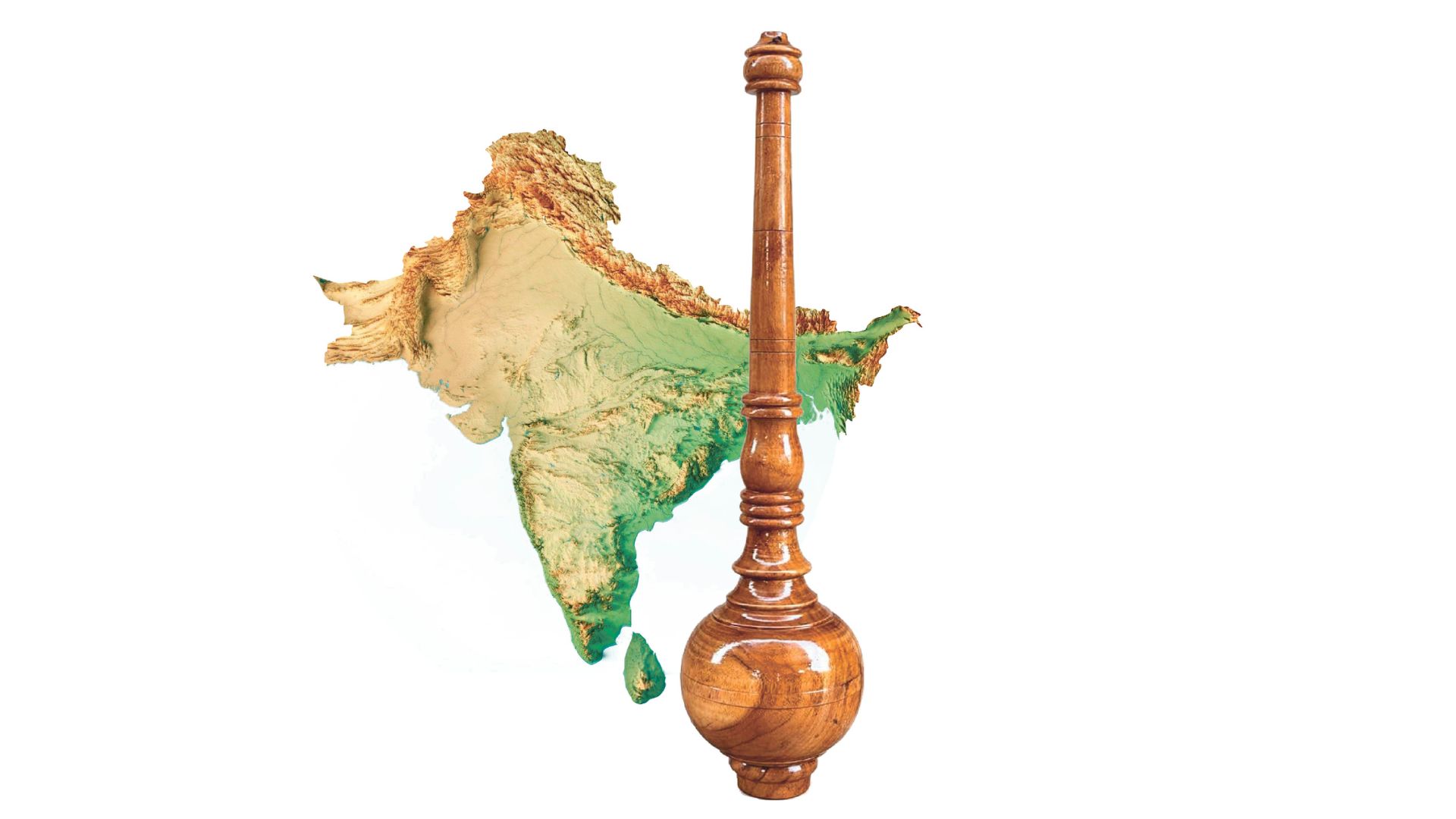
Long before barbells filled commercial gyms and kettlebells became symbols of functional fitness, strength was forged with a single, deceptively simple tool: The gada.
Part weapon, part training implement, the gada has been a symbol of power on the Indian subcontinent for thousands of years. Today, it is experiencing an unlikely revival, finding its way into modern fitness studios, physiotherapy clinics and home gyms as people rediscover an exercise tradition that predates almost every piece of equipment found in contemporary gyms.

In Hindu tradition, the gada is inseparable from Hanuman, the monkey deity revered for his immense strength, unwavering devotion and courage. His iconic mace came to represent not only physical power but also discipline and service.

The weapon is also associated with Bhima, one of the central heroes of the Mahabharata, whose mastery of mace combat made him one of the greatest warriors of the ancient epic, and with Balarama, another legendary wielder of the gada.
Ancient Indian texts describe gada-yuddha, or mace fighting, as a sophisticated martial discipline requiring strength, balance, timing and precision. Yet as warfare evolved and swords, firearms and artillery replaced the mace on the battlefield, the gada itself refused to disappear.
Traditional Indian wrestling schools, known as akharas, transformed the weapon into a conditioning tool. Wrestlers, or Pehlwans, began swinging increasingly heavy wooden gadas and mudgars, long club-shaped implements, to build shoulder endurance, grip strength, rotational power and remarkable stamina.
Unlike a barbell, whose weight is evenly distributed, the gada concentrates most of its mass at one end, forcing the body to stabilise every movement and recruit muscles that conventional weightlifting often overlooks.
For generations, the rhythmic arc of the gada became as familiar to Indian wrestlers as the sound of the wrestling pit itself.
Among its most celebrated practitioners was The Great Gama, widely regarded as one of the greatest wrestlers in history. Undefeated throughout his professional career, Gama’s legendary training routine combined thousands of Hindu squats and push-ups with intense sessions of gada and club swinging. His extraordinary feats of strength helped cement the instrument’s reputation as a tool capable of producing exceptional athletes.
Outside India, however, the gada remained relatively unknown. During the British colonial era, lighter Indian clubs were adopted into military physical training and eventually spread across Europe and North America. The heavier gada stayed rooted in India’s traditional wrestling culture, quietly preserving centuries of knowledge while the rest of the fitness world chased newer trends.
Only in recent years has the ancient implement returned to the spotlight. Modern manufacturers now produce steel maces inspired by the traditional gada, and strength coaches increasingly recommend them for improving shoulder mobility, rotational strength and joint stability. Professional athletes in sports ranging from mixed martial arts to cricket and baseball have incorporated mace exercises into their conditioning programmes, recognising the value of training movements rather than isolated muscles.
Much of gada training revolves around smooth, circular motions such as the “360” swing, where the mace travels behind the head before returning to the starting position. Although visually impressive, the movement is less about brute force than controlled coordination. Every repetition challenges the shoulders, forearms, core and upper back while encouraging mobility through a natural range of motion.
For office workers spending long hours at desks, the emphasis on posture and shoulder mobility can be especially valuable. For older adults, lighter mace exercises may improve balance and functional movement when performed with appropriate guidance.
And for experienced gym-goers, gada training offers a refreshing alternative to conventional lifting by demanding stability, coordination and endurance at the same time.
Those interested in trying it need not begin with a heavy implement. A steel or wooden mace weighing between 4kgs and 7kgs is sufficient for most beginners. After a gentle warm-up of shoulder circles and arm swings, newcomers can perform three sets of 10 front pendulum swings, followed by three sets of five slow 360 swings in each direction, resting between sets and focusing on smooth technique rather than speed. The session can finish with light overhead holds and gentle stretching to improve shoulder mobility.
Perhaps the greatest appeal of gada training lies in its simplicity. It requires little equipment, very little space and almost no technology. Yet with every controlled swing, it connects modern practitioners to a tradition that has endured for centuries.


