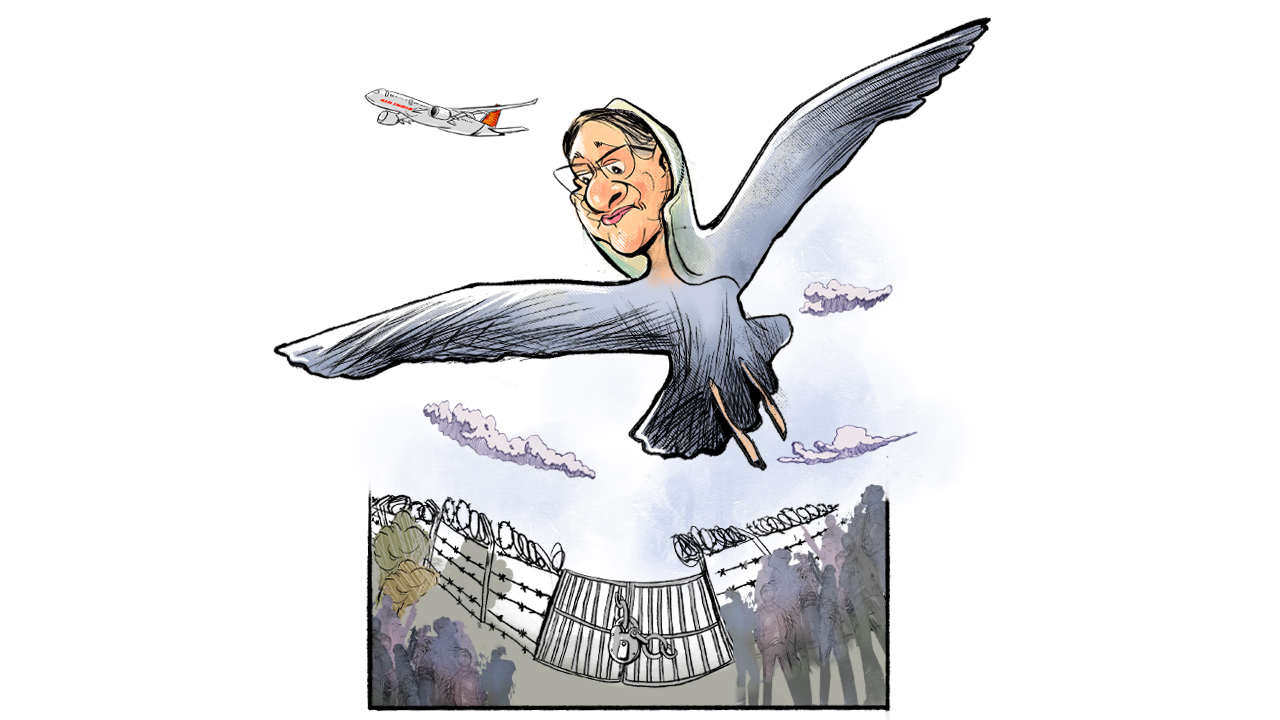

Deposed prime minister Sheikh Hasina has announced plans to return from exile in India around next December in a bid to surrender to Bangladesh authorities.
The 78-year-old Awami League leader, who faces a death sentence in her home country for crimes against humanity, told Reuters in a telephone interview on Friday that she and her senior party colleagues intend to return voluntarily to present themselves in court.
Political leaders in Bangladesh, however, branded the announcement a “political stunt”.
Less than one and a half months ago, on 23 May, TIMES of Bangladesh broke the report titled “Hasina plans to face trial”, which stated that she had expressed a strong desire to return home as early as this year to stand by the party grassroots.
Insiders suggested, according to the TIMES report, she might seek a travel pass from the Bangladesh High Commission in New Delhi by August, as her diplomatic passport has been revoked.
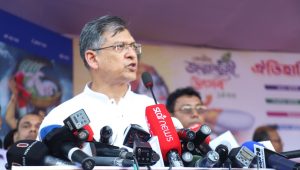
Shafiqur Rahman, leader of the opposition in parliament and ameer of Jamaat-e-Islami, said, “Hasina insisted she would never flee the country, yet she was forced to leave.”

“Now she claims she will return, but she never will,” Shafiqur said while speaking to journalists at the Chattogram Circuit House on Friday.
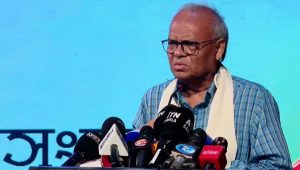
National Citizen Party Convener Nahid Islam said, “We want her to return so that her death sentence can be implemented. The government must extradite this genocidal killer through proper diplomatic and legal channels to execute the verdict.”
Speaking to journalists in Dhaka on Friday, Nahid, the opposition chief whip in parliament, added, “How Sheikh Hasina returns, or whether she surrenders, is for the government to decide. The state will determine the timing, logistics and execution of the trial verdict with absolute preparedness.”
In the Reuters interview, Hasina acknowledged the significant risks associated with her return, stating, “They may arrest me on my return, they may even kill me.”



She added, “Still, I have to go,” expressing a desire to return to the land where her parents are buried. She clarified that she originally fled the country in 2024 because of “threats on her life as crowds advanced towards her residence” during a student-led uprising.
However, the BNP government remains on high alert, viewing the proposed homecoming as a dangerous “political trap” designed to incite national chaos.
Prime Minister Tarique Rahman earlier warned that the move was a “calculated ruse” intended to re-energise Awami League activists and trigger street protests.
BNP policymakers fear that if the Supreme Court rejects any potential appeal against her death sentence, it could lead to severe political instability and “anarchy”.
Hasina told Reuters that the legal proceedings against her, including a death sentence for ordering a crackdown on protesters, were “farcical”.
She claimed that her surrender would prove this to the public and maintained that she was not worried about imprisonment, citing her history of arrests in 1981 and 2007. Despite the legal pressure, she confirmed that she had “not consulted with any foreign government on whether or when to return”.
The planned return of the country’s longest-serving leader is expected to test the current government’s stability and could impact strained diplomatic ties between Dhaka and New Delhi.
While Bangladesh has repeatedly sought her extradition, India’s foreign ministry stated that it was examining the request and remained committed to strengthening bilateral ties.
Hasina revealed that she has been organising the party through online meetings covering 125 of Bangladesh’s 300 parliamentary constituencies.
Although she admitted that her conviction may mean she is “not able to contest elections”, she questioned the suspension of her party, stating, “If we have done badly, let the people decide.”
She maintained that while “mistakes can happen” during a long-serving administration, the ultimate right to judge a government belongs to the people.
Hasina was a dominant figure in Bangladesh for half a century, thrust into the spotlight following the assassination of her father, an independence leader, and much of her family in a military coup.
While she was credited during her 20-year tenure with “turning around the economy of the Muslim-majority nation”, her rule also generated accusations of crushing dissent.
A United Nations report estimated that as many as 1,400 people were killed during the unrest that led to her downfall.