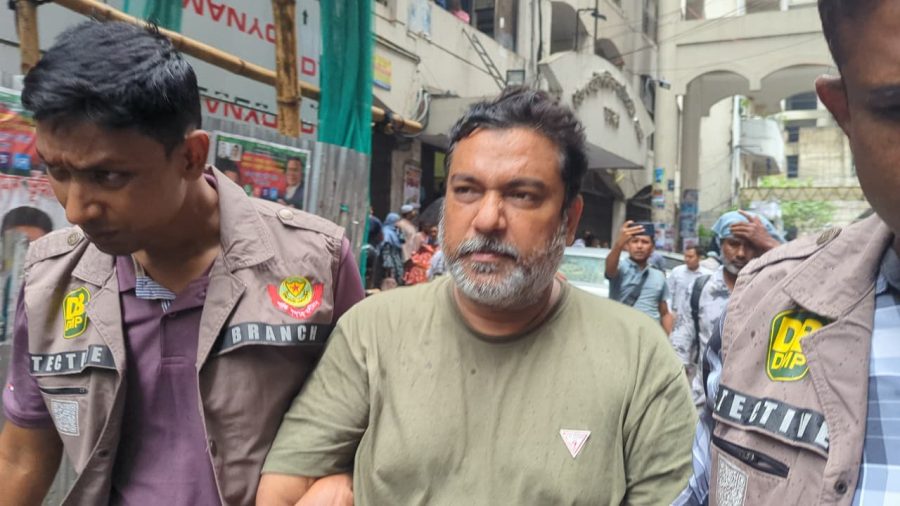



A Dhaka court on Thursday granted a three-day remand for 44-year-old Indian national Rabiul Islam in a fourth phase of questioning in a case involving espionage and activities against state security and national interests.
Judge Habib Ullah Pias of Dhaka Additional Chief Metropolitan Magistrate Court-17 passed the order following a hearing on a seven-day remand application submitted by the police. State Counsel Shamsuddoha Sumon confirmed the court order.
Rabiul is accused of collecting sensitive information, official documents, and photographs of restricted areas and key government installations to transmit them to a foreign intelligence agency, as well as aiding its agents. The case against him has been filed under Sections 3, 3A, 4, 5, and 9 of The Official Secrets Act, 1923.
According to case allegations, Rabiul is a resident of Gauribhoj village under Matia Police Station in North 24 Parganas district of West Bengal, India. However, state prosecution lawyers Mohammad Shamsuddoha Sumon and Harun Or Rashid argued during the hearing that the accused is a citizen of Assam province, India.

Investigation Officer (IO) Inspector Md Nur Alam of the Ramna Division Detective Branch (DB) of police had applied for a seven-day remand for further interrogation. Prior to this order, the accused had already undergone a total of 15 days of remand across three phases – eight days in two phases following his initial arrest under Section 54 of the Code of Criminal Procedure (CrPC), and seven days in a single phase after being charged in the espionage case.
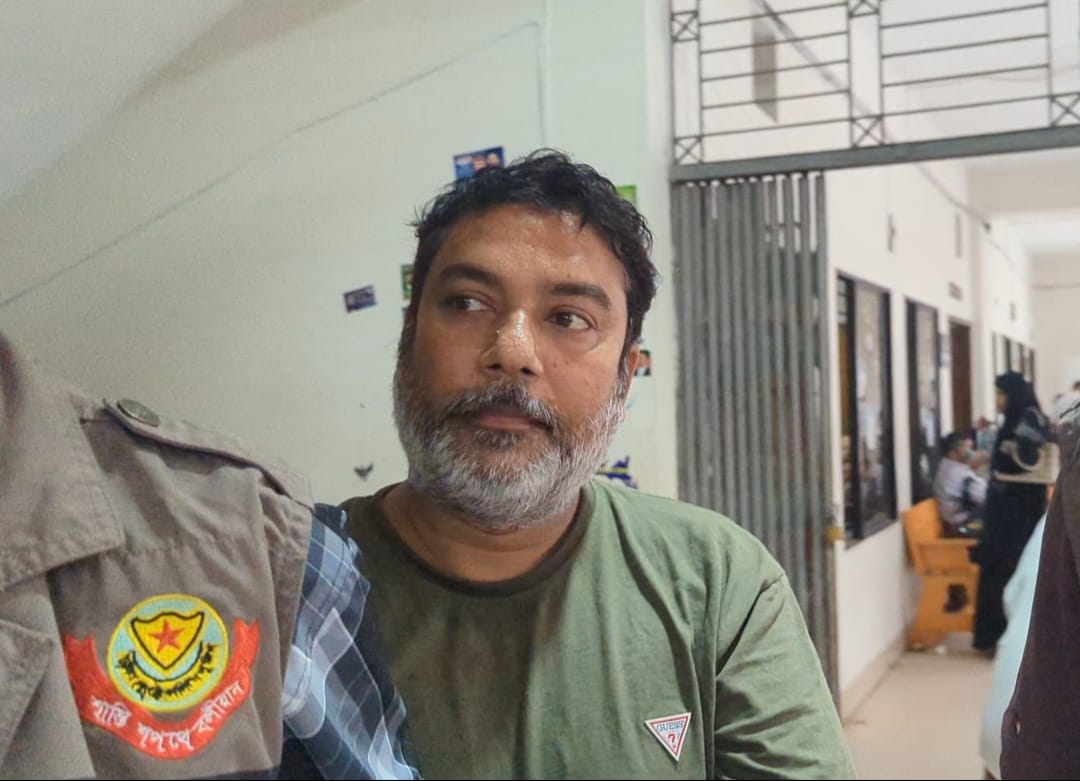
Arguing in favour of the remand, prosecution lawyers claimed that Rabiul has been operating as an agent for the Indian intelligence agency “RAW” and transmitting sensitive information gathered from key locations and government offices in Bangladesh to various countries. They noted that information usually extracted from other accused persons within a single day could not be obtained from Rabiul even after 21 days of questioning.




The prosecution emphasised that extended questioning is essential to identify and bring to justice those assisting him locally, uncover who in Bangladesh is supplying him with information and facilities, identify his sponsors and financiers, determine the full names and addresses of his local accomplices for arrest, and trace the communication channels and networks used to leak information to the foreign agency.
In the remand application, the IO said that Rabiul provided vague and fragmented responses during earlier interrogations without disclosing clear details on any matter. While police suspect him of working as an agent for a country’s intelligence agency, clear details regarding which country’s agency he represents, who his sponsors and financial backers are, and the identities of his local associates have not yet been established.
According to police records, Rabiul entered Bangladesh on 14 September through the Bhomra Land Port in Satkhira and stayed in Dhaka from 15 to 22 September. Based on secret information, police detained him at around 12:30am on 22 September in front of House 60, Road 13, Sector 11 under Uttara West Police Station in the capital, where he identified himself as an Indian citizen and produced his passport.
Police initially arrested him under Section 54 of the CrPC due to suspicious movement before subsequently filing the espionage case against him.
The IO pointed out discrepancies in birth dates across Rabiul’s passport, National Identity (NID) card, and driving licence, noting that his passport lists his birthplace as Riyadh, Saudi Arabia. Although Rabiul admitted to travelling to and from Bangladesh over the past 10 to 12 years – visiting 15 to 16 times on tourist and business visas – police alleged he failed to provide specific reasons for his frequent visits, suspecting he engaged in espionage under the cover of business activities.
Conversely, defence counsel Abdul Momen Mia prayed for bail and the cancellation of the remand petition. He argued that Rabiul had entered Bangladesh legally and had visited the country 15 to 16 times previously. Noting that police recovered no weapons or narcotics from the accused, the defence contended that Rabiul was arrested solely due to a mismatch in names, arguing there was no logical basis for placing him on remand again.
However, the court rejected the bail plea and granted a three-day remand to enable investigators to probe Rabiul’s local and foreign contacts, intelligence agency links, funding sources, and information transmission networks.