


The International Court of Justice (ICJ) in The Hague will deliver a landmark judgment on Thursday morning on whether Myanmar committed genocide against its Rohingya Muslim minority.
The verdict is expected to set a critical 21st-century benchmark for international law regarding the gravest of international crimes, which was defined following the Nazi-led Holocaust.
The UN’s top court has never before found a state directly responsible for genocide, and the ruling will carry significant implications for a separate high-profile genocide case brought by South Africa against Israel over its military campaign in Gaza, reports The Guardian.
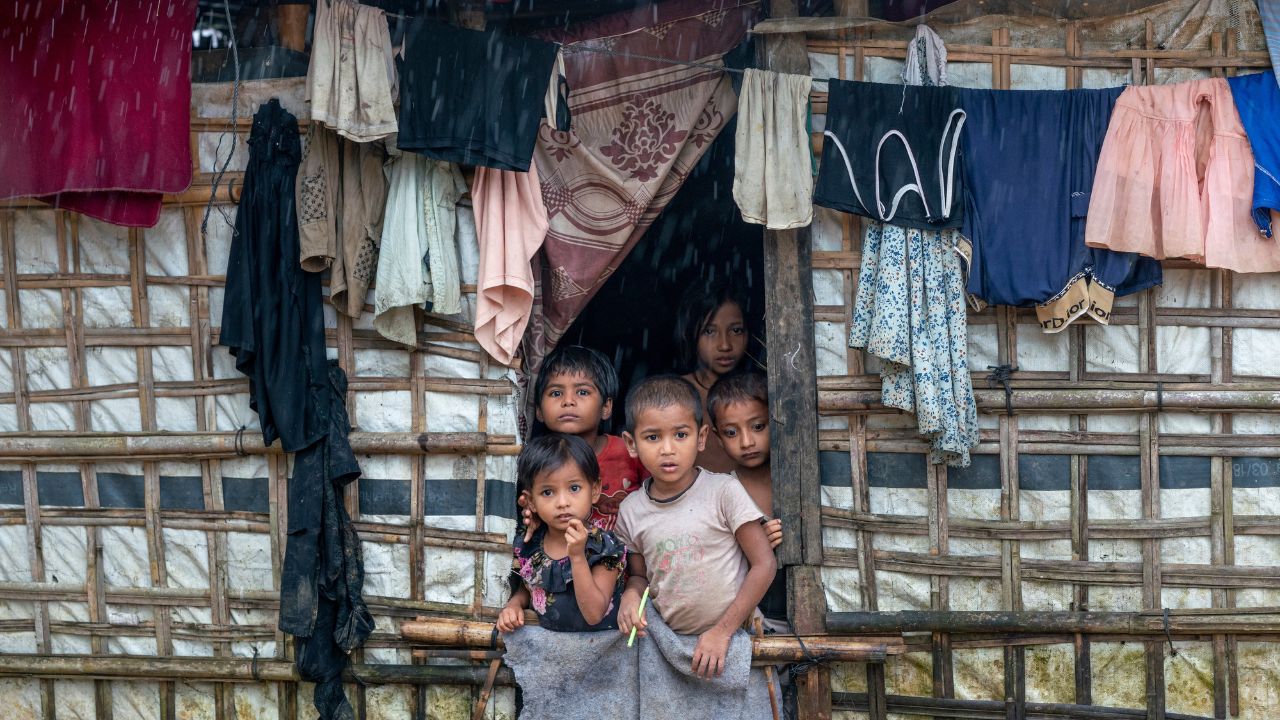
The judgment arrives nearly a decade after a 2017 military campaign forced hundreds of thousands of Muslim Rohingya to flee across the border into Bangladesh.
For decades, the Rohingya have been stripped of citizenship, facing systemic discrimination and communal violence with Buddhists in western Rakhine state.

The crisis reached a climax after a Rohingya militant group conducted guerrilla attacks in mid-2017, prompting the Myanmar army to execute massive “clearance operations”. Refugees described widespread atrocities, including a massacre in the village of Tula Toli, where civilians were systematically shot, children were drowned in a river, and the entire village was razed to the ground, as later confirmed by satellite imagery.
ICJ judges have spent seven years deliberating on allegations brought by The Gambia, a Muslim-majority nation, accusing Myanmar of breaching the 1948 UN Genocide Convention.
Gambian Justice Minister Dawda Jallow told the court that the case concerns real human beings targeted for destruction. A central legal hurdle remains proving “intent” to destroy a group in whole or in part.



Antonia Mulvey, founder of Legal Action Worldwide (Law), which represents hundreds of Rohingya survivors, expressed cautious optimism that the court will hold Myanmar fully accountable.
Mulvey highlighted consistent “patterns of conduct”, including attacking civilians, burning villages, gender separation, and mass sexual violence, as clear proof of intent to destroy the population. She noted that soldiers engaged in face-biting and genital mutilation of women to brand victims and halt reproduction.
In January, the ICJ held closed-door sessions to hear survivor testimonies from refugee camps in Bangladesh, including accounts of a child stabbed and thrown into a fire and piles of bodies in mass graves.
Previous ICJ cases dealing with atrocities in the Balkans (Serbia and Croatia) fell short of finding states directly guilty of genocide, although Serbia was held legally responsible for failing to prevent the Srebrenica genocide.
Myanmar has denied all genocide allegations, claiming its military actions targeted an insurgent uprising. A finding of genocide would heighten international pressure on junta leader Min Aung Hlaing, who headed the military during the 2016–2017 campaign and subsequently ousted the elected government of Aung San Suu Kyi in a 2021 coup, triggering a civil war that has left tens of thousands dead.

Min Aung Hlaing, who was installed as civilian president in April after elections condemned as a sham, is separately under investigation by the International Criminal Court (ICC) for crimes against humanity.
While an ICJ ruling could compel nations to block arms and jet fuel supplies to Myanmar, the court lacks direct enforcement mechanisms, and UN Security Council enforcement remains unlikely due to divisions between the US and China.
Geopolitically, while the Biden administration officially declared the Rohingya crisis a genocide in 2022, Donald Trump’s UN ambassador Mike Waltz warned that the ICJ must not set genocide standards that could be turned against allied soldiers.
Yanghee Lee, former UN rights investigator to Myanmar, called the upcoming verdict historic for survivors and urged the international community to seize the moment to secure justice.
Today, more than one million Rohingya reside in Bangladesh, forming the world’s largest refugee settlement in Cox’s Bazar, while fewer than 600,000 remain inside Myanmar, where displaced survivors express hope that the judgment will end decades of persecution and grant them equal rights and dignity in their homeland.