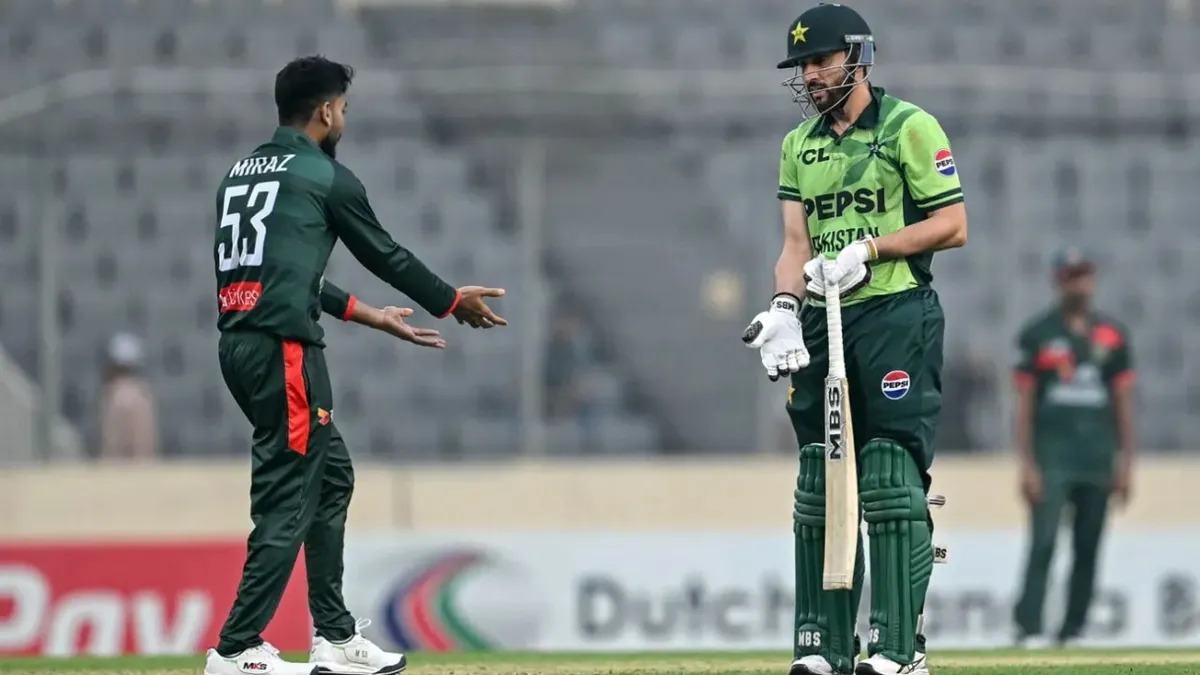



Pakistan levelled the three-match ODI series at 1-1 with a crushing 128-run DLS win over Bangladesh in Mirpur on Friday, but the match did not belong to the score alone. It belonged to a run-out, a shrug, and a few pointed words from Salman Ali Agha that left Mehidy Hasan Miraz looking legal, sharp and just a touch awkward.
Bangladesh had stormed through the opening match and looked ready to squeeze the visitors again. Instead, they lost their grip in a rain-affected contest and watched Pakistan play the smarter game with bat and ball. By the end, the tourists had done more than bounce back. They had dragged the hosts into a debate Bangladesh did not need.
That debate exploded around Agha’s dismissal. He stepped out of his crease in what looked like an instinctive move to return the ball to Miraz. The Bangladesh captain collected it and broke the stumps. The law backed him. The optics did not quite rush to his defence.
Agha did not rant afterwards. He smiled, then let the line hang in the air. “It was just a heat-of-the-moment kind of thing,” he said. That sounded calm enough on the surface, but he quickly shifted the conversation from law to spirit, and that is where the sting lived.

“It’s in the laws of the game. Anyone can always follow the rules,” Agha said. Then came the sentence that turned a routine press conference into a proper talking point. “But when you talk about the spirit of cricket, I believe that should come first regardless of the situation. What he did was legal and correct under the laws. But if I were in his position, I might have done something different.”
That line landed because Agha did not try to dodge the legal bit. He handed Miraz the rulebook, then quietly kept the moral ground for himself. Smart players do that. They do not shout. They let the other bloke hold the wicket and the argument at the same time.




Agha also shut down the idea that he had tried to nick a run. “The ball had hit the pad and then the bat. Since it had already made contact, I thought there was no chance of being out. I was simply trying to return the ball to him. I wasn’t attempting a run or anything like that.” That explanation mattered because it framed the moment as misunderstanding on one side and opportunism on the other.
He pushed that point even further when asked the obvious follow-up. “No, because I was standing right in front of him. Even if he had failed to collect the ball, I wouldn’t have tried to take a run.” In one answer, Agha killed off the idea of gamesmanship from his side and left Miraz carrying all the heat.
Then he twisted the knife a touch more. Asked whether he would have completed that dismissal as captain himself, Agha replied: “No, never. I’ve never done something like that before, and we won’t do that in the future either.” That did not sound like anger. It sounded like a man making sure everybody in the room knew exactly where he stood.
For Bangladesh, that formed the real damage. They did not just lose a match heavily. They let Pakistan walk away with the better performance and the cleaner public posture. That is a rough double hit for any side, especially one playing at home after such a strong start to the series.
The cricket itself gave Bangladesh even bigger reasons to worry. Pakistan produced the more clinical all-round display, controlled the tempo and never let the hosts settle into the chase. Bangladesh failed to replicate the authority they showed in the first ODI, and once the pressure built, their reply unravelled badly.
That collapse made the Miraz moment look even worse. A captain can always point at the laws, but captains also shape the tone of a contest. Miraz took a wicket, yes, but he also handed Pakistan a little emotional edge and gave Agha the easiest line of the night.
Agha at least tried to cool the temperature before leaving. “We haven’t spoken yet, but we will. Don’t worry, everything is fine between us.” Fair enough. Cricket usually moves on quickly. Dressing rooms patch things up. Scoreboards, though, stay rude.