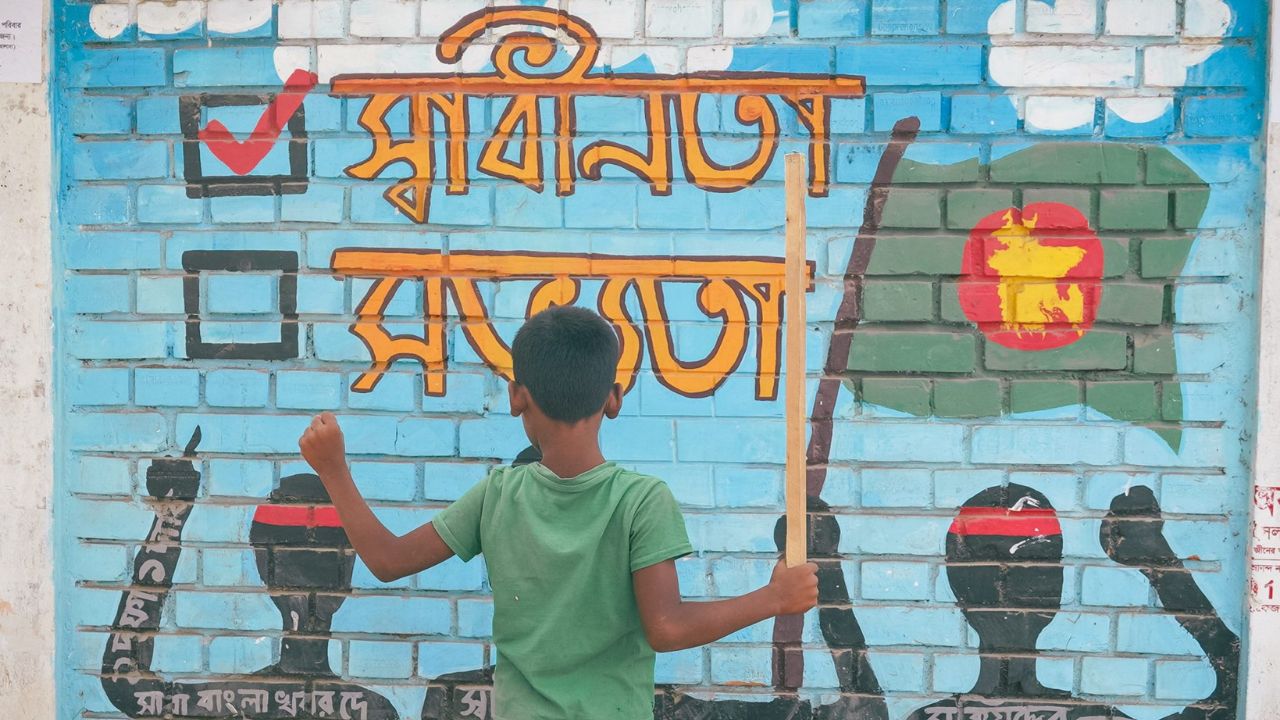
Bangladesh is heading towards its most important election, scheduled to be held on 12 February 2026. On the same day, the country is heading towards its first referendum since the 1990s. For millions of young voters, especially Gen Z Bangladeshis who have grown up in the shadow of political unrest and democratic backsliding, this will be their first engagement, not just in choosing representatives, but in shaping the fundamental direction of the state itself.
A referendum is basically a direct vote in which the entire electorate will approve or reject a single proposal, usually a constitutional amendment, major law, or status question. As constitutional scholars often note, a referendum is one of the few tools that allows citizens to speak in an unmediated way on a specific issue, rather than entrusting that choice entirely to parliament or the executive. Hence, for many of these first‑time referendum voters, the experience will feel markedly different from a regular election.
The term “referendum” derives from the Latin word “referre”, which means “to bring back” or “to refer back”. Etymological sources explain that nineteenth‑century observers adopted the term to describe Swiss political practices, in which federal delegates or authorities “referred back” major questions to the people or ‘the cantons’ for approval.
Some referendums have reshaped the constitutional identity of states in decisive ways. In Switzerland itself, the 1848 constitutional referendum was a pivotal moment in the country’s history. Following the Sonderbund civil war, the referendum was held to approve a new constitution that emerged Switzerland as a federal state. Around 72.8 percent of voters and a majority of cantons approved a new federal constitution, and this effectively marked the birth of Swiss confederation.

Italy’s institutional referendum of 1946 is another landmark case. After the fall of Mussolini and the end of the Second World War, Italians were asked whether to retain the monarchy or become a republic. A narrow but clear majority chose the republic, leading to the exile of the House of Savoy and the drafting of a new republican constitution that still shapes Italian politics today.
Scholarly surveys of independence referendums list numerous cases where entire states or regions were born or redefined through such ballots. The 2006 Montenegrin independence referendum marked the birth of Montenegrin as an independent state from Serbia. After 55.5% of votes went for the independence, which narrowly surpassed the 55% threshold needed to validate the referendum under the rules set by the European Union, the permanent members of the United Nations Security Council recognised Montenegro’s independence.



A similar independence referendum was held in South Sudan on 15 January 2011, to decide on whether the region should remain a part of Sudan or become independent. Organised as part of the Comprehensive Peace Agreement in 2005 to end the Second Sudanese civil war between the central Sudanese government and Sudan People’s Liberation Army (SPLA), the referendum commission announced that 98.83% of voters have chosen independence. This culminated in the official creation of the Republic of South Sudan, marking a turning point in Sudan’s history.
While some countries have moved towards liberation or independence, in places like Northern Ireland the same instrument exposed deep divisions instead of healing them. The 1973 Northern Ireland referendum, often called the “border poll”, was held to decide whether Northern Ireland should remain part of the United Kingdom or join the Republic of Ireland. After years of violence and agitations, it was expected that the majority would vote for a united Ireland. However, in a major upset, 98.92% of voters chose to remain in the UK, a result fueled by boycotts to the referendum by nationalists and catholics, who saw the entire exercise as structurally stacked against them.
Since independence, Bangladesh has held three national‑level referendums. The first referendum of Bangladesh was held on 30 May 1977 under President Ziaur Rahman and was framed as a national vote of confidence asking, “Do you have confidence in President Major General Ziaur Rahman and the policies and programmes adopted by him?”, and the official result claimed 98.9 percent “yes” on an 88 percent turnout. The second one took place on 21 March 1985 under General Hussain Muhammad Ershad, again asking voters if they supported the president’s policies and wanted him to continue governing under military rule until elections. Official data reported about 94.5 percent approval on roughly 72 percent turnout. However, in response, the opposition parties called nationwide strikes, alleging that the results were fraudulent.
By contrast, the third referendum, held on 15 September 1991, posed a clear constitutional question. It asked whether the president should assent to the Twelfth Amendment Bill restoring a parliamentary system in which the president would be head of state and the prime minister head of government. Although the turnout was only about 35.2 percent, around 84.38 percent of participating voters endorsed the change, enabling Bangladesh to revert from a presidential to a parliamentary form of government.
On 12 February 2026, Bangladesh is set to see its fourth major national referendum. This vote is expected to address core constitutional questions, such as the distribution of power between executive and legislature or the framework for conducting future elections. For Gen Z voters, stepping into the booth will be a decisive moment, giving them a direct say in shaping the country’s constitutional future and, in many ways, the fate of Bangladesh’s next political era.
The writer is a student at North South University. He can be reached at: [email protected]