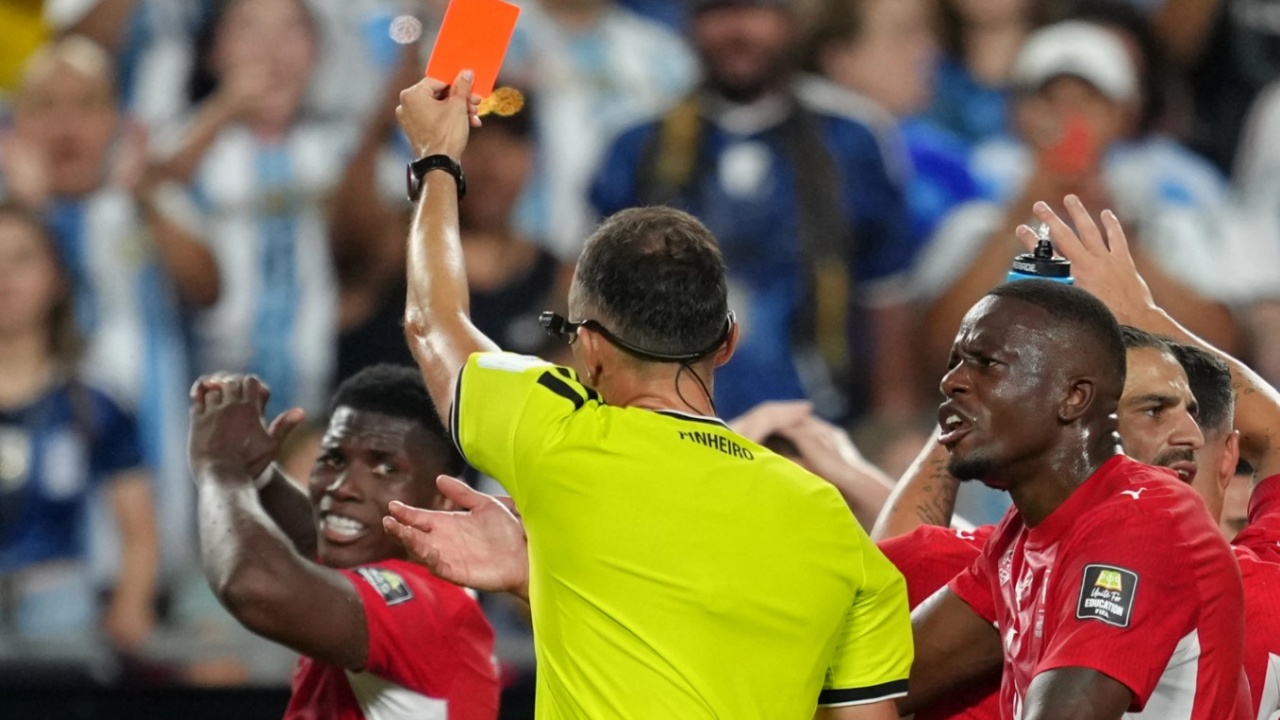

Argentina’s dramatic World Cup quarterfinal victory over Switzerland was overshadowed by another controversial VAR decision, with the dismissal of Swiss forward Breel Embolo reigniting debate over FIFA’s newly introduced “mistaken identity” rule.
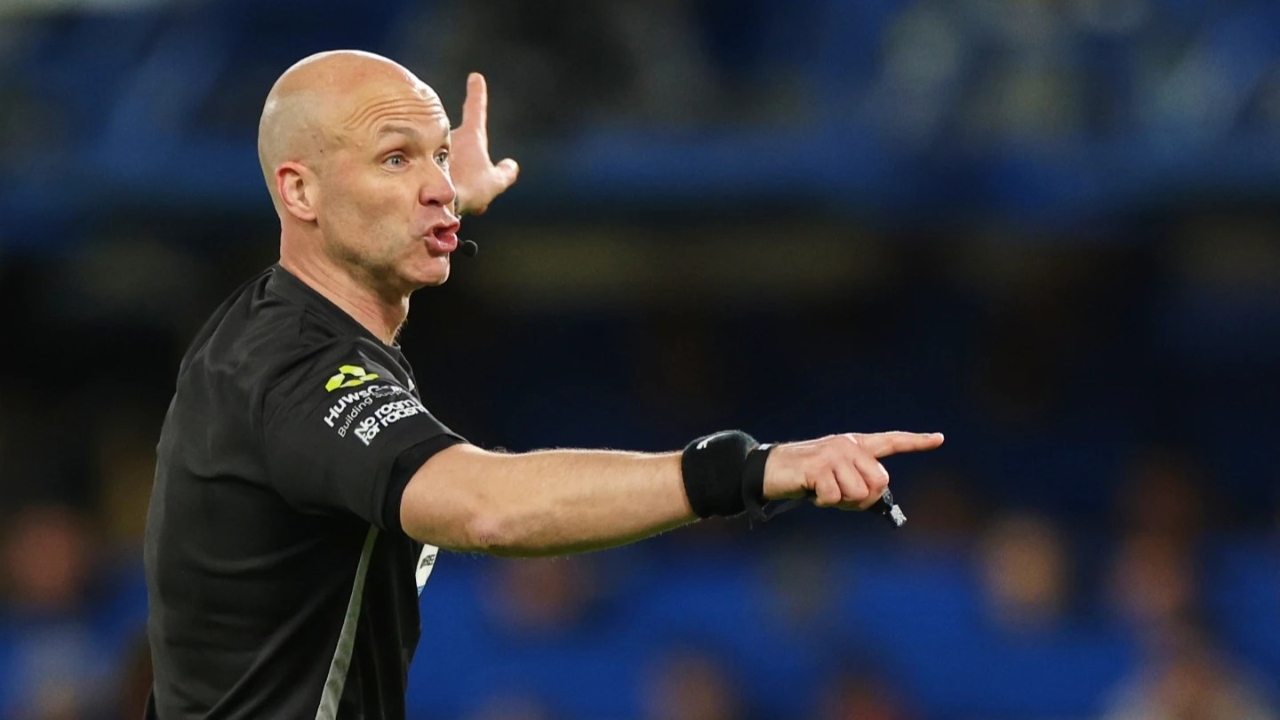
The incident occurred shortly after Switzerland had equalised to make it 1-1. Referee Joao Pinheiro initially booked Argentina midfielder Leandro Paredes for what appeared to be a foul on Embolo. Because Paredes received a yellow card, the video assistant referee (VAR) was permitted to intervene under FIFA’s protocol.
After reviewing the incident on the pitchside monitor, Pinheiro concluded that Embolo had simulated the foul rather than being illegally challenged. The referee rescinded the decision against Paredes, booked Embolo for simulation, and, as it was the Swiss striker’s second yellow card, sent him off.
Although the law is commonly referred to as the “mistaken identity” rule, Embolo’s dismissal was not a traditional case of mistaken identity. Instead, the VAR intervention was allowed because the referee had initially cautioned the wrong player. FIFA’s regulations permit VAR to intervene when the wrong team or player is penalised for an offence that results in a yellow or red card.
The turning point proved decisive, with Argentina taking advantage of their numerical superiority to secure a 3-1 victory after extra time and book their place in the semifinals.
Switzerland coach Murat Yakin criticised both the decision and the law after the match.

“The referee made the wrong decision,” Yakin said. “I know they will protect their referee but this rule destroyed our game today, and it’s very painful. To be eliminated in that way hurts a lot.”
The incident is the latest in a series of contentious officiating decisions at the tournament, with several teams voicing concerns over the application of new rules and VAR technology.
Germany left furious after VAR rules out winner



Germany’s World Cup campaign ended in controversy after a VAR review disallowed what would have been a dramatic extra-time winner in their round-of-32 defeat to Paraguay.
Defender Jonathan Tah thought he had scored the decisive goal, only for the effort to be ruled out after video review. Officials judged that Germany defender Waldemar Anton had fouled Paraguay goalkeeper Orlando Gill in the build-up.
Replays showed Anton making only slight contact as he challenged for position, prompting criticism that the decision was overly harsh. However, FIFA’s refereeing chief Pierluigi Collina said officials had been instructed to strictly enforce incidents where players impede opponents without attempting to play the ball, particularly when goalkeepers are involved.
Germany eventually lost the match in a penalty shootout, with Tah blasting the decisive spot kick over the crossbar.
The early exit is expected to have major consequences for German football. Head coach Julian Nagelsmann has since resigned, while former Liverpool manager Jurgen Klopp is widely tipped to succeed him.
Connected ball technology breaks Croatia hearts
Croatia’s World Cup campaign ended in controversy after connected ball technology helped rule out a dramatic stoppage-time equaliser against Portugal in the round of 32.
Josko Gvardiol’s goal was disallowed after the ball’s in-built sensors detected the slightest touch from Igor Matanović in the buildup, leaving Croatia offside following a VAR review. The contact was undetectable to the naked eye and regular replays.
FIFA defended the technology’s accuracy, but Croatia coach Zlatko Dalić criticised the decision, saying: “All these decisions take the joy out of football.”
VAR controversy and Egypt’s dream run
Egypt’s hopes of a famous World Cup upset were dashed after a VAR review disallowed a crucial goal in a dramatic 3-2 round-of-16 defeat to defending champions Argentina.
Mostafa Zico appeared to put Egypt 2-0 ahead, but the goal was ruled out after officials spotted a foul on Lisandro Martínez earlier in the buildup. Argentina went on to stage a remarkable comeback.
Egypt coach Hossam Hassan accused officials of injustice, while the Egyptian Football Association questioned the consistency of the decisions. FIFA refereeing chief Pierluigi Collina defended the ruling, saying there is no time or distance limit for reviewing incidents that lead to a goal.
Double blow for Norway
Norway were left frustrated after two key decisions went against them in a 2-1 World Cup quarterfinal defeat to England.
FIFA’s connected ball technology dismissed Norway’s claim that the ball had struck an overhead camera cable before Jude Bellingham’s equaliser, saying the ball’s sensors detected no contact.
Norway then had a goal ruled out after VAR spotted a foul by Erling Haaland on Elliot Anderson before a corner was taken. Under FIFA’s new rules, VAR can intervene for offences committed before the ball is put into play during corner routines.