The Bangladesh Army has described the recent communal violence in Khagrachhari and Guimara as part of a larger conspiracy aimed at destabilising the Chittagong Hill Tracts.
In a detailed statement released by the Inter-Services Public Relations Directorate (ISPR) on Sunday night, the army outlined a timeline of events, blaming the United People’s Democratic Front (UPDF) and its affiliates for inciting unrest, provoking clashes, and engaging in armed attacks.
A timeline of the unrest
The ISPR release recalled that on 19 September 2024, a man named Mamun was killed in Khagrachhari, after which UPDF activists attempted to stir communal tensions in Dighinala and Rangamati.
That unrest left three people dead, and several others injured. Marking the one-year anniversary this September, UPDF and its affiliate bodies organised protest marches in several parts of the Hill Tracts, allegedly with the aim of recreating similar violence.
On 23 September this year, the alleged rape of a schoolgirl in Singinala, Khagrachhari, triggered further tensions. The next day, police arrested Shoyon Shil, a suspect identified by UPDF (Main), with assistance from the army. He was remanded in custody, and legal proceedings are ongoing.

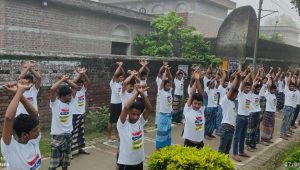
Despite this, UPDF affiliates, particularly the Pahari Chhatra Parishad (PCP) led by Ukhianu Marma, organised demonstrations under the banner “Jumma Chhatra Janata.” On 24 September they held rallies and human chains.
On 25 September they enforced a half-day hartal in Khagrachhari. At the same time, bloggers and individuals based both in Bangladesh and abroad spread provocative and misleading propaganda on social media, targeting Bengali residents of the area.
Escalation of violence
According to the ISPR statement, on 26 September UPDF-backed agitators pelted an army patrol with bricks and stones in Khagrachhari, injuring three soldiers. The army refrained from using force, describing its response as measured and humanitarian.

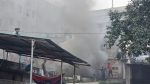


On 27 September, the situation escalated dramatically. UPDF members and affiliates engaged in shootings, vandalism, attacks on ambulances, and road blockades. By midday, the violence had taken on a communal dimension, with clashes erupting between hill residents and Bengalis.
The district administration imposed Section 144 in Khagrachhari and Guimara, while army, BGB, and police units worked overnight to prevent the unrest from spiralling into a full-scale riot.
Failing to spark wider conflict, UPDF turned its attention to Guimara’s Ramesu Bazar on 28 September. Defying Section 144, demonstrators blockaded the Guimara–Khagrachhari road, cutting off communications.
At around 10:30am, clashes broke out between UPDF-linked groups and Bengali residents. When army patrols attempted to intervene, they came under organised assault by attackers wielding sticks, stones, slingshots, and sharp weapons.
Three army officers and ten soldiers were injured. At the same time, a BGB vehicle was vandalised in Ramgarh, and several personnel were injured.
At approximately 11:30am, armed UPDF members fired 100–150 rounds of automatic gunfire from a hill west of Ramesu Bazar, targeting civilians and army personnel. Several people were wounded. Army patrols pursued the gunmen, who quickly retreated.
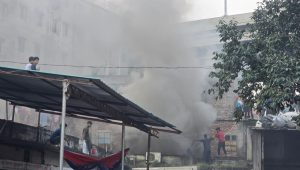
UPDF-linked groups also set fire to shops and houses in Ramesu Bazar, further inflaming tensions. Additional army units were deployed, and by 4:30pm the situation was brought under control.
‘Larger conspiracy’
The ISPR statement alleged that UPDF and its affiliates are systematically using women and schoolchildren in their violent campaigns, forcing them to join demonstrations. It further claimed that the groups are transporting armed outsiders into the Hill Tracts to incite violence.
On the afternoon of 28 September, a BGB checkpoint in Kaptai intercepted a passenger bus and recovered a cache of locally made weapons allegedly linked to UPDF operatives.
“These incidents demonstrate a broader conspiracy to destabilise the Hill Tracts and provoke communal riots,” the ISPR release read, adding that evidence has been documented by law enforcement agencies.
Call for calm
The army urged political leaders, community representatives, and all residents of the Hill Tracts to exercise restraint and cooperate with security forces.
It reiterated that the armed forces remain firmly committed to safeguarding the sovereignty of Bangladesh and ensuring the security of all communities in the Chittagong Hill Tracts, despite “false propaganda, misinformation, and provocative activities.”