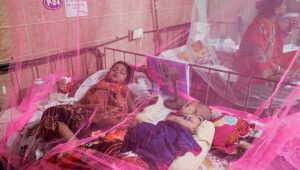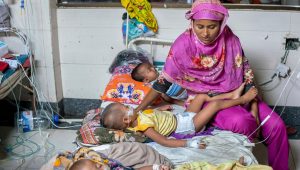



Patients in Bangladesh are being held hostage by pervasive commissions, irregularities, and mismanagement across the health sector, with large diagnostic centres paying nearly Tk1,861 crore annually in commissions – a financial burden passed directly on to service seekers.
The 10th biennial report (2025–26) of Bangladesh Health Watch, titled “Tackling Corruption: Strengthening Governance in Bangladesh’s Health Sector,” noted that graft in healthcare is not confined to bribery, embezzlement, or procurement irregularities, but also encompasses physician absenteeism, referral commissions, unnecessary diagnostic tests, and regulatory failures.
The report was officially published on Sunday at an event held at the International Mother Language Institute in Dhaka.
Heavy out-of-pocket costs, referral commissions
The report highlighted that families in Bangladesh bear 73 per cent of total healthcare expenditure, making them vulnerable to financial pressure caused by unnecessary tests recommended by doctors, commission-driven prescriptions, and the forced purchase of medicines from outside when public hospitals fail to supply them.
In addition, patients face informal financial demands when seeking emergency medical services, including intensive care unit (ICU) care, blood, oxygen, or operation theatre facilities.

A major area of concern is the financial kickback relationship involving doctors, diagnostic centres, hospitals, and pharmaceutical companies, where private diagnostic centres reportedly pay doctors a commission of 20 to 40 per cent – or even higher in some institutions – on diagnostic test bills.
For large diagnostic centres, these commissions total approximately Tk 5.10 crore daily, influencing clinical decisions, encouraging unnecessary tests, and damaging public trust in physicians.
Unnecessary testing, physician absenteeism
Illustrating the human toll of these practices, the report cited an instance where a child was referred from a local facility to a private hospital nearly 60 kilometres away, where 11 diagnostic tests costing nearly Tk10,000 were conducted, only for the child to be prescribed just two medicines in the end.



Moreover, the absence of doctors and healthcare workers at government health facilities was identified as a form of corruption and governance failure that deprives the public of services funded by state resources.
Unannounced inspections revealed that roughly 40 per cent of doctors were absent from their designated government duty posts, with the impact being particularly severe at remote health centres staffed by a single doctor.
Procurement failures, idle medical equipment
Governance breakdowns were also documented at every stage of medical equipment procurement, from selecting items and determining purchase terms to verifying usability after delivery.
Owing to severe mismanagement, medical equipment worth Tk283 crore is lying out of order, while equipment worth Tk44 crore remains completely unused.
At Khulna Medical College, a linear accelerator valued at Tk8 crore that was supplied in 2011 remained boxed up for 12 years due to a lack of infrastructural preparation.
Similarly, medical equipment worth Tk29.50 crore – including MRI, brachytherapy, and catheterisation machines – at various hospitals in Chittagong remained out of order or unused for one to four years.

Flawed accountability mechanisms, administrative shortfalls
Systemic shortcomings in institutional accountability further worsen patient suffering.
Data from the Bangladesh Medical and Dental Council (BMDC) revealed that out of 172 medical negligence complaints lodged between January 2010 and May 2025, 93 were settled while 79 remained ongoing.
Disciplinary action was taken in 29 cases during that period, leading to the temporary suspension or cancellation of registration for 28 doctors and the permanent cancellation of registration for one doctor.
However, shortages in manpower and investigative capacity, the absence of objective verification standards, and public ignorance of the complaint mechanism weaken the settlement process, making timely redress difficult for patients.
Additionally, human resource management under the health ministry – which oversees over 180,000 personnel – is plagued by political and administrative influence, non-transparent recruitment and transfers, promotion irregularities, and training opportunities concentrated among a select few.