Solar hybrid air conditioners are emerging in Bangladesh as electricity costs rise and power constraints persist, combining solar energy with grid supply to ensure uninterrupted cooling.
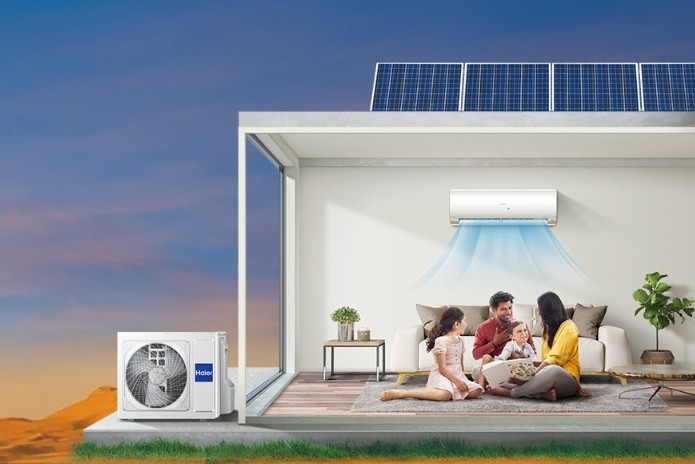
The Haier Solar Hybrid AC uses solar-generated direct current during daylight hours and automatically switches to grid electricity when sunlight is insufficient, said Haier Bangladesh Limited Head of Product, Air Conditioning Muhammad Munim.
The system prioritises solar power and balances it with grid supply based on availability, ensuring continuous operation without manual intervention.
Unlike conventional systems, it does not require a separate external solar inverter, as it integrates direct solar input with hybrid AC/DC functionality, improving efficiency by reducing conversion loss.
The model available in Bangladesh has a capacity of 1.6 tonne, or around 19,000 BTU per hour, and uses inverter technology to maintain stable cooling while lowering energy consumption.

It includes self-cleaning, Wi-Fi-enabled smart control in selected models and eco-friendly R32 refrigerant with lower environmental impact.
The package of the air conditioner with the solar system is priced at around Tk1,55,000. With a promotional offer selling at Tk1,47,250 now.
A full solar setup includes four 550-watt panels. The entire hardware set, with installation costs, raises the upfront investment compared with conventional units. But the operational savings are significant.
According to Muhammad Munim, electricity use can fall by up to 100 per cent during daytime, subject to adequate sunlight and proper system configuration.



At night, when operating on grid power, energy savings can reach up to 65 per cent compared with standard units.
The payback period is typically around four years, depending on usage patterns and electricity tariffs.
The system reduces reliance on the national grid, offers protection against rising power prices and lowers carbon emissions through renewable energy use, strengthening both cost efficiency and energy security.
It is particularly suited to households, small businesses and areas prone to load-shedding where daytime cooling demand is high.
Interest is growing among upper and upper middle-income households, particularly in urban and semi-urban areas.
The category remains small but is expanding as awareness increases and costs gradually decline.
Haier assembles the product locally under a completely knocked-down model, importing key components and assembling them in Bangladesh.
This supports competitive pricing, faster supply and stronger after-sales service while contributing to local employment.
The system also incorporates features suited to local conditions, including voltage protection, low-voltage operation and smart connectivity.
Manufacturers are focusing on artificial intelligence-driven optimisation, advanced energy management and further reductions in power consumption.
Solar hybrid air conditioners remain at an early stage in Bangladesh, but signal a shift towards combining energy efficiency with renewable integration, said Muhammad Munim.