Textiles and Jute Minister Khandaker Abdul Muktadir said the jute sector’s export earnings could grow from nearly $1 billion to $5–7 billion.
This goal is achievable through proper planning, modern technology, research, high-quality seed production, and the promotion of diversified products, he added.
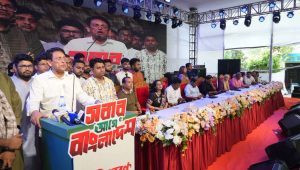
He made these remarks while speaking as the chief guest at the inauguration of the Diversified Jute Products Fair-2026 at the Jute Diversification Promotion Centre (JDPC) in Dhaka.
The inaugural ceremony was chaired by Textiles and Jute Secretary Abdun Naser Khan, with State Minister of Textiles and Jute Md Shariful Alam attending as a special guest.
During his address, Muktadir recalled that in the 1972-73 fiscal year, jute and jute-based products accounted for around 90 per cent of Bangladesh’s total export earnings. At that time, jute contributed $313 million out of a total of $348 million in export revenue.

He noted that while the nation’s total export earnings have now risen to between $50 and $55 billion, the contribution from the jute sector remains limited to around $1 billion. Consequently, the government has adopted a timely action plan to revitalise the potential of the jute industry.
Muktadir identified self-sufficiency in high-quality jute seed production as a primary goal for sustainable development. He remarked, “Currently, Bangladesh relies on imports to meet the annual demand for approximately 6,000 tonnes of jute seeds.”




He pledged that this dependency would be reduced by ensuring the domestic production of quality seeds.
To ensure fair prices for farmers, Muktadir stressed the importance of product diversification, innovative designs, and high-value market expansion. He announced plans to increase investment in research, innovation, and technological development.
Moreover, he revealed a plan to launch joint ventures with leading Chinese universities to enhance productivity, develop improved seeds, and create international-standard designs.
Muktadir informed the audience that an integrated roadmap is being formulated in coordination with the JDPC and private sector partners.
Additionally, initiatives are underway to hand over state-owned jute mills to private management to ensure modernisation, increased production, and profit-oriented operations.
He also that Prime Minister Tarique Rahman is keen to restore the lost glory of the jute sector. Under his leadership, the government will regularly review the progress of every stage of the jute sector under a time-bound action plan to take necessary measures.
State Minister Shariful called for a collective effort to advance the economic and social revolution of the jute industry.
He said such progress would allow jute to regain its past glory, earn significant foreign exchange, and improve the socio-economic conditions of jute farmers and workers in remote areas while creating new employment opportunities in both rural and urban sectors.
Following the ceremony, Muktadir and Shariful inspected various stalls at the fair and discussed market expansion and existing challenges with entrepreneurs.
The five-day fair will remain open to the public daily from 10am to 9pm until 23 May.