
Despite massive investments in infrastructure, teacher recruitment, and student incentives, government primary schools are struggling to retain pupils.
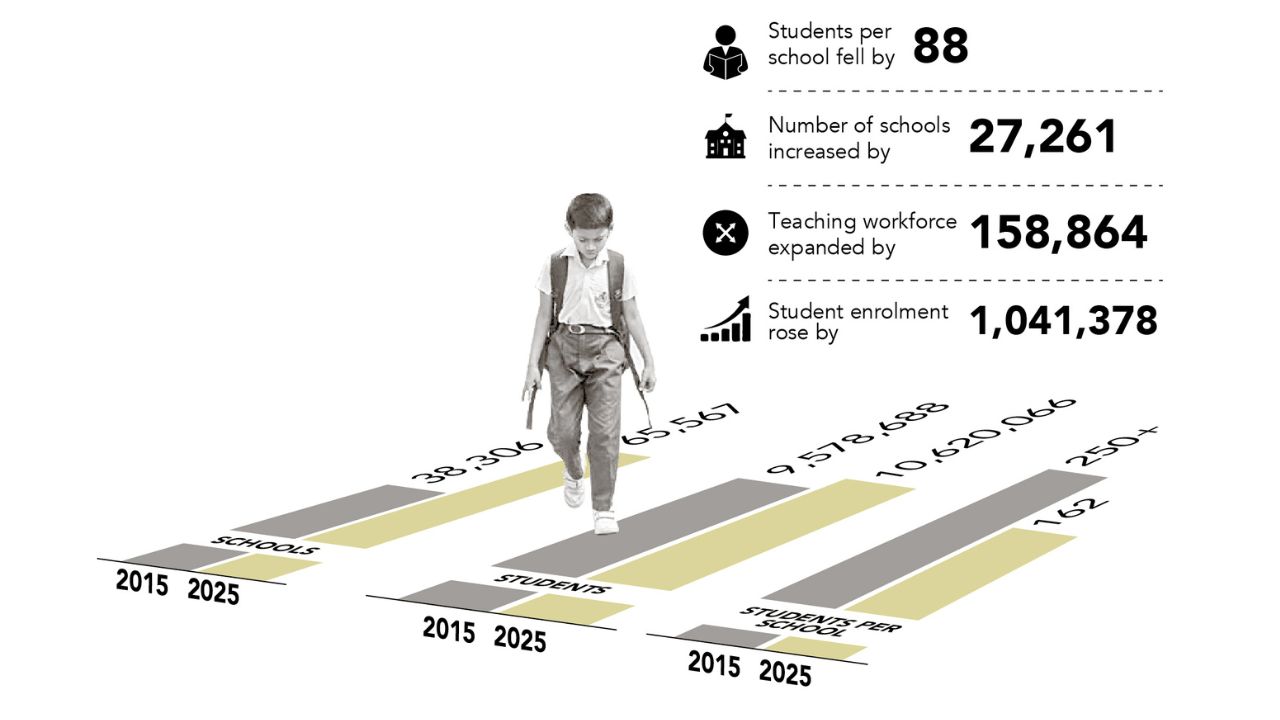
Over the past decade, the average number of students per government primary school has fallen by 88, raising questions about public confidence in the country’s foundational education system.
Official data show a striking paradox. In the last ten years, the number of government primary schools increased by 27,261, while the teaching workforce expanded by 158,864. Yet student enrolment rose by only 1,041,378, a growth widely considered negligible when measured against the scale of expansion.
As a result, schools are becoming larger in number but thinner in attendance.
In 2015, Bangladesh had 38,306 government primary schools serving 9,578,688 students. On average, each school had more than 250 students, reflecting a dense enrolment base.
Today, the number of schools has risen to 65,567, while total enrolment stands at 10,620,066. The average number of students per school has dropped sharply to around 162, a decline that educators say is not merely demographic but structural.
Teachers and education researchers attribute much of the decline to behavioural shifts triggered during the Covid-19 pandemic. When schools were shut for extended periods, many students moved to madrasas and kindergartens, a transition that has since solidified into a trend.

As a result, enrolment in government primary schools has been falling year after year.
Educators also acknowledge shortcomings within the system itself, including a lack of teacher engagement and follow-up with families, which has further eroded trust.
Riaz Parvez, president of the Primary School Head Teachers’ Association, told TIMES of Bangladesh that the quality of teaching in government primary schools remains competitive.
“The quality of primary school teachers and teaching methods is better than that of any comparable institution,” he said. “However, we may be somewhat behind when it comes to communication with parents and maintaining follow-up relationships.”
He also pointed to a growing social perception problem, noting that enrolling children in private schools has increasingly become a marker of social status for many families.

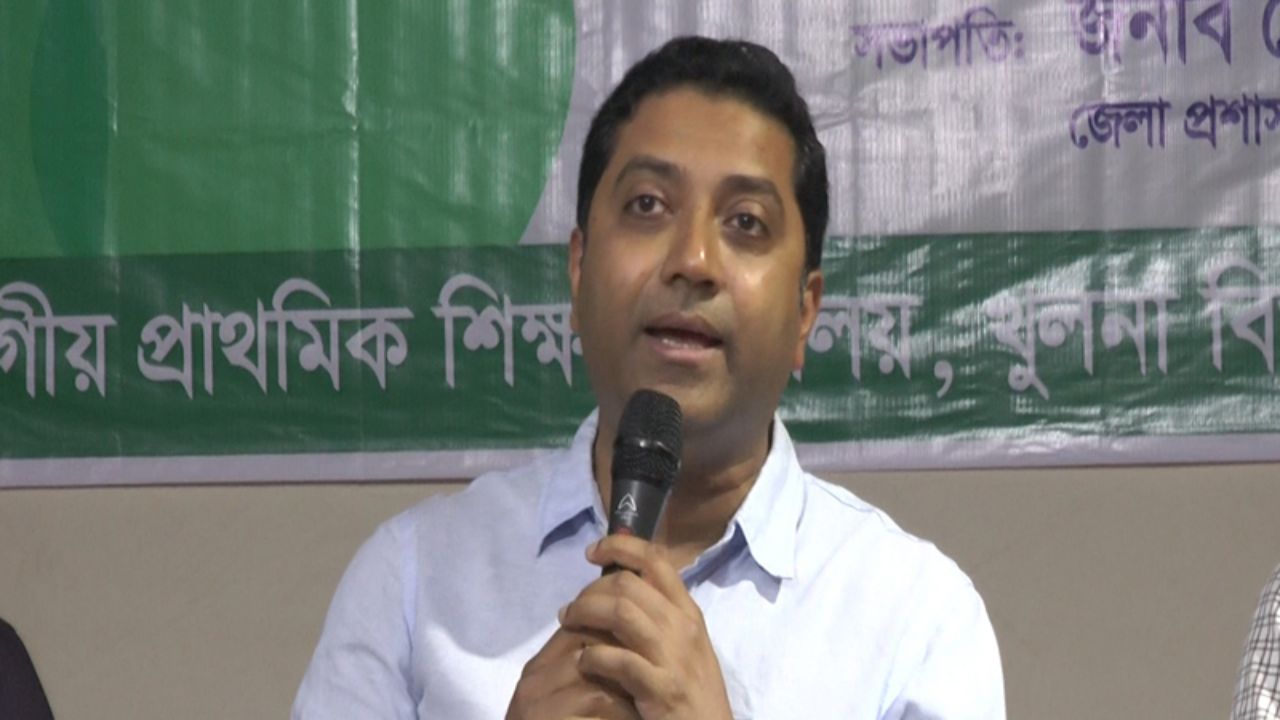
Mohammad Ahsan Ibne Masud, senior specialist at the National Academy of Primary Education (NAPE), identified policy changes under the previous government as another key factor behind declining enrolment.
He said parents have limited trust in class-based assessments and prefer to see formal examination results.
“Parents in our country want to see exam outcomes,” he told TIMES. “They have little confidence in classroom-based assessments.”
Under earlier reforms, exams were removed from Classes One and Two, and written exam marks were significantly reduced from Classes Three to Five, with greater emphasis placed on continuous classroom evaluation. According to Masud, this approach was unpopular with parents.
In response, the system has since reverted to two terminal exams along with an annual examination, restoring a structure parents are more comfortable with.
Parents, however, point to deeper issues of accountability. Many accuse government primary school teachers of failing to ensure effective classroom instruction and learning outcomes.
They argue that in most schools, there is little to no relationship between teachers and parents, deepening mistrust. Some teachers themselves reportedly do not send their own children to government schools, further reinforcing doubts about quality.
As a result, families with financial means increasingly choose private schools, believing their children will receive greater care and attention there.
A senior official at the Directorate of Primary Education, speaking on condition of anonymity, said that madrasas have been actively expanding enrolment by leveraging religious motivations and conducting door-to-door campaigns.
Private schools, the official added, are also aggressively courting parents through extensive outreach efforts, often manipulating perceptions to their advantage.
To counter these trends, the government has introduced several measures aimed at making government primary schools more attractive and competitive. These include reserving scholarship examinations exclusively for students enrolled in government primary schools, increasing the amount of stipends provided to students, and introducing mid-day meals in schools in the form of snacks.
Alongside these incentives, the authorities say monitoring of the primary education system has been strengthened. Greater emphasis is now being placed on structural fixes, particularly the rational distribution of teachers across schools, in an effort to address long-standing imbalances and improve overall efficiency.
Farid Ahmed, director general of the National Academy of Primary Education (NAPE), said monitoring of the primary education system has been strengthened compared to the past.
He stressed the need to rationalise student-teacher distribution, noting stark imbalances across schools.
“Some schools have eight to ten teachers, while others have only two or three,” he said. “This needs to be properly reorganised.”
Ahmed also noted that parental demands for three periodic exams have been met this year, textbooks have been updated, and reforms are ongoing.
“Let’s see what happens next,” he said.
For now, the country’s government primary education system stands at a crossroads — expanded in size, better resourced than before, yet facing a steady erosion of public confidence that money alone has failed to reverse.