


The government has launched an initiative to transition the country’s gold sector from an informal state into a legal, recognised, and accountable industry. As part of the process, all relevant state bodies and stakeholders have been directed to submit their written feedback on the draft Gold Policy 2018 (Amended) 2026 by next Sunday.
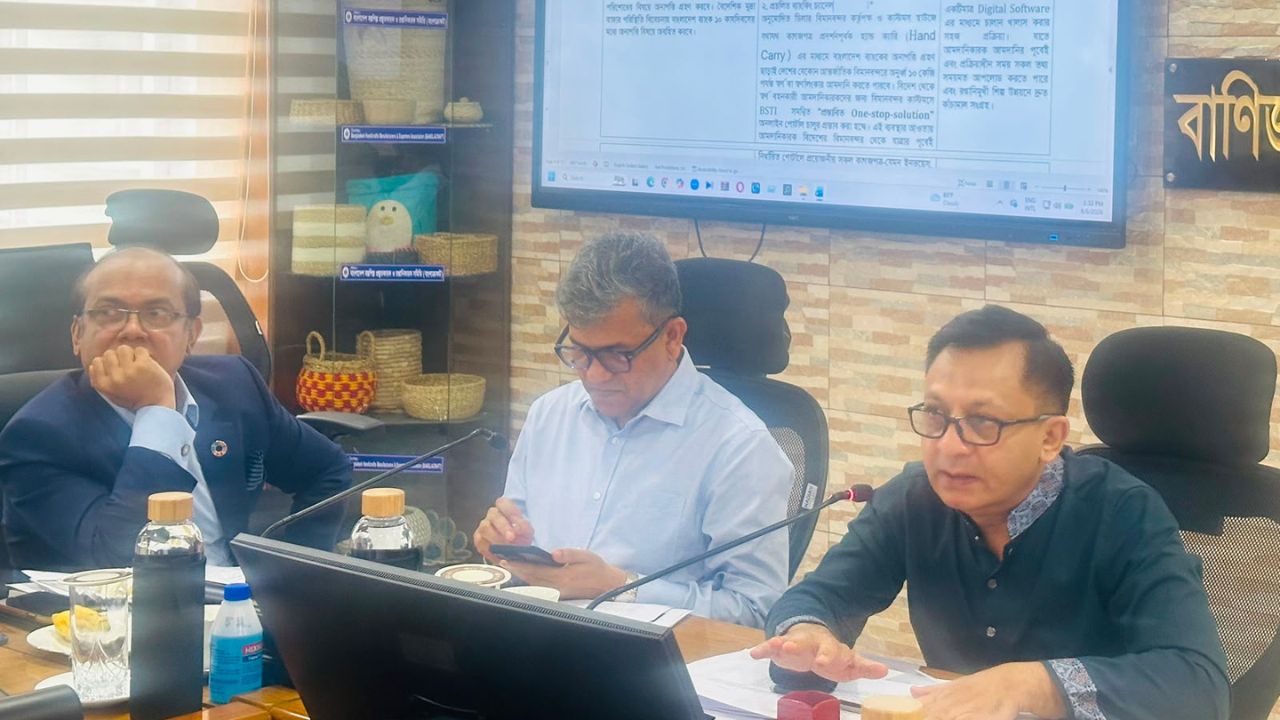
Commerce Minister Khandakar Abdul Muktadir issued this directive on Thursday during a meeting on the draft policy, held at the conference room of the Ministry of Commerce at the Secretariat.
Presided over by Commerce Secretary Md Ataur Rahman Khan, the meeting was addressed by Bangladesh Jewellers Association (BAJUS) President Enamul Haque Khan and Export Promotion Bureau (EPB) Vice Chairman Mohammad Hasan Arif.
Representatives from the National Board of Revenue (NBR), Bangladesh Bank, and other relevant government bodies and gold sector stakeholders also presented their views.
Addressing the meeting, the commerce minister noted that although the gold sector has long played a vital role in the national economy, it has failed to become fully institutionalised due to the absence of proper policy and regulatory framework.
He stressed that instead of solely blaming business owners for this situation, the weaknesses of regulatory agencies must also be considered.

“We must change our mindset,” Muktadir said. “It is not appropriate that a recognised business sector has remained outside the formal structure for so long. This situation has arisen because necessary initiatives were not taken in time. We now want to bring the sector within a legal and institutional framework.”
Stating that the government aims to enable the gold sector to operate like any other industry and business sector in the country, the minister said that formalising the sector would boost employment, encourage legal imports, increase revenue collection, and bring transparency to gold reserves and transactions. While traders will pay duties and taxes in accordance with the regulations, the government will ensure a business-friendly regulatory environment, he added.
Under the proposed framework, every stage of purchasing, selling, and storing legally imported gold must be accounted for. Regulators will regularly monitor information regarding the amount of gold held by traders, sales volumes, and the sources of procurement.
Highlighting the economic significance of gold, the minister explained that one of the primary functions of money is to store value, and gold is internationally recognised as such a medium. He noted that central banks worldwide preserve a significant portion of their reserves in gold alongside foreign currencies.




“If gold worth 4 billion or 10 billion dollars is legally imported and remains within the country without being smuggled out, it essentially serves as a store of value within the country,” he remarked.
However, to prevent gold smuggling, the minister stressed the importance of avoiding abnormal price differences between the domestic and international markets. He pointed out that if the local price of a product is significantly lower than in neighbouring or nearby countries, it creates an economic incentive for illegal smuggling.
“No businessman will incur a loss for themselves to benefit a businessman in another country,” Muktadir observed, adding that customs duties and tax rates must be determined by taking international gold prices into consideration, particularly the market rates of major trading hubs like Dubai.
The minister also highlighted that the draft policy does not focus solely on import, but also places high importance on the potential of manufacturing and exporting gold ornaments by adding value locally.
By allowing raw material imports at minimal and rational duties, local artisans and entrepreneurs will be able to manufacture competitive products for the international market.
“First, we must see if gold can be imported at international market rates, value-added domestically, and then exported,” the minister said.
“Secondly, there is a massive demand for gold in Bangladesh’s domestic market. Since gold is widely used in weddings and social ceremonies, the policy must also consider the purchasing power of average consumers.”
Acknowledging that rising gold prices are putting a strain on the general public, he said that establishing a rational policy and supply chain would increase market competition, allowing consumers to purchase gold at relatively fair prices.
Before finalising the draft policy, the government will review the policies and regulatory frameworks of three to four major jewellery-exporting countries, including India, the minister revealed.
A comparative analysis will be conducted to study their import systems, duty structures, stock management, export incentives, and monitoring mechanisms against Bangladesh’s proposed guidelines.
Muktadir urged the NBR, Bangladesh Bank, and other relevant bodies to submit their written feedback, identifying potential questions, risks, and implementation challenges.
“The government’s objective in formulating this policy is not to plunge the sector into a new crisis,” the minister assured. “Everyone involved here is experienced and aware.
Prioritising the national interest above all else, we must collectively build a framework that turns the gold sector into a legal, transparent, and sustainable business.”
The meeting was informed that once feedback from various stakeholders is compiled, another meeting will be convened if necessary. Following this, the process to finalise the amended Gold Policy will be completed as swiftly as possible.