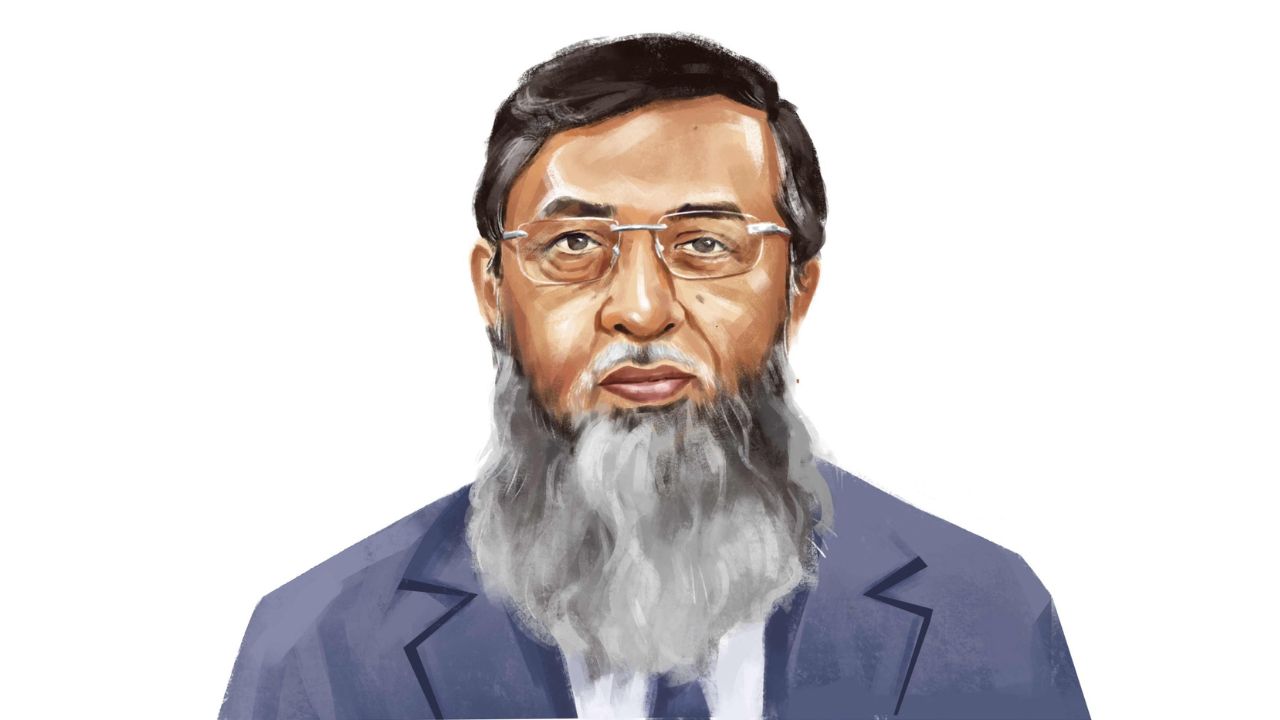



Bangladesh’s readymade garment (RMG) sector is being pushed towards destruction as unilateral labour law amendments by the interim government accelerate an already fragile crisis, Bangladesh Knitwear Manufacturers and Exporters Association (BKMEA) President Mohammad Hatem said.
Speaking in an interview with Al Amin Rubel of TIMES of Bangladesh, Hatem said reform itself was not the problem, but selective and imbalanced reform imposed by bypassing tripartite consensus had become the trigger.
Since assuming office, the incumbent government has focused almost exclusively on labour law, while failing to deliver meaningful reform in banking support, export facilitation, taxation or even the most basic requirement of law and order, despite mounting global pressures on the RMG sector, he added.
“The question remains—where exactly did the government reform, and for whom?” the business leader questioned.
Although some recommendations of the labour reform committee were implemented, the amended law marked what Hatem described as the starting point of destruction of the RMG industry, drawing a direct parallel with the collapse of the jute sector.
Once the jute industry was destroyed, he said, the groundwork has now been laid under the interim government and the labour ministry to push RMG towards the same fate.
He said the labour ministry bypassed unanimous decisions taken by both the technical and tripartite committees, where the government, employers and workers had reached consensus after multiple meetings, decisions that were even publicly announced by the labour adviser before being reversed.
“The government bowed to foreign pressure, including pressure from the International Labour Organization, broke its backbone and sacrificed national interest.”
Hatem identified the most destabilising change as the drastic reduction in the threshold required to form trade unions, directly contradicting tripartite consensus.

Under the agreed framework, factories with up to 3,000 workers were to require 300 members to form a union, and factories with more than 3,000 workers were to require 400.
But the amended law now allows unions with just 20 workers in factories with 300 workers, 40 in factories with 500 workers and 100 in factories with up to 1,500 workers.
He warned that the change would politicise factory floors and invite vested interest groups.
“Awami League will form one union, BNP another, Jamaat another, Jatiya Party another—because five unions are allowed. These unions will not protect workers’ interests; they will destabilise factories and the sector.”
Backing his warning with data, Hatem said that as of 31 December 2025, 1,497 trade unions had been formed in the RMG sector, while 905 factories where unions existed had already shut down, showing that in Bangladesh’s context trade unions have historically failed to protect either workers or industries.
He recalled how violent union dominance contributed to the collapse of Adamjee Jute Mills.




He also pointed to contradictions in the amended law over who qualifies as a worker and who belongs to management, blaming the labour ministry for creating confusion that has planted the seeds of future unrest.
Three industry associations rejected the gazette on the very day it was issued, he said.
On social security, Hatem said the provident fund mandate was imposed without worker demand or clarity, noting that under the previous law three-quarters of workers had to apply in writing, yet no such applications were ever made.
“So, whose pressure made provident funds mandatory?”
Under the amended law, factories with 100 workers must introduce provident funds despite earlier assurances of a transition to the national pension scheme, raising questions about running parallel systems and creating deliberate bureaucratic complexity that opens the door to harassment and corruption.
Hatem stressed that he was not opposed to labour rights.
“When it comes to workers’ welfare, we will not step back even an inch.”
But destroying industry in the name of labour protection would ultimately destroy workers’ livelihoods, he warned. “If the industry does not survive, where will the workers go?”
He said deteriorating law and order and a growing tagging culture were accelerating factory closures, with owners being branded as political collaborators without legal findings, calling the trend extremely dangerous.
He cited the beating of the owner of Mahmood Denim as a stark example of double standards.
“If a worker were beaten like that, the whole world would protest. But when an owner is assaulted, no one speaks.”
Wrongdoing should be punished individually, he said, but industry must be kept beyond politics.
These labour and law-and-order shocks are hitting an industry already under extreme stress, with Bangladesh Bank (BB) tightening loan-classification rules and interest rates of around 15 per cent making survival increasingly difficult.
“In my 38 years of business life, I have never seen a period as bad as 2024–25.”
Around 265–270 factories under BKMEA and the Bangladesh Garment Manufacturers and Exporters Association (BGMEA) have shut down over the past two years, with many more on the brink.
“The industry is in the ICU. You cannot impose global best practices before saving the patient.”
He criticised the withdrawal of incentives citing conditions from the International Monetary Fund (IMF) and least developed country (LDC) graduation, while competitor countries, including India, continued large-scale support, warning that the collapse of spinning mills would break backward linkage and leave Bangladesh vulnerable to cheap yarn imports.
Describing the tax regime as “tax terrorism,” he said taxes are imposed on turnover rather than profit, forcing factories to show artificial profits despite widespread losses, under pressure from both the National Board of Revenue (NBR) and BB.
On exports, he warned that rising tariffs in the United States and intensifying competition in Europe were shrinking orders month by month, with recovery unlikely even by the end of 2026.
Calling LDC graduation self-destructive without free trade agreements, port capacity, energy security and investor-friendly tax policy, he questioned the basis of confidence when Bangladesh has not signed a single free trade agreement with any European country.
Hatem said the interim government was triggering destruction by piling labour shocks on an industry already weakened by financial, fiscal and global pressures, while withdrawing support instead of cushioning the blow.
Only a democratically elected political government, he said, could restore confidence and balance.
“Industry must be kept beyond politics. Punish wrongdoing but never shut down factories.”