The government is reviewing the possibility of allowing a Higher Secondary Certificate (HSC) candidate, Ayesha to sit for her missed Bangla first paper examination after she was reportedly unable to reach the examination centre on time due to a medical emergency involving her mother.
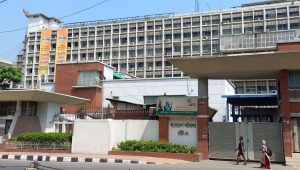
The incident occurred at the Government Mirpur Bangla College examination centre in Dhaka on Thursday, the opening day of this year’s HSC and equivalent exams. According to eyewitnesses and centre officials, Ayesha arrived at the gate just minutes after the stipulated time had passed and was not allowed to enter the examination hall, as per standard rules issued by the education board.
Ayesha, a humanities student from a reputed city college, had reportedly spent the early morning hours accompanying her ailing mother to the hospital after a sudden deterioration in her health. Speaking to reporters near the centre premises, the visibly distraught student said, “I didn’t imagine I would miss my exam. My mother’s condition was critical. I had to choose between being with her and my future. I hoped the authorities would understand.”

The story quickly gained traction on social media and mainstream news outlets, prompting a wave of public empathy and criticism of what many called an inflexible application of rules. Hashtags like #LetAyeshaWrite and #HumanityFirst trended across platforms, with students, parents, and educators expressing solidarity with the candidate.
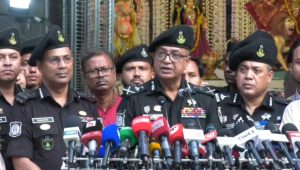
In response to the outpouring of support and calls for reconsideration, Education Adviser to the Interim Government, Professor CR Abrar, addressed the issue on Friday morning. “We are deeply moved by the situation. It is being considered seriously on humanitarian grounds,” he said. “The possibility of allowing the candidate to take the Bangla First Paper exam is under review, in light of existing rules governing public examinations.”

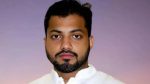

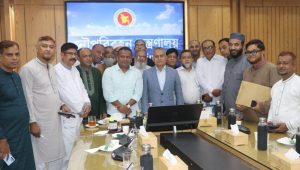
Professor Abrar acknowledged that public examination laws are stringent, particularly regarding late arrivals and absenteeism, but stressed that there can be scope for discretion under exceptional circumstances. “The law is not blind to compassion. We are consulting with the Dhaka Education Board and legal advisers to see whether a make-up exam can be arranged without compromising the integrity of the examination system,” he added.
An official from the Board of Intermediate and Secondary Education, Dhaka, confirmed that an internal inquiry has been launched and the student’s circumstances are being verified. “We are collecting necessary documents from the hospital and her college, and will place a recommendation to the Ministry of Education within two days,” the official said, requesting anonymity.
Human rights activists and education reform advocates have welcomed the government’s response. “This is not just about one student. It’s about how our education system treats emergencies and unexpected human situations,” said Rokeya Kabir, Executive Director of Bangladesh Nari Pragati Sangha. “Punishing a student for showing filial responsibility sends the wrong message to our youth.”
Educationists, however, have cautioned that any special provision must be carefully structured to avoid abuse and maintain fairness for all candidates. “There has to be a clear and transparent mechanism in place. One-off decisions can create administrative confusion unless institutionalised,” said Professor Ziaul Haque, former chairman of the education board.
Meanwhile, Ayesha and her family are anxiously awaiting the board’s decision. “I haven’t lost hope yet. I know I did the right thing as a daughter. Now I just want to be given a chance to prove myself as a student,” she said.
As of Friday noon, no final decision had been announced, but education officials confirmed that a resolution is expected by early next week. The Ministry of Education has assured that the matter will be handled with sensitivity and urgency.