
US President Donald Trump’s tariff policies have jolted global trade diplomacy into action, prompting a flurry of free trade deals as countries seek to counter lost access to the American market.
Since Trump’s re-election last November, the European Union has signed three agreements – with Mercosur, Mexico and Indonesia – and is pressing ahead with talks to finalize another with India before year’s end, reports Reuters.
Mercosur, meanwhile, concluded a deal with the European Free Trade Association and reopened negotiations with Canada after a three-year pause.
Other players have also rushed back to the table. India and New Zealand restarted discussions after more than a decade, while the United Arab Emirates clinched three separate trade pacts in a single day in January.
EU officials have said new partnerships are part of the bloc’s response both to US import duties of around 15% on European goods and to Chinese restrictions on vital minerals for the green transition.

Looking beyond Washington
While these agreements cannot immediately offset the sting of Washington’s protectionism, they reflect a determination to diversify. US trade accounts for 17% of Europe’s total, and Brussels has warned against over-reliance.
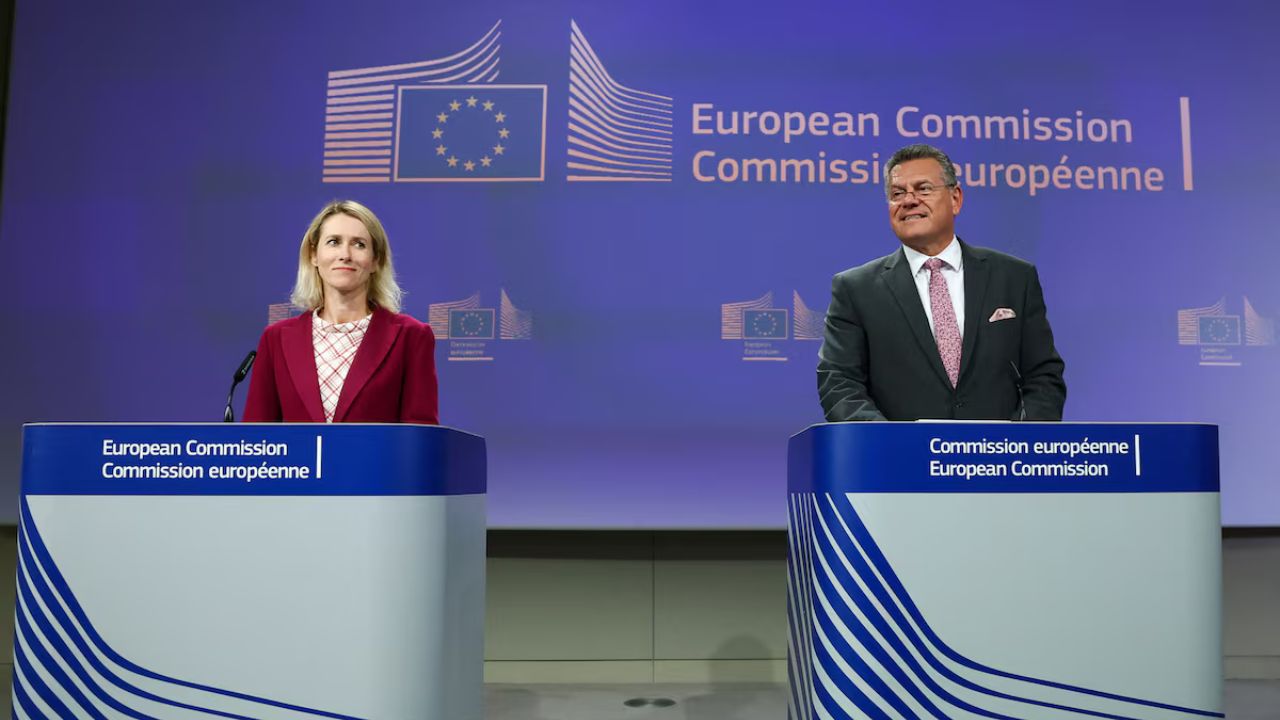
“We also need to take care of the other 83%,” EU trade chief Maros Sefcovic told lawmakers last month.




Even countries once hesitant, such as India and France, are showing signs of softening their stance on market liberalization.
The World Trade Organization has welcomed the momentum, with Director-General Ngozi Okonjo-Iweala saying such deals complement, rather than undermine, multilateral trade rules.
Limited near-term payoff
Economists caution that the immediate pain of US tariffs far outweighs the gradual benefits of new trade frameworks, which often take years to implement due to ratification and phased tariff reductions.
Nonetheless, investment decisions could accelerate as firms position themselves for future advantages.
Niclas Poitiers of the Bruegel think tank estimates Trump’s tariffs may shave 0.2–0.3% off EU GDP, though he notes that uncertainty’s drag on corporate investment could be more severe.
Beyond economics, Poitiers said bilateral treaties provide stability at a time when the US itself is undermining global trade norms.
What may emerge is a lattice of agreements bolstering the multilateral system — but with the US, and to some extent China, on the outside.
Sabine Weyand, the EU’s top trade official, told parliamentarians last week the bloc is positioning itself as “the reliable partner for the rest of the world.”
Yet the strategy faces limits. As Sander Tordoir of the Centre for European Reform warned, many economies eager to sign new pacts, including Japan and the EU itself, are net exporters and thus depend on buyers.
With the US accounting for roughly half of global trade deficits, demand must come from elsewhere.
For Europe, the only market large enough to fill the gap may be its own. “Europe will need to stoke internal demand or face stagnation,” Tordoir said.