
For some time, my elder son, Munad, had been urging me to visit Nepal, the land of the Himalayas and green hills, but his busy work schedule kept getting in the way. In the end, it was my daughter-in-law, Nuhash, who made it happen, arranging for our family of five to travel during the last Eid vacation.
A day after Eid, we boarded a Biman flight for Kathmandu in the afternoon – myself, my wife Zibu, our sons Munad and Setu (Rakib), and Nuhash. A crew member had cautioned us of possible turbulence ahead, but by the grace of Allah, the flight stayed smooth, and we touched down at Tribhuvan International Airport in just over an hour, Kathmandu unfolding below us as a city cradled by green hills.
A representative of our travel agency greeted us at the airport with the traditional Nepali gesture of a colourful cotton scarf for each of us, and a driver was waiting outside with a name plate bearing my name.
He took us straight to the Apsara Boutique Hotel in Thamel, the buzzing heart of the capital. After a brief rest, we walked to a nearby restaurant for dinner through a short, passing drizzle, then returned to the hotel for the night.

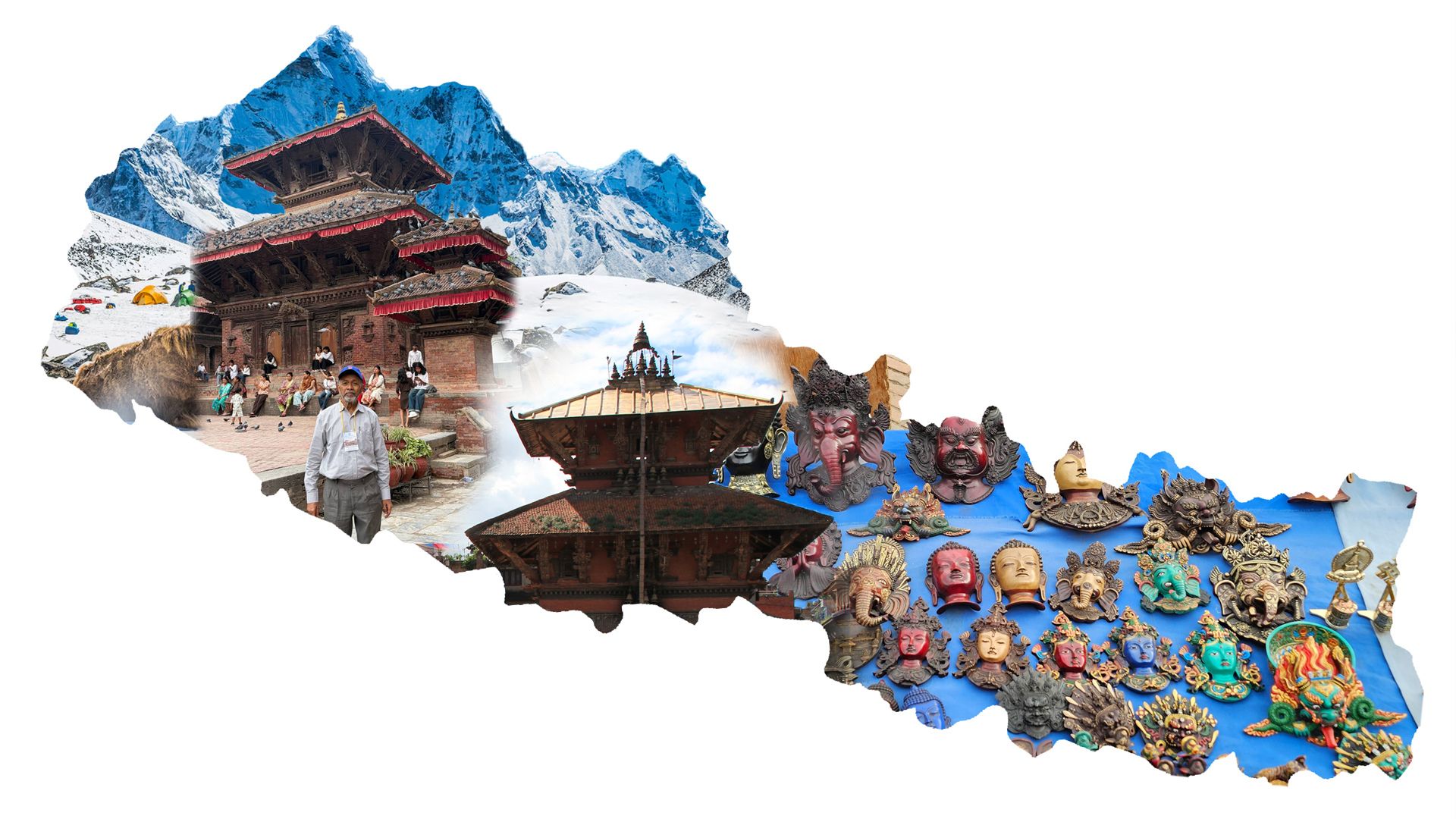
The next morning began with a hearty hotel breakfast, after which we set out to explore. Kathmandu’s hills are dotted with Buddhist monasteries and Hindu temples alike, and our first stops were Boudhanath and the hilltop Swayambhunath temple, reached by climbing 365 stairs – a climb rewarded with a sweeping view of the entire valley.
From there, we visited the Narayanhity Royal Palace Museum, pausing along the way for a cup of tea made with milk and coconut, served in an earthen cup at the suggestion of Madhu, our driver.

We took a short boat ride on the Bishnumati River before lunch, then stopped at Jimbu Thakali Restaurant in Kalimati for a traditional Nepalese thali. The afternoon took us to Kathmandu Durbar Square in Basantapur, the former royal palace complex and now a UNESCO World Heritage Site.
Nepal was once a patchwork of small kingdoms until King Prithvi Narayan Shah united them into a single country, a history still visible in the nine-storeyed former palace at Hanumandhoka, known locally as the country’s meeting ground of old and new.
That evening, we boarded a tourist bus for Pokhara, 2,713 feet above sea level, arriving after a night journey. A prearranged vehicle wound us up through the hills before dawn to the Sarangkot viewpoint, 5,249 feet up, to watch the sun rise over the snow-capped Dhaulagiri-Annapurna range. Underdressed for the cold and caught off guard by the altitude, we still felt, for a moment, as though we were standing on top of the world – a rare and unforgettable sight.
We checked into Hotel Crystal Palace in Pokhara and spent the following day touring the valley before setting off, two days later, back toward Kathmandu by road. The return route took us through the picturesque village of Bandipur and over the Chandragiri Hills, where a cable car strung between two green peaks, 2,520 feet high, offered a ride equal parts thrilling and nerve-wracking — we murmured a quiet prayer as the valley dropped away beneath us. We landed back in Kathmandu safe and grateful.
In all, we spent five days and four nights in Nepal and fell thoroughly for its charm and the warmth of its people. Boarding our Biman flight home, I found myself hoping our two governments would do more to ease people-to-people travel between our neighbouring countries, so that more families could share what ours just had.
I owe this trip to my son and daughter-in-law, who gave us the chance to be, if only briefly, more curious citizens of the world. And I thought, throughout, of my elder brother, Shaheed freedom fighter Captain RAM. Khairul Bashar, who had dreamed of travelling the world after retirement – a wish cut short by his death in Bangladesh’s Liberation War in 1971. I am eternally grateful for the chance to see even one corner of it in his place.