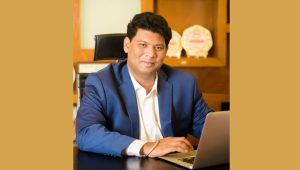



The appointment of businessman and BNP’s election steering committee member Md Mostaqur Rahman as the governor of Bangladesh Bank has sparked debate at a time when the country’s financial sector is struggling with record levels of non-performing loans.
The government led by Tarique Rahman appointed Mostaqur to the top post at the central bank for a four-year term. The Financial Institutions Division under the Ministry of Finance issued the notification to this end on Wednesday.
His appointment is significant not only because he comes from a business background rather than the ranks of economists, bankers or career bureaucrats — traditionally the pathway to the role — but also because he previously had a large business loan rescheduled after falling into default.
This marks the first time in the country’s history that a businessman has been appointed governor of the central bank. Previous governors have typically been senior economists, central bankers or civil servants.
In 2009, the government of Sheikh Hasina appointed Atiur Rahman, who had been a member of the Awami League’s election steering committee. He later resigned in 2016 following the Bangladesh Bank reserve heist.
Mostaqur takes office at a challenging moment for the banking sector. According to official data, non-performing loans in Bangladesh now stand at Tk 6.44 lakh crore — roughly one-third of total disbursed loans.

Before his appointment, Mostaqur had taken a business loan from Mutual Trust Bank, of which Tk 86 crore had become classified as non-performing. In June last year, the loan was rescheduled for 10 years under a “policy support” framework announced by Bangladesh Bank, with a 2 per cent down payment. He had reportedly applied for a 15-year rescheduling period.
TIMES of Bangladesh has obtained documents showing that the new governor had previously been classified as a loan defaulter. Senior officials at both Mutual Trust Bank and Bangladesh Bank also confirmed the rescheduling to TIMES.
The loan restructuring was carried out under BRPD Circular 7 of 2025. The circular specifies that loans receiving special rescheduling benefits must be classified as Special Mention Accounts (SMA) and subject to general provisioning requirements. As a result, while the loan remains classified under regulatory categories, under prevailing rules Mostaqur cannot formally be described as a loan defaulter at present.
The issue of loan classification has been politically sensitive. Eleven members of the current 13th parliament reportedly contested the election after securing High Court stays that temporarily lifted their defaulter status. Among them is minister Khandakar Abdul Muqtadir, who now holds key portfolios including commerce, industries, jute and textiles.




In February, Bangladesh Bank further relaxed rescheduling terms, allowing defaulters to renew loans with a 1 per cent down payment, down from the previous 2 per cent requirement. Several senior banking executives had privately expressed concern that such measures reward defaulters while locking up liquidity for extended periods, potentially increasing pressure on banks’ financial management.
Amir Khosru Mahmud Chowdhury, the finance minister, said administrative changes were part of the new government’s efforts to implement its priorities.
“After assuming responsibility, the government is making changes in various places in order to implement its agenda. This is a normal process,” he told reporters.
Biru Paksha Paul, former chief economist of Bangladesh Bank, said it was not surprising that a new government would appoint its own governor. However, he noted that globally the position is typically filled by professional economists.
“The new governor is not known as a policy maker,” he said, adding that being a businessman does not necessarily preclude effective leadership.
He cited Alan Greenspan, former chair of the US Federal Reserve, who served nearly 19 years and had private sector experience before assuming office.
“The key issue is whether the new governor can act as a strong policy maker and administrator,” Paul said. “If the central bank fails, Bangladesh will face serious consequences. He must act as a knowledgeable regulator. A central bank is a knowledge-based institution.”
Paul added that the governor would need strong expertise in macroeconomics and monetary policy, and should consult experienced professionals in shaping decisions.
Mostaqur is the managing director and CEO of Hera Sweater Garments. Born in Dhaka in 1966, he hails from Jamapur Union in Sonargaon, Narayanganj.
According to his resume seen by TIMES, he completed his undergraduate and postgraduate studies in accounting at the University of Dhaka and became a Fellow Cost and Management Accountant (FCMA) from the Institute of Cost and Management Accountants of Bangladesh (ICMAB) in 1991.
He has more than 33 years of experience in corporate finance, exports, financial management and institutional governance.
Although not widely associated with leadership of major business chambers, he has served as chairman of the Bangladesh Bank-related standing committee of the Bangladesh Garment Manufacturers and Exporters Association (BGMEA) since July 2025.
During 1998–2000, when current Finance Minister Amir Khosru Mahmud Chowdhury was president of the Chittagong Stock Exchange, Mostaqur served as a board member representing MRM Securities, a brokerage firm later renamed UCB Brokerage House after ownership changes.
He is also a member of REHAB, Dhaka Chamber of Commerce and Industry (DCCI), and Association of Travel Agents of Bangladesh (ATAB), and has served on various committees within these organisations.
Repeated attempts to contact Mostaqur for comment were unsuccessful.