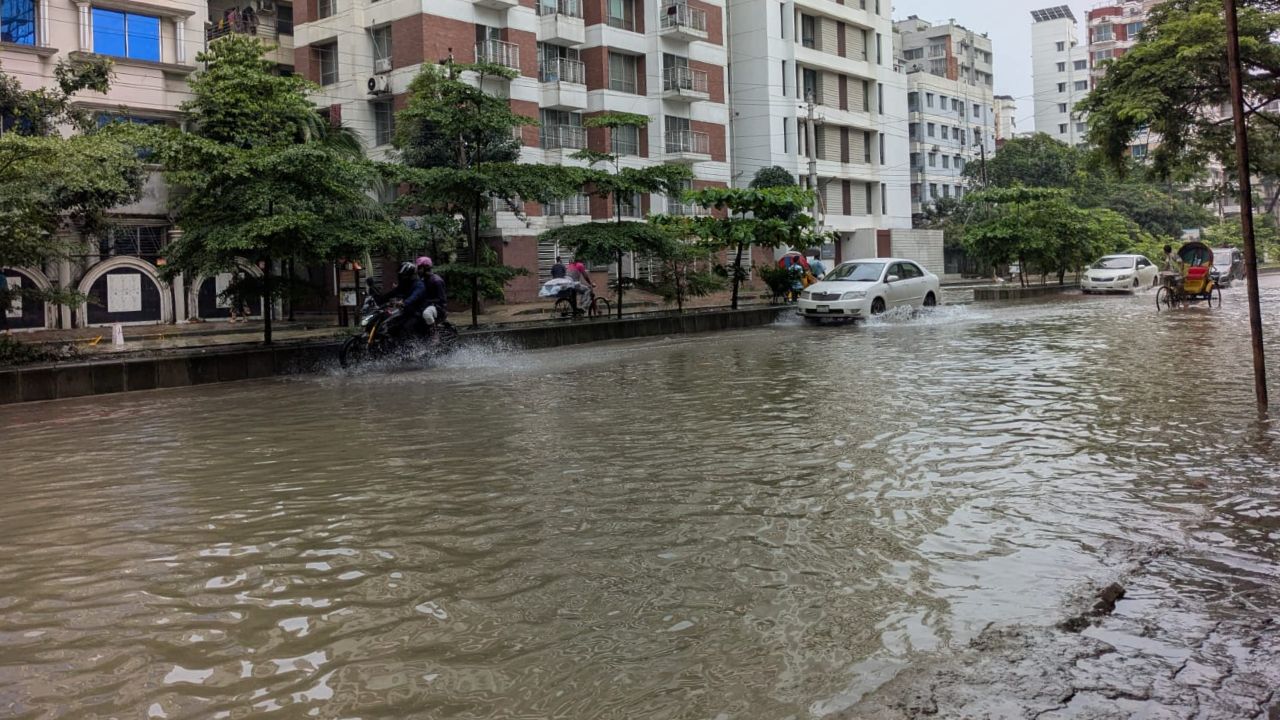

Heavy rainfall has left parts of Bashundhara Residential Area (R/A) severely waterlogged and flooded, disrupting the daily lives of residents. Inadequate drainage infrastructure, poor management and the geographical location have contributed to severity of the situation.
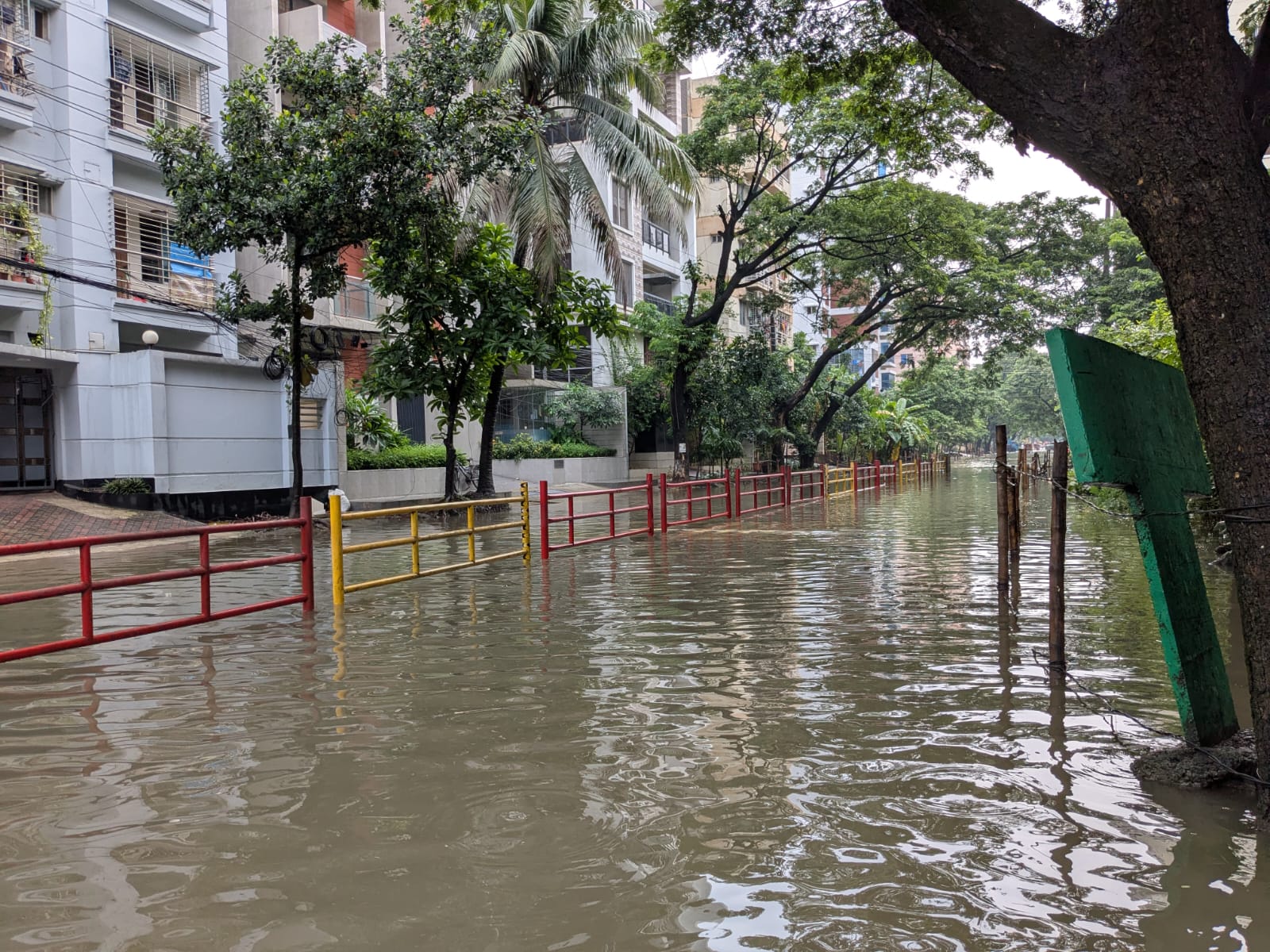
Located beside 300 feet expressway, flooding in the area is not a new phenomenon. Being a low-lying area, the neighborhood remains vulnerable to waterlogging and floods during periods of heavy rainfall, as rainwater from surrounding higher areas flow into Bashundhara R/A.
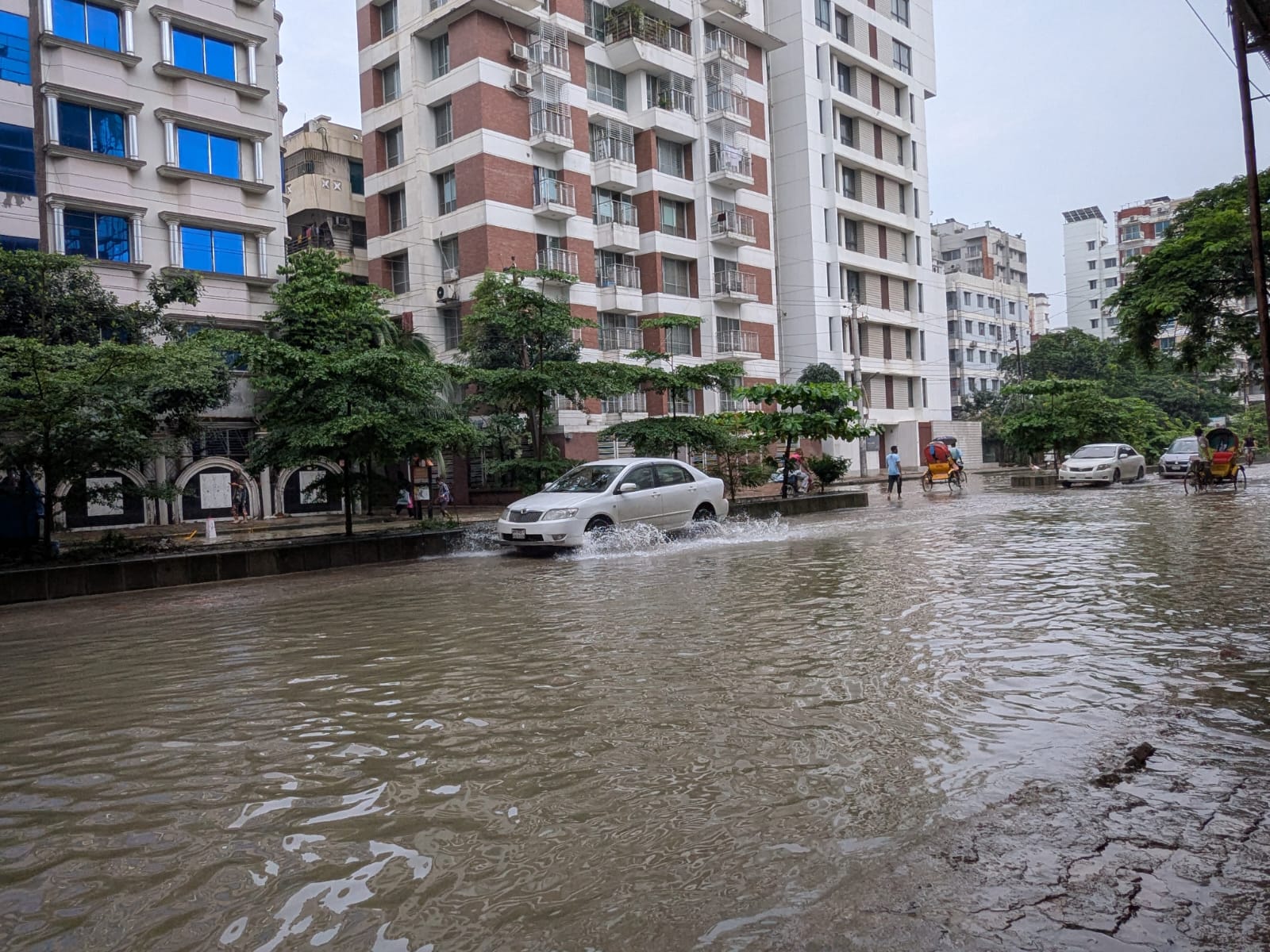
The recent rainfall has caused severe waterlogging in several blocks of the residential area with roads becoming fully submerged. Often causing vehicle breakdowns and traffic jams which often cause problems for residents trying to commute.
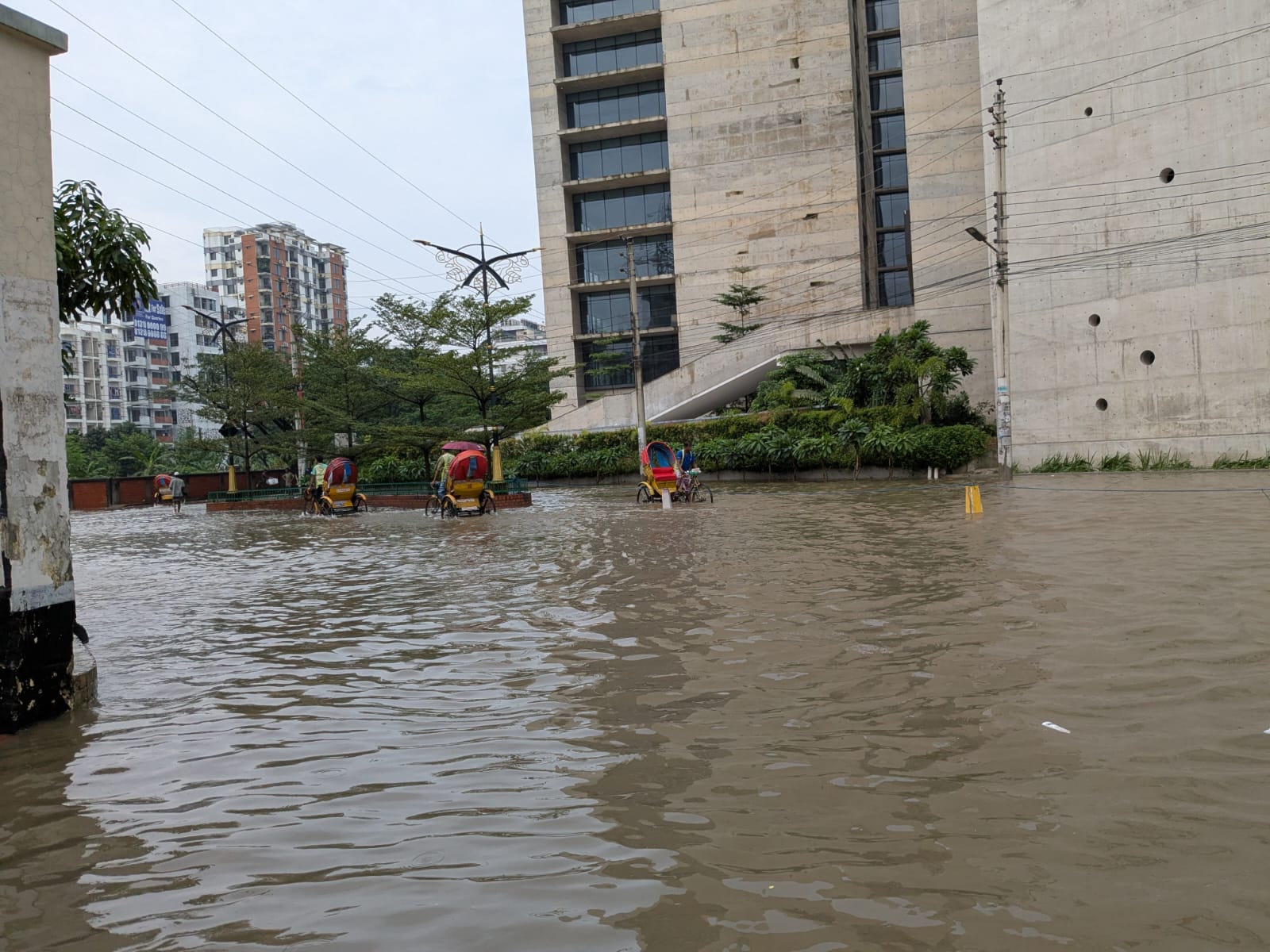
“The water is so high that most of us are forced to keep our cars in the garage. Other wise it might breakdown in the middle of the road, especially in the areas near 300 feet,” said Anam Rashid, a resident of Bashundhara R/A.

“Due to severe traffic jam near Jamuna Future Park caused by the waterlogging, I had to take several alternate roads. In the end I was forced to drive my motorbike through highwaters and it has completely shut down,” said Bappi, a resident.
Several universities in the area were forced to conduct online classes due to students not being able to reach the campus. The decision was met with positivity, especially by those who commute by rickshaw in the residential area. Like any other area in Dhaka, rickshaw fares in Bashundhara R/A often double or triple during heavy rainfalls.



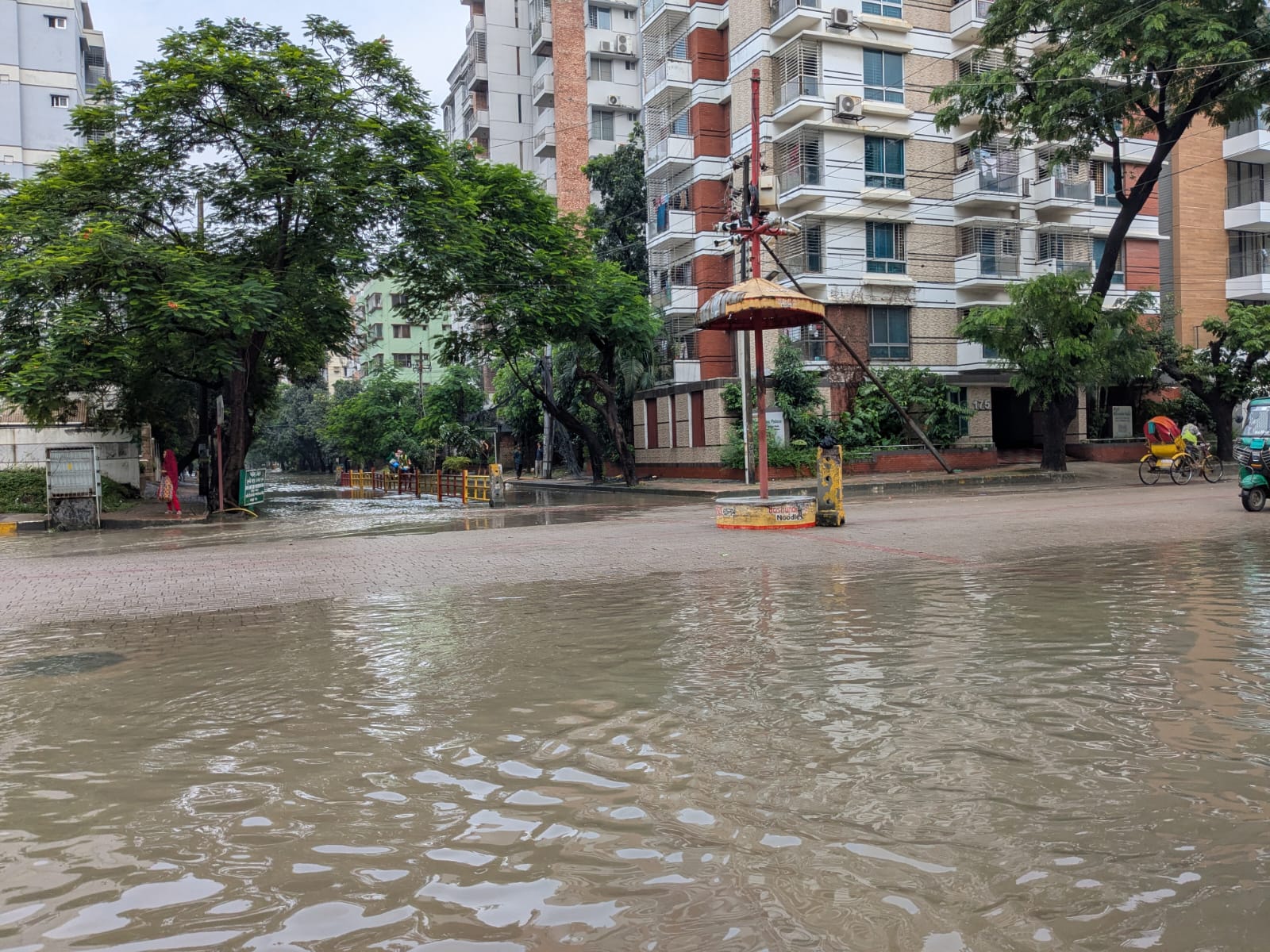
The lack of proper and sufficient drainage infrastructure is often blamed for the problem. Often it takes several days for water to fully drain out from the residential area. The lack of proper governance and management is also frequently blamed.
Nurul Islam Sourav, former research assistant of the Department of Global Studies and Governance at Independent University, Bangladesh (IUB), has said the lack of proper initiatives and urban planning as one of the reasons.
“Though the Bashundhara Group are the primary stakeholders, alongside there are several external organizations who on pen and paper are also stakeholders as they manage the overall Dhaka, such as, WASA, Dhaka City Corporation etc.,” said Nurul Islam Sourav.
“Bashundhara have their own private drainage lines that they maintain. The water in these lines flow and dump rainwater in external outlets,” he added.
He further added that the urban planning Dhaka is very unorganized which affect external outlets such as canals. Canals play a vital role in dumping rainwater to avoid waterlogging. But due to accumulation of urban solid waste such as plastic in the canal systems, the water flow gets disrupted.
“The canals accumulate so much solid waste that water cant go through them. And a good portion of Dhaka’s canals face this similar issue. As a result, the external organizations cannot give priority to a single area to fix the issue,” said Sourav.
He added that “Since the Bashundhara R/A system depends on the public canal systems, the problem occurs. As a result stakeholders fail to take initiatives to fix the problem.”