Multi-platform investment frauds targeting regular investors remain a credible threat to the unwary. Operating through Facebook advertisements, WhatsApp groups, and fake websites, these deceptive schemes promise quick stock market profits, but instead lead users into financial ruin.
An investigation by Dismislab exposed the scale of this fraud, revealing fraudulent Facebook and Instagram ads linked to fake groups and apps, exploiting the names of legitimate brokerage firms like City Brokerage Limited (CBL) and BRAC EPL Securities.
How the fraud works
The fraud begins with enticing Facebook ads promoting high returns from stock market investments.
These ads direct users to WhatsApp groups where they are further manipulated.
In these groups, fake experts provide advice and direct users to download fraudulent apps or visit fake websites, where they are instructed to transfer money via mobile financial services such as bKash and Nagad.
By bypassing official brokerage accounts, the fraudsters directly pocket the money.
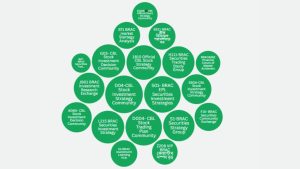
In September, hundreds of such ads circulated from 15 Facebook pages, leading to more than 3,000 members across 20 WhatsApp groups. These groups, operating under the names of CBL and BRAC EPL, were found to promote false stock trading opportunities.
Detailed investigation of the scheme
Dismislab researchers joined several WhatsApp groups to trace the entire process. In CBL’s name, they were led to a fake Android app named CBLPG.
Meanwhile, the BRAC EPL groups directed users to a fraudulent website, anmbracbxt.com. The groups employed staged praise from fake users and fabricated tips to create a sense of legitimacy.
The WhatsApp groups used names of real experts like Dr Zahid Hussain, a former World Bank economist, to deceive members.
A message announced that Dr Hussain would hold a ‘live session’ to provide stock tips, further luring investors. The individuals using these names were later found to be impersonators with no connection to the actual experts.

Tactics used to build trust
Both CBL and BRAC EPL schemes operated similarly, but with different mediums – one using an app, and the other a website.
The WhatsApp groups maintained a consistent structure, with fake users flooding the chats with positive feedback.
In the CBL groups, two individuals – Zahiruddin Shah and Anwesha Basu – posed as brokerage officials, providing fake investment advice. The BRAC EPL groups used Nusrat Jahan and fake names to create a similar facade.
One of the most striking aspects of the fraud was the use of Facebook pages with identical advertising materials promoting both CBL and BRAC EPL groups.
These ads featured similar graphics and text, further solidifying the idea that the fraud was carefully orchestrated.




As part of the investigation, Dismislab found that these ads were running consistently, with new WhatsApp groups popping up each week.

Fake apps and websites
The investigation revealed that the app named CBLPG had been downloaded over 1,200 times, and several fake websites, such as anmbracbxt.com, were set up to mimic legitimate platforms.
After joining the groups, users were instructed to make deposits directly into personal bank accounts or via mobile financial services, bypassing any connection with the actual stock brokerage services.
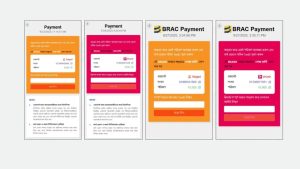
The CBLPG app required users to register with personal information and provided a link to deposit money through bank transfers or mobile wallets.
Similarly, the BRAC EPL scam directed users to a fake website asking for deposits via bKash or Nagad. Both platforms were created solely to deceive and defraud users.
High-profile names exploited
The fraudsters used the names and photos of prominent figures, including Muhammad Yunus and Dr Zahid Hussain, to build trust among potential victims.
On 15 September, a message in one of the WhatsApp groups claimed that Dr Hussain would join the group to offer stock advice, with a fake news article circulating to bolster the claim. The article, originating from a paid news site, falsely described an event that did not exist.
Dr Hussain, however, distanced himself from these activities. He told Dismislab that he had no involvement in the WhatsApp groups or their activities and advised people to be cautious of such scams.
Broader scope of fraud
This scam is not unique to Bangladesh. Similar schemes have been reported in India, where fraudsters have targeted investors through WhatsApp groups and fake apps, promising unrealistic returns and then disappearing once the money was collected.
Nithin Kamath, co-founder of Zerodha, a leading Indian financial firm, warned about the dangers of WhatsApp investment scams, which claimed the most victims on 29 April.
The modus operandi of the fraudsters in Bangladesh mirrors those in India. Initially, small amounts are invested, with profits shown to gain the trust of victims. Once trust is built, larger investments are encouraged, leading to bigger losses when victims try to withdraw their money.
Technology’s role in facilitating fraud
The fraudsters use various tech platforms to operate undetected. From Facebook ads to encrypted messaging services like WhatsApp, the fraud network leverages technology to manipulate unsuspecting investors.
Hundreds of ads were found running from obscure Facebook pages with no other activity than promoting these fraudulent schemes. These pages often use AI-generated images and machine-translated content to further their deception.
Additionally, mobile financial services (MFS) such as bKash and Nagad have been exploited to facilitate the transfer of funds directly into scammers’ accounts.
While MFS institutions like bKash have systems in place to monitor and report suspicious transactions, this fraud highlights a gap in accountability, especially in cases where funds are transferred to personal numbers.
Impact on the public and the institutions
Both BRAC EPL and City Brokerage have officially notified the Bangladesh Securities and Exchange Commission (BSEC) and the police about the scam.
Ahsanur Rahman, CEO of BRAC EPL, expressed concern over the damage to their reputation and the financial risks to investors. Despite warnings, the scams persist, with new WhatsApp groups appearing weekly.
The fraud network continues to expand, with new groups emerging even after the investigation. As of late September, four new WhatsApp groups had surfaced, and hundreds of new members were joining daily.
These new groups promote the same fraudulent schemes using the names of trusted brokerage houses.
More robust action is needed
This sophisticated fraud scheme highlights the growing risks of online investment scams, particularly on social media platforms like Facebook and WhatsApp.
The use of trusted names and high-tech tools to lure victims makes it harder for investors to differentiate between genuine opportunities and frauds.
While the BSEC and other institutions are aware of the issue, the rapid growth of these scams suggests that more robust action is needed to protect consumers and preserve the integrity of Bangladesh’s financial markets.