
S M Faridul Haque
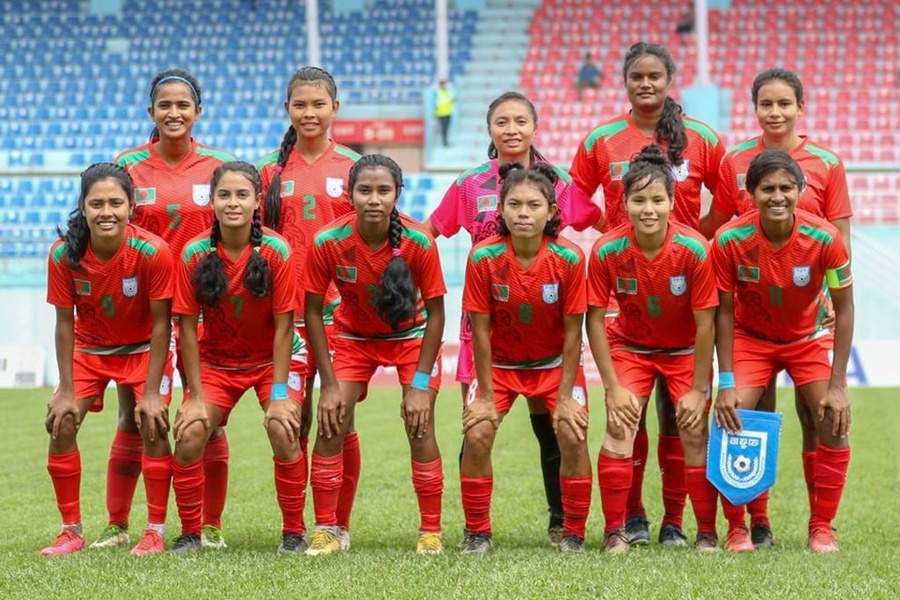
Bangladesh’s women’s national football and cricket teams have shown incredible performance in the recent years. The Bangladesh Women’s National Football Team achieved a historic milestone. They qualified for the 2026 AFC Women’s Asian Cup. This was their first-ever qualification. They defeated teams like Bahrain, Turkmenistan, and Myanmar in flawless matches, securing nine points from three games. As a result, they jumped 24 places in the FIFA rankings, reaching 104th globally. The Bangladesh Women’s Cricket Team is also making waves. In the 2025 ICC Women’s Cricket World Cup, they won their opening match against Pakistan. The team’s growth and success are a reflection of their hard work and dedication.
Despite these successes, the journey is not easy for women, especially those from rural areas. Many players in both football and cricket come from rural backgrounds. In these areas, resources are limited. Female football players often train on uneven, muddy fields. They lack proper coaching and equipment. They often have to travel long distances to reach urban centers for proper training. This is not only time-consuming but also financially burdensome.
On this International Rural Women’s Day, let’s pause and reflect on how far we’ve come. But also, let’s remember how much work is still ahead. Women, especially in rural Bangladesh, still face many challenges. They deserve equal opportunities to succeed and thrive.

Over the years, Bangladesh has made great progress in gender equality. The government, along with NGOs and private sectors, has been working hard to make a difference. More women are now in government positions. More women are getting university degrees. The rise is clear, and it’s inspiring. In the last decade, the number of women in government jobs has increased by over 30%. More women are also leading businesses. In 2021, around 20% of Bangladesh’s startups were women-led, up from just 5% in 2010. This progress is a testament to the collective effort to empower women. The inclusion of women in the military is also growing. More than 4,000 women are now serving in the Bangladesh Armed Forces. Their presence contributes to the country’s security and defense. It’s a powerful reminder that when women are given the chance, they excel. All these are the outcomes of commitment and actions of society. Both the Government, NGOs and private sectors are working hand in hand to overcome the challenges faced by women. But the case of women in sports still needs attention.
Beyond the physical challenges, the women players face deep social barriers. Patriarchy is still a strong force in many rural communities. Many women are discouraged from playing sports. Family expectations often prioritize domestic work over professional dreams. Take Shamsunnahar, for example, who comes from rural Shariatpur. She had to balance her passion for football with the responsibilities of household chores. Despite her talent, her dreams were often put on hold.
Women from rural areas also face resistance from their communities. From media reports, we know that in various rural regions, women’s sports are often restricted or interrupted. During women’s football matches, groups of men have attempted to disrupt the games, claiming they go against cultural norms. Similar incidents have been reported in other rural areas, where local authorities and even families sometimes try to stop girls from playing, fearing it will tarnish their “honour.”


Nafisa Khatun, of Jhenaidah, is another powerful example. She faced the heartbreaking reality of not having a stable home. After her parents separated, she had to live with relatives in cramped conditions. Despite the lack of resources, Nafisa never gave up on her passion for football. She had to travel long distances for training, often using public transport with very little money. Yet, her determination and hard work made her one of the key players on the national team. She proved that with dedication, even the toughest circumstances can’t hold a person back.
These challenges are not just physical- they are emotional and psychological. Rural women face low literacy rates, limited support systems, and deep cultural resistance. These barriers hold them back from reaching their full potential.
Breaking these barriers and creating equality for women in the sports sector is crucial, not only for promoting fairness but also for unlocking opportunities that can significantly benefit individuals, families, and society as a whole. Women’s participation in sports can become a viable career path, offering financial independence, personal growth, and a platform for influencing others. When women excel in sports, they become role models and inspire other girls to pursue their dreams, breaking societal barriers along the way. Additionally, sports careers provide opportunities for women to contribute economically, helping to support their families and elevate their communities. For instance, Ritu Porna Chakma, a national footballer from a rural background, has not only excelled on the field but also plays a vital role in supporting her family since her father’s passing in 2015. Similarly, Marufa Akter, a cricketer from Nilphamari, began her career by helping on her father’s farm. Her dedication has led her to represent Bangladesh internationally, showcasing how sports can transform lives and contribute to family well-being. In a recent interview with ICC, International Cricket Council, she shared the story of her fight against poverty and patriarchy.
On this International Rural Women’s Day, let’s recognize that rural women, especially those who dream of becoming sports professionals, deserve the same opportunities as women in urban areas. It’s our collective responsibility to make sure they have the resources and support they need. No one should be excluded from sports because of where they come from or the challenges they face.
The government, NGOs, and the private sector need to work together. We need to create an ecosystem where rural women can succeed in all aspects of life, including sports. It’s time for community leaders, coaches, and policymakers to support these women. They are already breaking barriers, and they need our help.
We also need to work towards breaking down the social stigmas that hold rural women back. Let’s make a commitment to this International Rural Women’s Day. Let’s ensure that rural women are not left behind. They deserve equal opportunities in sports and beyond.
Together, we can create a future where every rural woman has the chance to flourish. Whether it’s in sports, education, or any other field she chooses, every woman deserves the chance to shine.
The writer is a Gender and Inclusive Development Strategist, works for National and International Organizations as consultant