




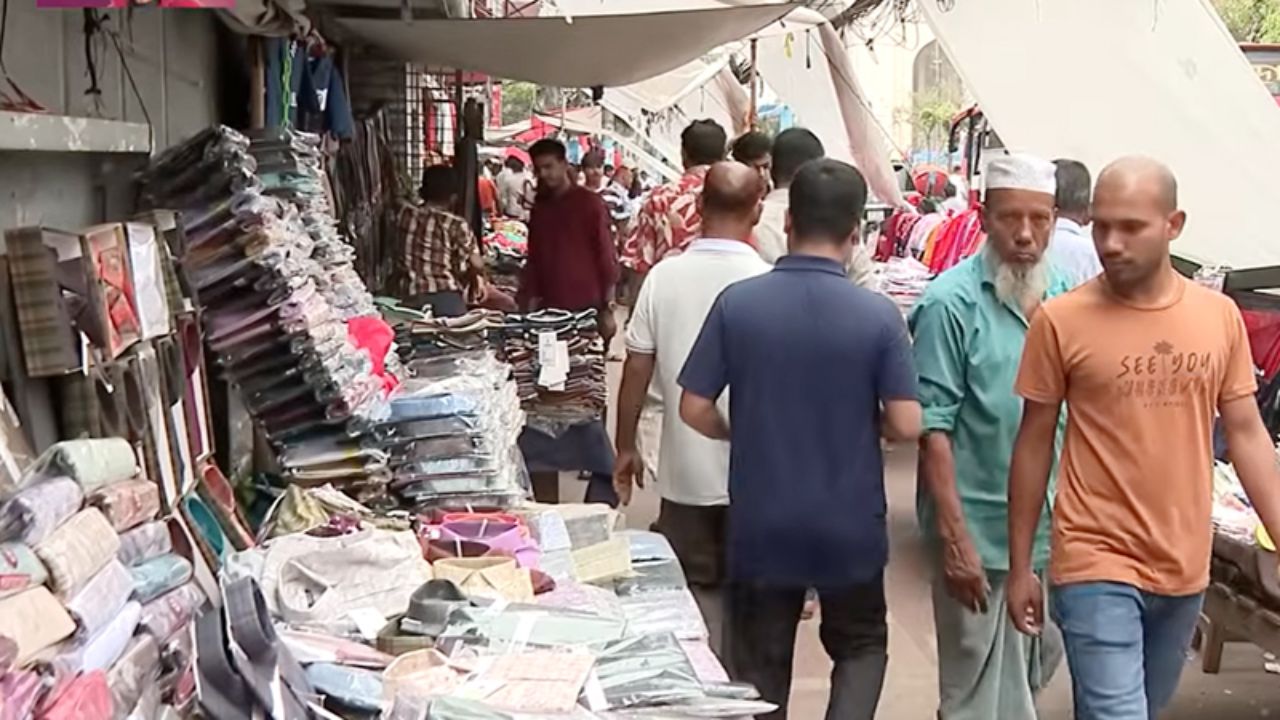
Dhaka South City Corporation (DSCC) has barred hawkers from setting up stalls on main roads while allowing registered vendors to operate in selected footpath areas and designated zones under a new hawker management plan.
The plan includes region-based registration of hawkers, limits on the number of vendors according to available space, and the introduction of holiday markets on Fridays and Saturdays. The DSCC is also planning night markets in selected areas after office hours.
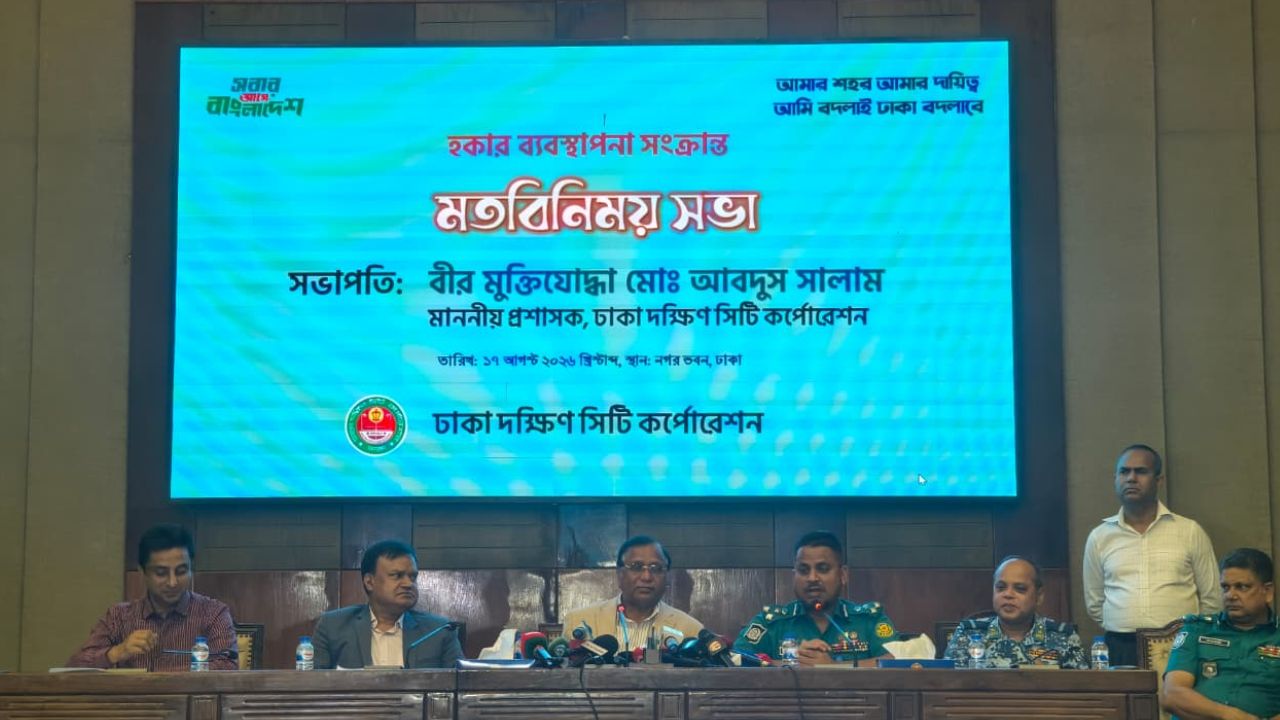
The initiative was announced at a view-exchange meeting on hawker management held at Nagar Bhaban on Monday, chaired by DSCC Administrator and heroic freedom fighter Md Abdus Salam. Hawker representatives also attended the meeting and placed their demands and proposals.
Salam said it was not possible to accommodate all hawkers in one location and stressed the need to balance their livelihoods with the smooth movement of vehicles and pedestrians.
He said hawkers would not be allowed on main roads, though selected parts of less-congested side roads and wider footpaths could be used for vending.
“You cannot sit on the road. Roads are primarily for movement,” he said, referring to public suffering caused by hawkers occupying roads between Gulistan, Zero Point and Sadarghat.
He said hawkers would be allowed to conduct business only in designated areas under specific rules, rather than occupying spaces arbitrarily.
If daily vending space proves insufficient, holiday markets will be introduced on Fridays and Saturdays, while night markets will operate in selected areas after office hours.
Dhaka Metropolitan Police (DMP) Additional Commissioner (Traffic) Md Anisur Rahman said areas that remain busy during the day but become quieter at night, including Motijheel, are being considered for night markets.
“We want to launch a night market. The night economy will operate at night. We will start this immediately after office hours,” he said.
Salam said the DSCC aims to complete the registration and management framework for hawkers within two weeks.
Under the proposed system, registered hawkers will receive licences and identification numbers containing details of their business type, designated zone, location, stall size and operating hours. Police will verify licences through barcodes and QR codes before allowing vendors to operate.
“The police will permit hawkers to sit only after verifying their licences. This will eliminate extortion,” Salam said.
The registration list will be prepared based on region, police station and zone, while the number of hawkers in each area will be fixed according to physical capacity.
After registration, hawkers will pay designated fees for space use, cleanliness and management services. In return, the city corporation will provide waste disposal and other civic facilities.
Salam alleged that hawkers in several areas, including Segunbagicha, often pay excessive charges after renting spaces from permanent shop owners or local groups.
“Do not pay rent to any shopkeeper of any market. Do not rent spots from local thugs (mastans), regardless of which political party they belong to,” he told hawkers.
DMP Additional Commissioner Anisur Rahman said genuine hawkers must be separated from small traders to determine the actual number of street vendors in Dhaka.
He said people running street businesses with capital of Tk4 lakh to Tk5 lakh should be considered small traders rather than hawkers.
Citing a survey, Rahman said around 3,670 hawkers currently operate on the capital’s main roads. Of them, around 1,900 could be rehabilitated under the existing hawker policy, while alternative arrangements such as night and holiday markets would be made for others.
He warned that strict action would be taken against anyone operating outside designated zones or occupying excess space after the new policy comes into effect.
“Whether you like it or not—we will be strict. Absolutely tough means tough,” he said.
The meeting was attended by hawker association leaders and DSCC officials.


